

 Back to All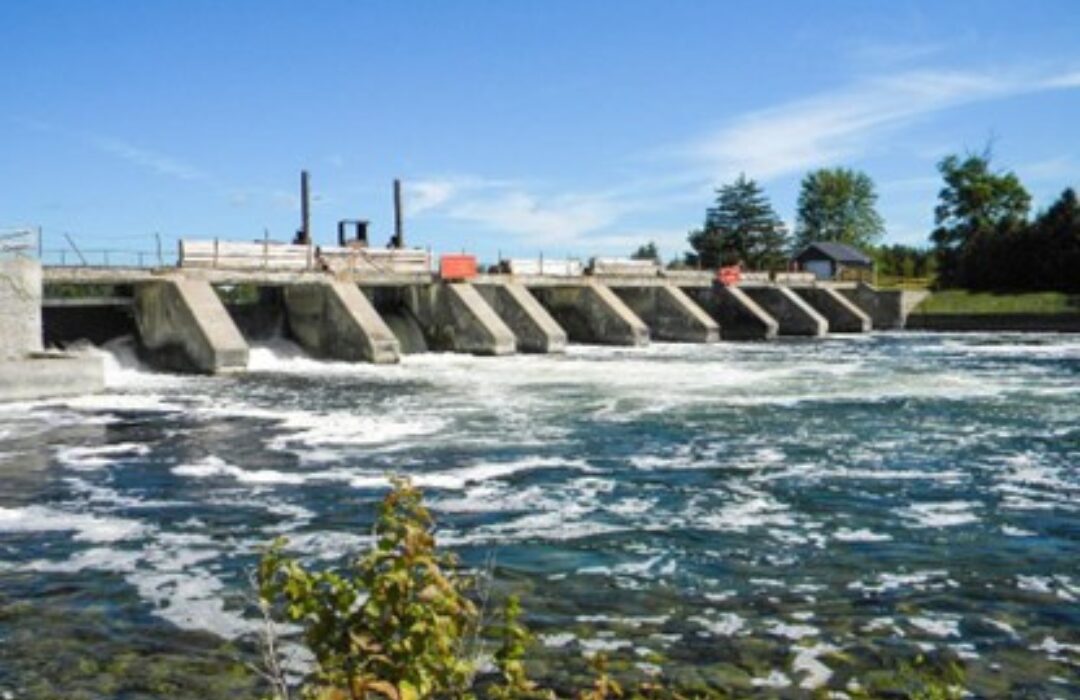
*Sponsored Content
A quiet crisis is unfolding, one stemming from the heart of renewable energy infrastructure.
There are more than 500 hydroelectric sites across Canada and the U.S. that are more than a century old and approaching the end of their operational lives.
While these facilities have served as reliable sources of clean energy, their aging infrastructure and the failure to redevelop facilities now pose a growing risk to public safety, financial stability and environmental stewardship. The urgency to act is clear: we must rethink how we value, maintain and revitalize these legacy hydro sites before the consequences become irreversible.
KGS Group’s Stefan Kohnen, Principal & Regional Manager, explores this topic and what options are available to bring aging infrastructure back to life.
THE HIDDEN SIDE OF SMALL HYDRO
Seventy percent of these aging facilities are considered small-scale, producing less than 10 megawatts of power. Their level of output may seem modest, but their role in public infrastructure is anything but.
These sites often support critical functions such as flood control, irrigation, navigation, recreation and occasionally reservoirs for firefighting in local communities. But as their ability to directly generate revenue declines and operating costs rise, many owners face a stark dilemma: invest in costly redevelopment, decommission the powerhouse, or remove the dam entirely.
Traditional economic models often fail to justify the redevelopment of these sites based solely on electricity generation. This approach has led to a dangerous trend of “run to failure” operations, where sites are minimally maintained until they become unsafe or financially untenable. In some cases, owners may even walk away completely, leaving communities and regulatory bodies to manage the fallout.
The industry must confront a difficult truth: hydropower facilities have two jobs. They not only generate electricity but also maintain infrastructure that communities rely on. Ignoring this dual role creates a blind spot in both policy and investment strategies.
A NEW FRAMEWORK FOR REDEVELOPMENT
To address these challenges, there needs to be a shift in how the value of hydro sites is currently evaluated. Decisions on redevelopment need to incorporate the non-power benefits these aging sites provide. This broader perspective can help close the financial gap that often prevents investment in small hydro sites.
This approach is not just theoretical—it’s already being applied in practice. The redevelopment of the Sawer Creek Dam in Ontario offers a compelling case study of how innovative thinking and technical diligence can turn a seemingly uneconomical site into a viable project.
CASE STUDY: SAWER CREEK DAM
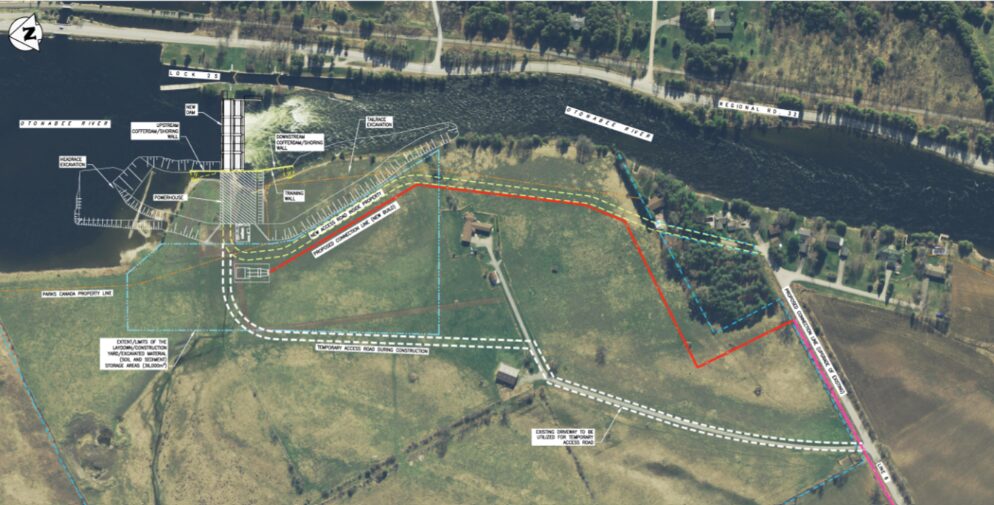
Bawitik Power Corporation, in collaboration with KGS Group, undertook the development of a generating station at the unpowered Sawer Creek Dam, a site with just 3.2 meters of head. At first glance, the project appeared economically unfeasible, but by applying a phased development process and a set- based design methodology, both technical and financial outcomes were optimized.
The key to the project’s success lies in the phased development approach developed by KGS Group. It recognizes that for this scale of project, the economic challenge is larger than the technical one and focuses on cost drivers both direct and indirect. The approach incorporates the reality that design choices drive direct costs but contracting strategy will drive most indirect costs.
The result was a tailored solution that addressed not only energy generation but also environmental flows, spillway capacity, and construction diversion needs. The Sawer Dam project demonstrates that, with the right approach, even low-head, small-scale sites can be successfully developed, provided the full value of the site is recognized and leveraged, in this case by recognizing and monetizing the value of cost sharing in the long-term care of this public structure.
THE ROLE OF PERFORMANCE MEASUREMENT IN REDEVLOPMENT
Another critical component of successful hydro development and operations is accurate information about the turbine performance. Understanding how a turbine performs under real-world conditions is essential for both operational optimization and financial planning. Accuracy matters.
Performance measurement provides data on energy inputs, outputs and losses, helping operators identify inefficiencies and make informed operating and investment decisions. This data is also vital for establishing contractual guarantees with turbine manufacturers and verifying that new or upgraded equipment meets expected standards. Without this data, owners risk making costly decisions based on outdated or inaccurate assumptions.
With good performance management, owners can reduce uncertainty, improve financial outcomes and extend the life of their assets.
MOVING TOWARDS A SUSTAINABLE FUTURE
The path forward for aging hydro infrastructure is not without challenges, but it is possible to find a path forward. It begins with a shift in mindset—from viewing small hydro sites as minimal power producers to recognizing them as multi-functional public assets.
To that end, KGS Group advocates for:
- Incorporating non-power benefits into economic analyses of redevelopment projects
- Adopting phased, collaborative development models like those used at Sawer Dam
- Embedding performance measurement into every stage of the asset lifecycle
- Engaging stakeholders to build consensus and secure social license for redevelopment or, when necessary, dam removal
With over 500 sites nearing their end of life, the time to act is now. Redevelopment is not just a technical or financial issue; it is a matter of public safety, environmental responsibility and long-term infrastructure resilience.
If you want to learn more about revitalizing legacy hydropower, Stefan is running a session, “Do We Have a Blindspot about Public Safety when Considering Redevelopment of Existing Hydro?” at this fall’s Clean Currents 2025 in Pittsburgh, Pennsylvania, on October 14-17.

