

 Back to All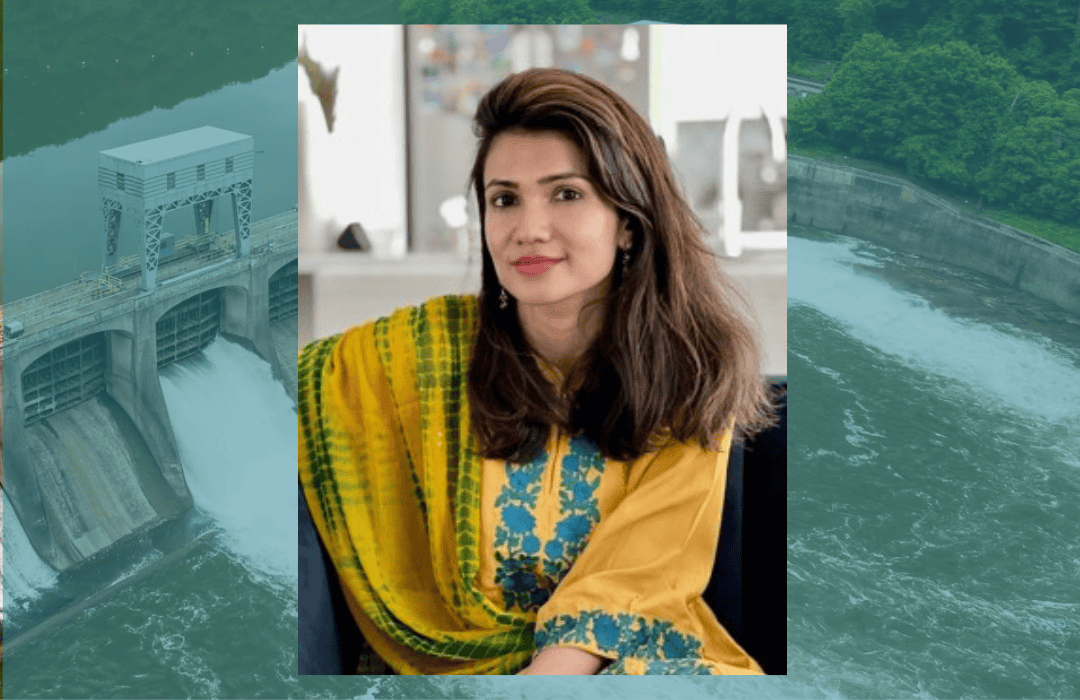
This article is part of a series titled “Shaping the Current: A Spotlight on Hydropower’s Future Leaders,” that aims to highlight voices of emerging leaders in hydropower.
Growing up in Bangladesh, Samiha Tahseen knew what it meant to go without power, sometimes for hours at a time. Load shedding became a common part of her life which left an impression that never quite faded. Witnessing how unreliable electricity affected communities sparked an early interest in infrastructure systems, inspiring her to pursue a degree in civil engineering at the Bangladesh University of Engineering and Technology, as well as a PhD in Civil Engineering at the University of Toronto focused on environmental systems and sustainability.
Today, as Director of Generation Planning at Brookfield Renewables, she channels that experience into her work leading hydro systems optimization, forecasting, and operational strategy across one of North America’s largest renewable energy portfolios.
As part of her journey, Samiha has navigated the challenges of transitioning from academia to industry, immigrating to a new country, and establishing herself as a leader in a traditionally male-dominated field. Her journey reflects how diverse perspectives and lived experiences can help shape a more sustainable energy future.
POWERHOUSE: Tell us about yourself, your educational and professional background, and what brought you to the hydropower industry?
Samiha: I grew up in Bangladesh, where load shedding was a routine part of daily life. Power outages were not just an inconvenience—they affected education, healthcare, productivity, and overall quality of life. From an early age, this shaped how I viewed infrastructure systems: many challenges stemmed not only from limited resources, but from suboptimal planning, short-term decision-making, and insufficient consideration of sustainability. These experiences motivated my interest in infrastructure systems that are reliable, resilient, and socially responsible, ultimately drawing me toward the energy and water sectors.
I completed my BSc in Civil Engineering at the Bangladesh University of Engineering and Technology (BUET), followed by a PhD in Civil Engineering at the University of Toronto with a strong emphasis on environmental systems and sustainability. My doctoral research focused on hydropower systems, pumped storage, reservoir operations, and sustainability assessment, integrating engineering analysis with economics, policy, and environmental constraints. During this time, I published peer reviewed research, contributed to UNIDO’s World Small Hydropower Development Report, and collaborated closely with utilities, consultants, and system operators to ensure my work was translated beyond academia.
My entry into the hydropower industry was intentional, though not linear. I transitioned from an academic and research-focused background into industry, bringing a civil and environmental engineering perspective to operational decision-making. One of the key challenges I faced was translating rigorous technical analysis into practical, business-oriented insights that resonate with operators, traders, and executives. As an immigrant and a woman in a traditionally male-dominated field, I also navigated credibility barriers—earning trust by consistently delivering clear, defensible, and impactful results.
Since joining Brookfield Renewable in 2017 as a Generation Planner, my role has evolved from technical analysis to strategic leadership. Today, I lead teams responsible for optimizing hydro, wind, solar, and storage assets, applying a systems level approach that balances reliability, revenue, environmental stewardship, and long-term sustainability.
POWERHOUSE: How did you first learn about opportunities in this industry?
Samiha: I first learned about opportunities in the hydropower industry while developing my PhD research on the Niagara hydropower system. Studying Niagara exposed me to the reality that hydropower is far more than an engineering challenge—it is shaped by cross border governance, environmental obligations, markets, and societal expectations.
This complexity was deeply compelling. I was fortunate to be supervised by Dr. Bryan Karney, who played a pivotal role in shaping my path into the industry. He encouraged me to engage with industry partners, attend conferences and seminars, and present my work beyond academic settings. These experiences provided early exposure to real-world decision-making and helped bridge theory and practice.
Ultimately, I was drawn to hydropower because of its ability to contribute meaningfully to a low carbon energy future while navigating real-world constraints thoughtfully. Coming from Bangladesh, where unreliable power supply had tangible economic and societal impacts, I wanted to work in a field where better system design and informed decision making could improve reliability and sustainability without shifting costs or risks to communities, ecosystems, or future generations.
POWERHOUSE: What is your title and job function? What does a typical day look like for you?
Samiha: I am a Director in Generation Planning at Brookfield Renewable America. My role focuses on optimizing the operation of hydro, wind, solar, and storage assets by integrating hydrology, forecasting, market dynamics, and sustainability considerations into both operational and strategic decisions.
A typical day is highly interdisciplinary. It may involve reviewing hydrological and inflow forecasts, assessing system constraints, collaborating with trading and risk teams, or evaluating operational strategies that balance revenue, reliability, environmental requirements, and regulatory obligations. I also spend a significant portion of my time leading and mentoring engineers and planners, aligning cross functional stakeholders, and translating complex technical analysis into clear, actionable insights for decisionmakers
At its core, my work is about optimizing limited natural resources responsibly, ensuring that energy production supports decarbonization goals while respecting ecological limits and social considerations. I find it deeply meaningful to work on problems where success is defined not only by financial performance, but by using resources efficiently without making conditions worse for others.
I also value the continuous learning inherent in this role. Climate variability, evolving markets, and changing societal expectations constantly introduce new challenges, keeping the work both intellectually engaging and impactful.
The skills most critical in my role include curiosity and adaptability, integrity in transparent and defensible decision-making, strong communication, and the ability to integrate engineering, environmental, economic, and equity perspectives to drive balanced outcomes.
POWERHOUSE: How does your work contribute to the broader goals of the hydropower industry?
Samiha: My work supports the broader goals of the hydropower industry by advancing the efficient expansion, optimization, and sustainability of hydropower within a modern, low-carbon energy system.
Through my role at Brookfield Renewable, I support the assessment, modernization, and integration of new developments, including efforts to power existing non-powered dams—an efficient pathway to expand renewable capacity with limited environmental impact and capital intensity. In parallel, my work focuses on optimizing the planning and operation of hydropower assets through advanced hydrological analysis, reservoir management, and data-driven decision tools. Collectively, this helps ensure hydropower remains reliable, flexible, and resilient supporting decarbonization, grid reliability, and the long-term value of existing assets.
POWERHOUSE: Why do you think hydropower is important for the future of energy?
Samiha: Hydropower is critical to the future of energy because it is the only large-scale renewable resource that simultaneously provides clean electricity, system flexibility, and long duration storage. As power systems become increasingly dominated by variable renewables, hydropower’s ability to ramp quickly and provide essential grid services becomes indispensable.
In a world facing climate uncertainty, electrification, and rising demand, hydropower anchors the energy transition by providing resilient, dispatchable, and sustainable clean power that enables the broader renewable ecosystem to scale.
POWERHOUSE: What is your favorite ‘fun fact’ about hydropower?
Samiha: Hydropower is based on ancient technology—humans have been using flowing water to do useful work for thousands of years. Modern hydropower applies that same principle with advanced engineering, making it one of the oldest and most efficient energy technologies still powering our future.
WHY IT MATTERS
Samiha’s work in the hydropower industry demonstrates how thoughtful planning and responsible resource management can strengthen both energy systems and communities. As a woman leader in hydropower, she brings a new perspective to the industry, one shaped by personal experience of enduring energy insecurity in Bangladesh, technical expertise in engineering and environmental systems, and an unwavering belief that sustainable energy should serve both people and the planet.