

 Back to All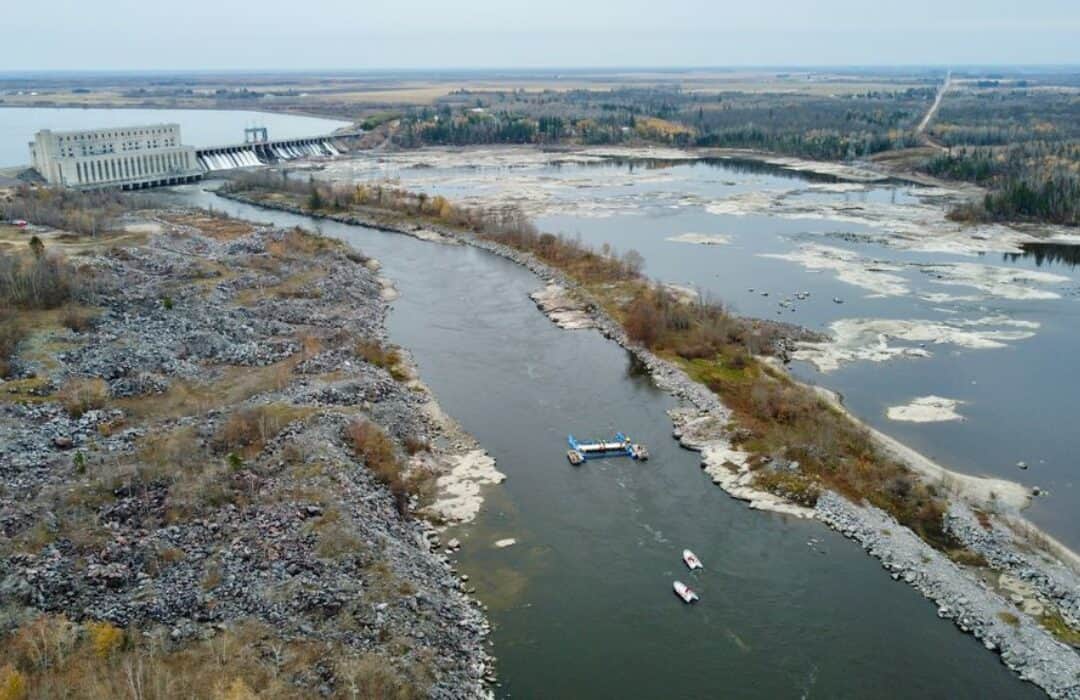
To glimpse marine energy at work first-hand has often meant a trip to hard-to-reach places—where the ebb of tides, the peaks and troughs of waves, and the flow of mighty rivers are at their most powerful.
At least that has been the story for ORPC, a developer of river and tidal power solutions whose work has focused in large part on transitioning remote off-grid communities from costly diesel generation.
But a recent announcement by the company to deploy its RivGen® Power System in the St. Lawrence River in Montreal marks an unprecedented opportunity for a broad audience to understand how free-flowing river power produces energy right where it’s needed.
Beginning in 2026 and continuing through 2029, ORPC Canada will deploy and operate two RivGen devices in the St. Lawrence River with support from Natural Resources Canada. The company’s first urban installation will deliver stable, predictable and affordable local power, supporting Montreal’s transition to a more resilient energy system. Ultimately, the more people who are directly exposed to an energy project like ORPC’s, as well as its benefits, the more voices there are to influence policy and grow the industry.
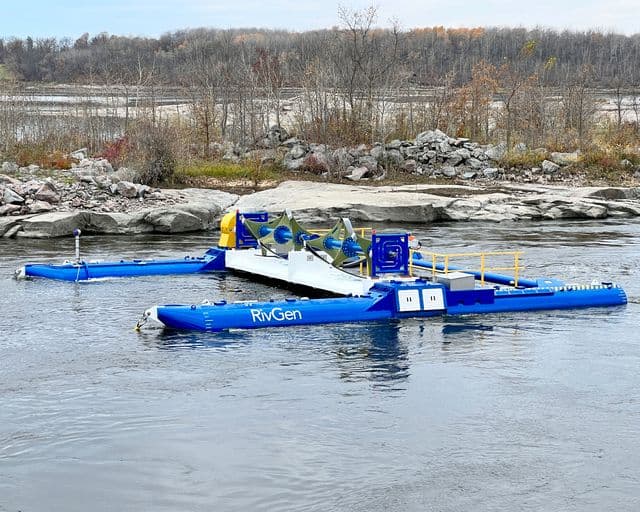
Two RivGen devices like this one will be deployed in Montreal. (Photo Credit – ORPC)
BUILDING ON TWO DECADES OF INNOVATION
ORPC, headquartered in Maine with subsidiaries in Ireland, Chile and Canada, has a 20-year track record of innovating marine energy systems. The launch of its first urban project in Montreal builds on the company’s work on the Kvichak River in Igiugig, Alaska, supported by the U.S. Department of Energy, which continues to set the record as the longest operating marine energy project in all of the Americas.
Through 18 deployments spanning Alaska to Manitoba, Maine and Northern Ireland, ORPC’s team has fine-tuned its power systems and the skills needed to successfully install and retrieve them in areas with limited access to heavy equipment.
“What sets us apart is our ability to take that innovation into real communities—working closely with local partners and regulators to get projects successfully deployed. That means building, shipping, assembling, grid-connecting, and maintaining our systems on site over years, not months. That hands-on execution is where the real breakthroughs happen. Every deployment gives us insights that accelerate our engineering and sharpen our technology. We’re not just advancing marine energy—we’re proving what a resilient, community-centered clean energy future can look like at scale.” — Stuart Davies, CEO, ORPC
In the last several years, ORPC’s work in remote regions has expanded to include on- and off-grid applications in industrial hubs, and urban centers, with a preliminary permit on the Niagara River in Buffalo and active projects on the Lower Mississippi River in Louisiana, major waterways in France, and now in Quebec’s largest city.
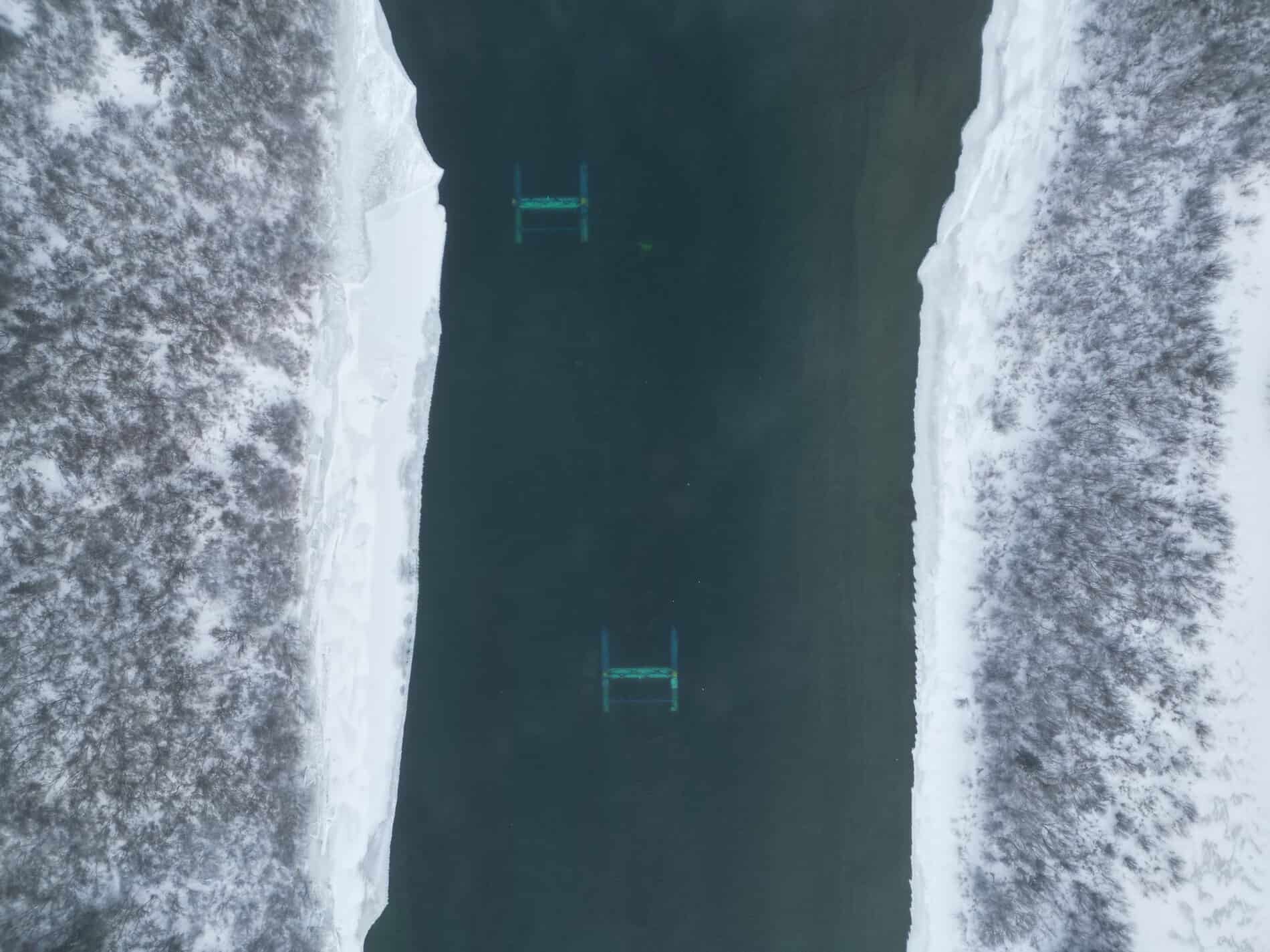
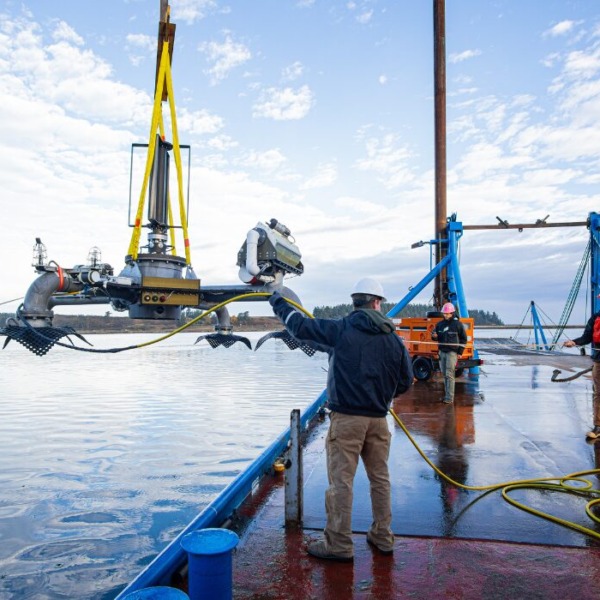
Through its many deployments in North America and Europe, ORPC has honed its expertise in deploying and operating its underwater power systems. (Photo Credit – Igiugig Village Council)
AN ALREADY-PROVEN ENERGY SOLUTION
Montreal, a city within reach of the entire Northeast corridor and major hubs across the United States and Canada, presents a unique opportunity for ORPC to introduce a much larger audience to its technology, generating broad awareness for an industry that has often remained in the shadow of more ubiquitous energy solutions like solar and wind.
To see is to understand, and for the first time potential customers, investors, regulators, and the public can easily visit the site of a RivGen Power System at work. Ahead of its deployment, ORPC will display the RivGen devices on land near the project site to educate visitors on how the low profile, crossflow turbine harnesses the power of moving water to generate electricity without impediment.
ORPC is strongly emphasizing community engagement and collaboration with local partners including Indigenous peoples whose longstanding stewardship and cultural ties to the St. Lawrence River continue to shape the region.
Once installed, the submerged devices operating at the bottom of the river fit seamlessly into the environment—with an uninterrupted viewshed, without obstructing boats and other traffic, and most importantly operating in harmony with aquatic life.
“We’ve moved past the need to prove marine energy. Now, it’s about bringing visibility to the benefits of the technology to a larger audience—primarily its ability to act as a source of continuous, reliable power amidst a growing demand for more electricity worldwide.” –Stuart Davies, CEO, ORPC
From this new urban stage, ORPC will gain experience from operating in a heavily trafficked region which will help the company advance its priority work in North America and beyond.
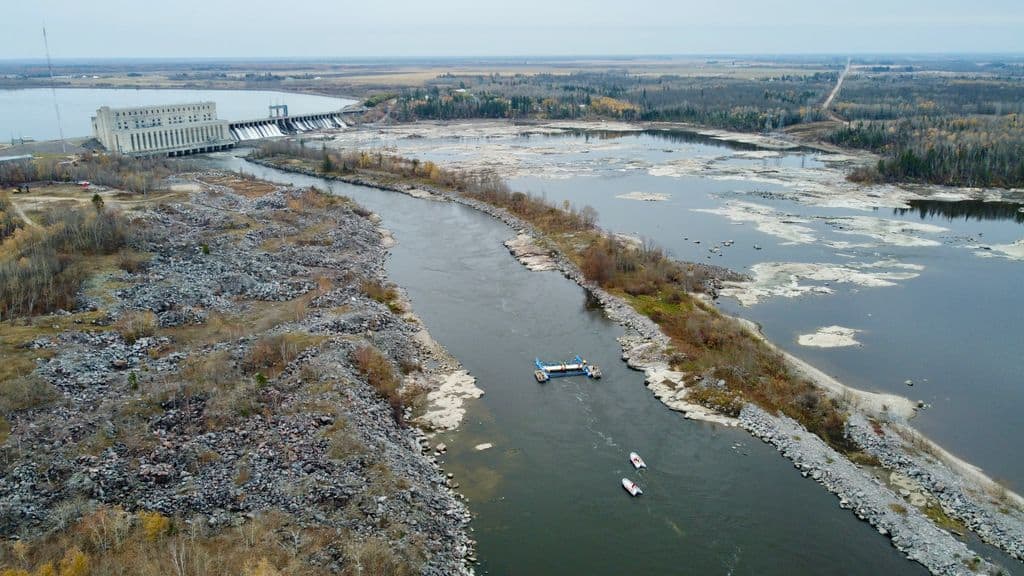
Aerial of ORPC RivGen® device in Winnipeg River, Manitoba, Canada, prior to deployment. (Photo Credit – ORPC)
THE TIME IS NOW FOR MARINE ENERGY
Globally, marine energy is accelerating. The United Kingdom recently awarded 20.9 MW of tidal stream contracts in its seventh Contracts for Difference allocation, and France’s new national energy roadmap includes 250 MW of tidal capacity by 2030. In the United States, momentum is building as well.
Congress recently approved a record $141 million in funding for marine energy research, and the newly introduced FLOWS Act aims to streamline small-project permitting. The tax legislation passed last year resulted in the sunsetting of tax credits for both wind and solar. However, the tax credits remain in place for hydrokinetic energy through 2035 which puts river, tidal and wave-powered electricity at a tax advantage to solar and wind for the first time in 20 years.
“I’m incredibly optimistic about what the next five to ten years will mean for marine energy in the United States and worldwide. We’re seeing unprecedented momentum—from policymakers, from industry leaders, and from communities—recognizing that predictable, renewable power from rivers and tides must be part of every nation’s energy future. Marine energy is no longer an emerging concept; it’s a proven resource whose moment has truly arrived.”
— Stuart Davies, CEO, ORPC
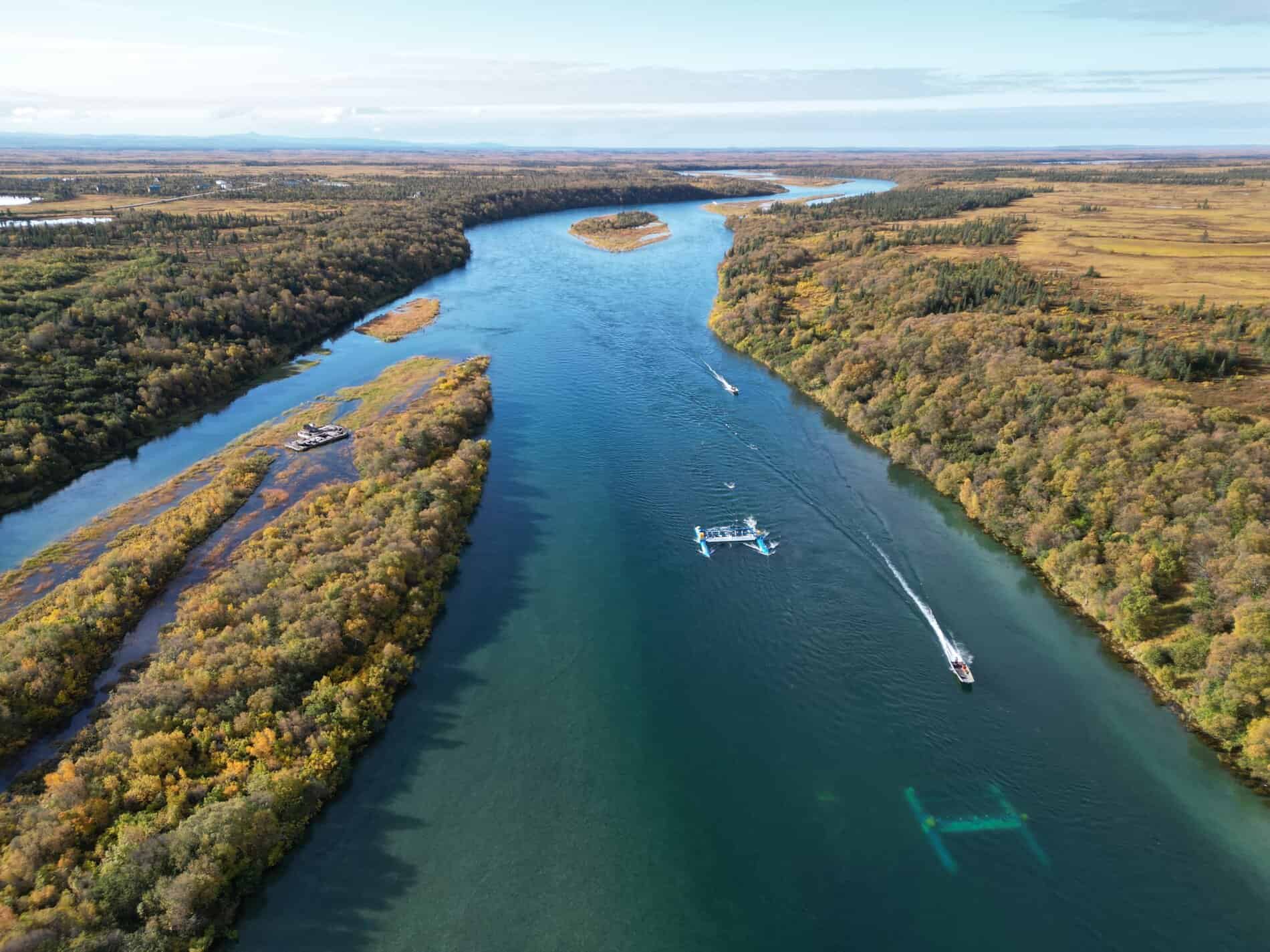
ORPC RivGen® device operating, a second on river surface. (Photo Credit – Igiugig Village Council)
WHAT COMES NEXT?
After years of largely flat electricity demand, the rapid electrification of transportation, heating, and industry—combined with the explosive growth of data centers—is driving a significant surge in load across North America. As utilities and grid operators look for dependable resources to meet this rising need, marine energy offers a uniquely predictable, reliable, and secure generation profile.
With costs approaching commercially competitive levels, the sector is hitting an important inflection point. Continued outreach and education will be essential to ensure that communities, regulators, and developers fully recognize marine energy’s role as a viable, complementary addition to the nation’s renewable energy mix.
For updates on ORPC’s latest projects, sign up for its newsletter here.