
 Back to All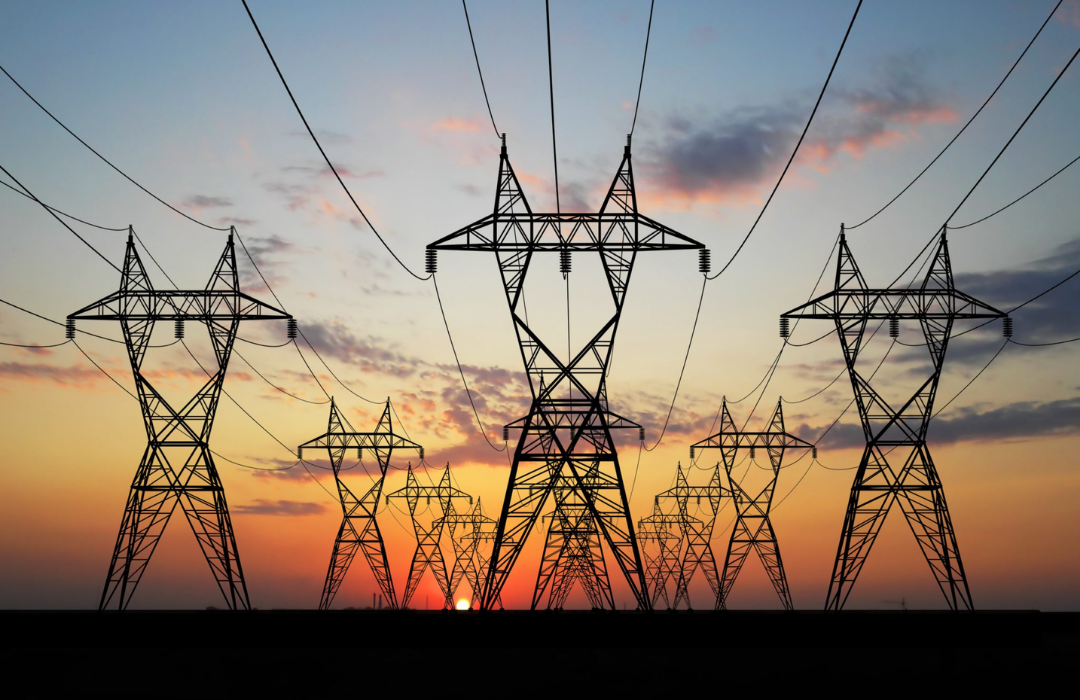
In May, the North American Electric Reliability Corporation (NERC) issued a Level 3 Essential Action Alert, only the third in its history, in response to the grid reliability risks posed by large computational loads such as A.I. data centers and cryptocurrency mining facilities.
These loads are highly sensitive and can shift demand suddenly or go offline entirely without any notice to grid operators. The slightest change in internal conditions, such as minor voltage fluctuations, may cause an entire cluster of computers to cease power consumption altogether, pulling gigawatts of demand from the system. This is very destabilizing to the grid and has real consequences for those interconnected to it, including hydropower assets.
In June, the Federal Energy Regulatory Commission (FERC) echoed the need for reliable and equitable large load interconnection by issuing six show-cause orders to the regulated Independent System Operators (ISOs) and Regional Transmission Organizations (RTOs).
These individually tailored orders direct the RTOs and ISOs to either defend their existing tariffs or propose revisions under Section 205, so that large load interconnection occurs under terms that are just, reasonable, and not unduly discriminatory.
While every order is different, all balance the same tension between speed to power and protecting existing customers from the costs and reliability risks of rapid load growth.
Both actions respond to the same underlying shift, in which electricity demand is climbing sharply and the loads driving that growth behave in ways the grid was not built to anticipate. For the hydropower industry, the question that follows is narrower: hydropower is already absorbing much of this volatility for free. Is anyone going to pay for it?
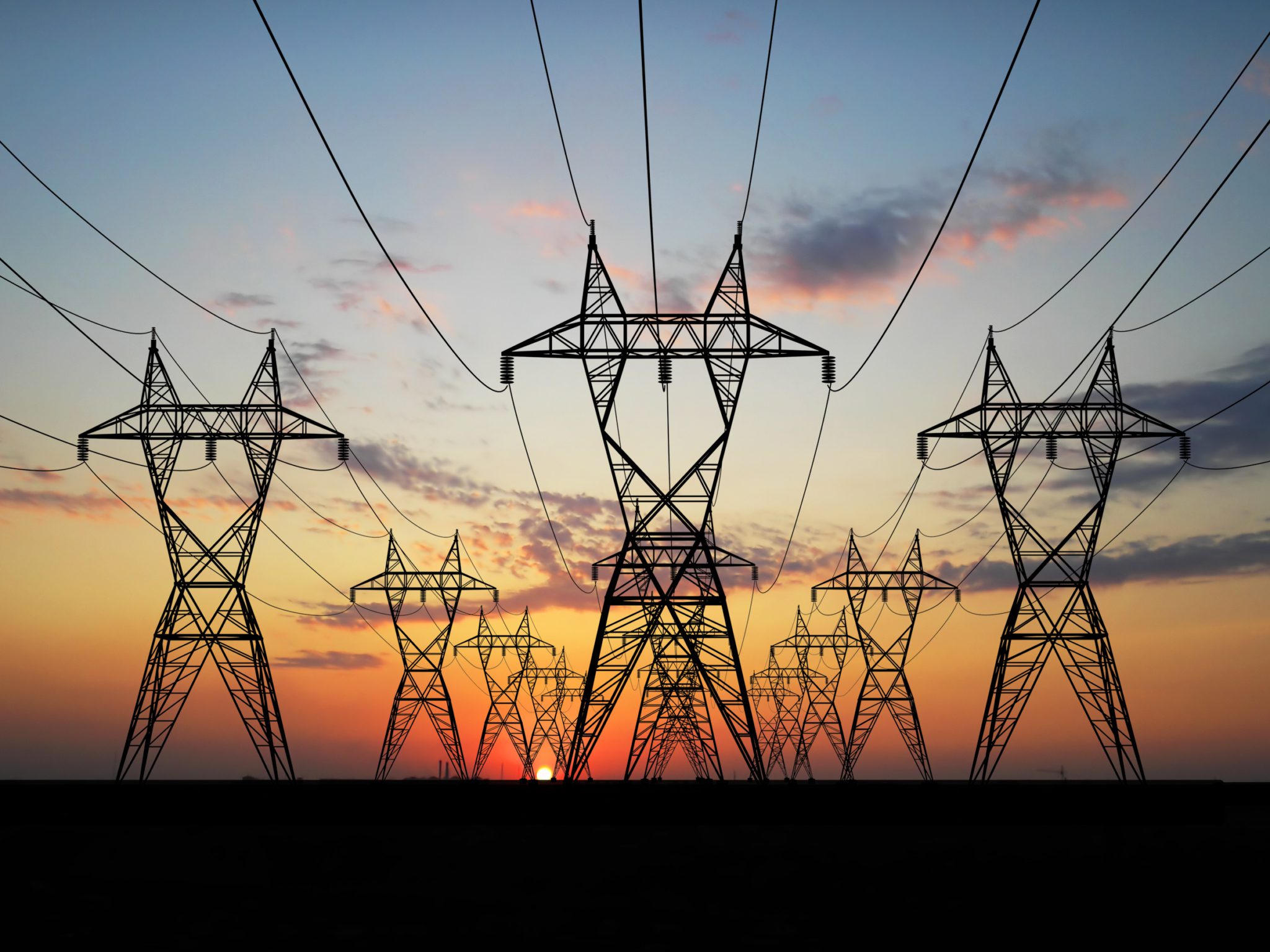
Transmission lines at sunset. (Photo Credit – Wikimedia)
WHAT HYDROPOWER IS ALREADY PROVIDING
When large loads suddenly turn off, it causes rapid fluctuations in grid voltage and frequency. These whipsaws, if not properly arrested and returned to normalcy, can impair the movement of electricity through the transmission system and cause regional load shedding.
Historically, this control has been provided by large synchronous generators like hydropower. Hydro delivers inertia inherently, whenever it is online and spinning, with no controls to arm, no state of charge to manage, and no headroom to reserve. It is a physical property of the fleet, not a scheduled service.
System inertia is a measure of the total kinetic energy stored in the spinning masses of all the turbines in an interconnected system. When a generation resource trips offline, causing frequency to dip, or a large load suddenly disconnects, causing frequency to jump, kinetic energy is instantaneously converted into electrical energy, providing a burst of power and reducing the rate of change of frequency (RoCoF).
NERC’s own risk assessments depend on the existence of generators like hydropower. In its March 2026 gaps white paper, NERC judged the likelihood of frequency instability in the Eastern and Western Interconnections to be low, resting that finding partly on the very large amount of online inertia historically available at all times of the year. Its explanation for why large-load risk stays low in Québec is more direct still: a predominantly hydroelectric fleet supplying substantial natural inertia and frequency regulation. The assumption is doing real work in the reliability case. It is also entirely unpriced.
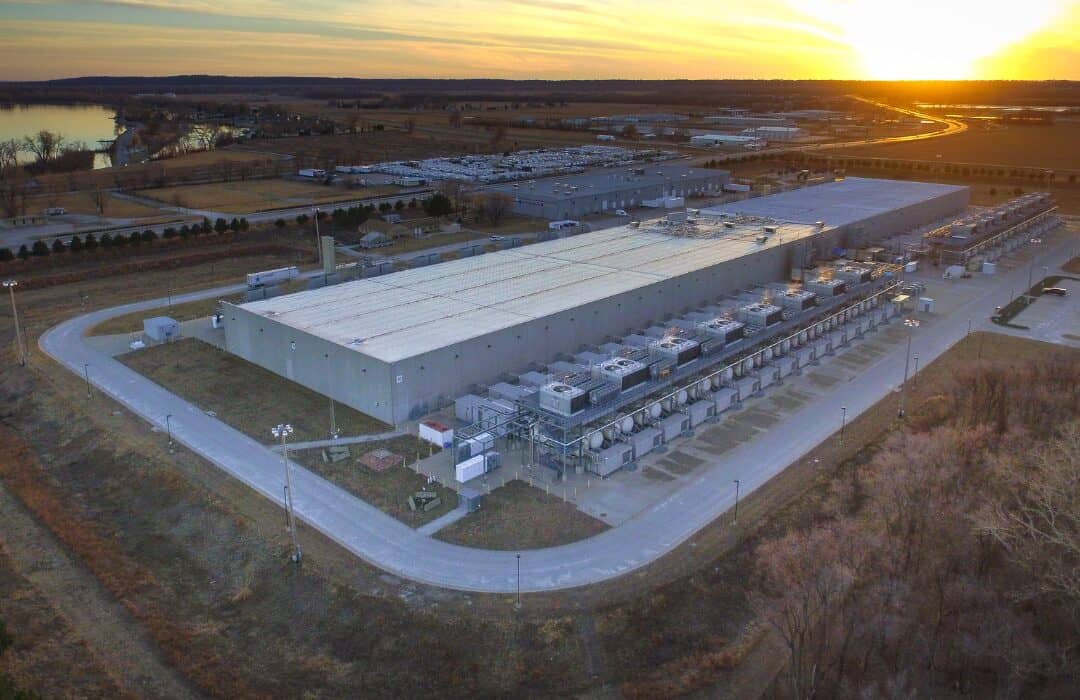
Google Data Center in Council Bluffs, Iowa. (Photo Credit – Chad Davis / Wikimedia)
MANDATORY FOR GENERATORS, VOLUNTARY FOR THE LOADS
Now set the physics aside for a moment and look at the obligations.
Frequency response from hydropower and other synchronous generators is measured event by event under BAL-003. Ride-through is already required under NERC standards PRC-024 and PRC-029. Now, with the Level 3 Alert, operators are being told to assess withstand capability for high RoCoF and over frequency during load-loss events as well. Compensation for inertia and the duty attached to it is zero.
For the loads driving the problem, the Level 3 Alert creates no mandatory obligation and carries no penalties for failure to implement. Ride-through, ramp limits, GPU smoothing, and rack-level storage are recommended, not required. Enforceable standards arrive in 2027 at the earliest and would apply prospectively at best, leaving no obligation to retrofit the tens of gigawatts already interconnected.
That asymmetry is a cost-causation problem in its classic form. One party’s behavior imposes a measurable, mandatory duty on another, and the tariff has no mechanism to recognize it.
The obvious answer is to build a mechanism. That raises the harder question: what is the service worth? Until recently, no one had a defensible answer. Two markets have since been forced to produce one, from opposite starting positions. ERCOT ran short of synchronous inertia and had to price a replacement. CAISO still has its synchronous fleet and is watching access to it thin out, hour by hour. Between them, we may find an answer.
ERCOT: WHAT IT COSTS TO REPLACE INTERTIA
Because the Texas grid operates as a standalone interconnection, its spinning mass is limited to what is online inside ERCOT, with no inertial contribution from the Eastern or Western Interconnections. Growing inverter-based resource penetration has steadily reduced that pool further, leaving ERCOT with the lowest system inertia of any major U.S. market. At the same time, NERC has logged 26 cryptocurrency ride-through events there above 100 MW. The region running closest to its inertia floor is the same one absorbing the most large-load volatility.
ERCOT’s low inertia and computational load volatility required the system operator to create a new market product. Fast frequency response (FFR), implemented in 2020 as a subtype of the Responsive Reserve Service (RRS), pays qualified resources like batteries to inject power quickly and correct initial frequency deviations. In the following seconds, synchronous generators proportionally increase output and arrest it, a process operators call primary frequency response (PFR). Together, BESS and synchronous generators act as complementary technologies.
Notably, ERCOT caps FFR’s contribution at 450 MW and sets a floor on RRS supplied by primary frequency response, an acknowledgment that the two are complements rather than substitutes. In 2023, ERCOT concluded that it should invest in synchronous condensers, which were found to be more reliable and predictable than resources like batteries whose response depends on control system programming alone. NERC makes a similar point in its own assessments.
This was the hybrid solution that Texas arrived at, and it is worth reading closely. Facing a shortage of synchronous inertia, ERCOT did not create a way to pay for it. It created a product for a partial substitute, capped that product’s contribution, and then studied buying hardware to supply the rest. Batteries earn revenue for fast injection. Synchronous condensers can be built and recovered as transmission assets. The one thing that remains unpriced is the inertia already on the system.
That is one way to solve the problem, and it is expensive. Fortunately, other parts of the U.S. already have synchronous generation. This presents an opportunity for a different, more sensible path forward.
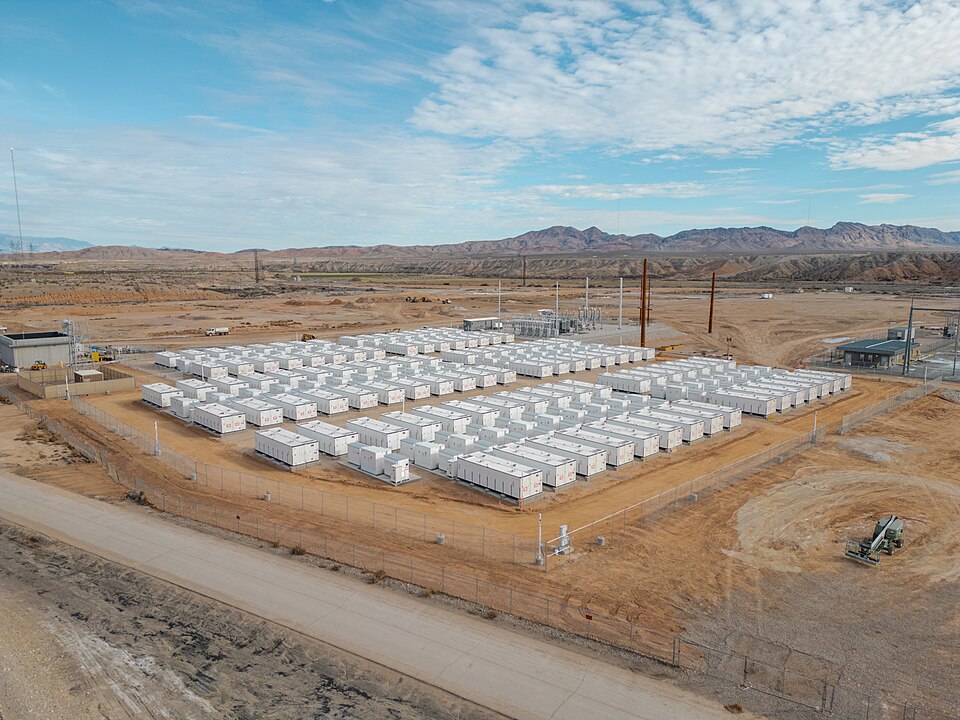
The Reid Gardner Battery Energy Storage project near Moapa, Nevada. (Photo Credit – Sig. Chiocciola / Wikimedia)
CAISO: WHAT IT COSTS TO KEEP IT
The Western Interconnection still has its synchronous fleet, including hydropower.
CAISO’s problem is not an absence of spinning mass but the prospect of losing access to it, hour by hour, as inverter-based output displaces synchronous output through the middle of the day. ERCOT had to build what it lacked. CAISO can still choose to pay for what it has before scarcity sets in and large computational loads add even more pressure to the system.
Until recently there was no rigorous way to price any of this. That is changing. At the request of a hydropower industry group that includes NHA, the Department of Energy directed Argonne and Oak Ridge National Laboratories, working with the University of Tennessee Knoxville, to develop valuation methods for services that markets do not currently pay for. Inertia is one of them. The ORNL and UT Knoxville team presented interim results to NHA’s Market Design Committee in July.
The approach estimates how much inertia a system needs using NERC critical inertia, then stacks available resources by what each gives up to supply it. Under average conditions the resulting price is near zero, because synchronous machines already online give up nothing.
But average conditions are not the binding case. In CAISO in 2024, inertia demand ran to roughly 66 GW·s while synchronous generators and condensers supplied 58.4 GW·s. Batteries closed the gap and set the price at $374 per GW·s. Every synchronous machine online in those hours supplied inertia and received nothing for it.
What that figure establishes is a ceiling. Replacement has a price, that price is already being paid, and whatever it would cost to retain the synchronous fleet is less than the cost of rebuilding its function.
Now add the data center and cryptocurrency loads. Everything in the CAISO case describes a supply side that is thinning. The demand side is about to move as well. The research finds that low inertia conditions are more likely in ERCOT and WECC than in the Eastern Interconnection. These are the same regions absorbing the fastest growth in large computational loads. The disturbances those loads produce are the ones inertia is doing the most to absorb, and the ones no adequacy standard yet accounts for.
This is why the timing matters. ERCOT priced its answer after it ran out of options. CAISO, and the rest of the country behind it, still has the fleet on the system and the ability to decide what keeping it is worth. That decision is being made now, in tariffs written for a demand profile that no longer exists, in proceedings already open at FERC. It will not be made twice.
PAY FOR THE PRODUCT, BILL THE CAUSE
So, what should the hydropower industry do about it?
NHA’s position rests on two halves, and neither carries the argument alone. Cost causation establishes the urgency and identifies who pays. Scarcity establishes the price.
Pay for the product means compensating for the availability of physical inertia and sustained frequency response, valued by what it displaces as it becomes scarce. This is a scarcity argument rather than a damage claim, and the distinction is deliberate. It does not require asserting that inertial response itself wears out hydropower machines. Operators and turbine manufacturers largely agree that it does not. Wear follows active, repetitive control duty, meaning governor motion, cycling, and runner-blade actuation, rather than the spinning itself. Where a contracted service demands that kind of repeated active response, duty-based compensation belongs on top of the availability payment.
Bill the cause means allocating those costs to the large loads driving minimum-inertia requirements, rather than spreading them across ratepayers who did not create the need. FERC settled the obligation side of primary frequency response in 2018, in a world where gigawatt-scale loads did not disconnect in a quarter second. That world is gone. The changed circumstance is documented in NERC’s own publications, and NERC cannot set a price.
WHAT COMES NEXT?
Three vehicles are open, and they are not interchangeable.
NERC’s large loads standards work sets the technical predicate but cannot deliver compensation, because NERC does not run markets. Members’ standards teams carry that ballot. NHA monitors it for two things: generator-side compliance obligations drafted without hydropower in the room, and any language that forecloses a market solution at FERC.
FERC’s show cause proceeding on RTO large load tariffs is where cost allocation gets decided. RTO and ISO responses are on the docket now, and responsive comments are the most consequential filing opportunity of the year. Per-RTO sub-dockets, once noticed, carry short intervention clocks.
A FERC technical conference on compensating inertia and sustained frequency response is where the full case lands. NHA is currently asking for member sponsors to help support FERC staff engagement. When NERC’s standards work reaches FERC, the docket opens.
The record is what has changed. Hydropower’s spinning mass is holding up assumptions that reliability planners make in writing and that no tariff reflects. The industry’s task is to get that value recognized before the question is settled by default.
NHA members interested in supporting this effort, or in contributing event-response and operating data to the record, should contact Connor Nelson and join the NHA Markets Design Committee.