



 Back to All
Sponsored Content
Reservoir operations have never been simple. Every day, operators make decisions that influence flood risk, hydropower generation, water supply reliability, environmental resources, recreation, and downstream communities. A release that benefits one objective may create challenges for another. Store too much water, and flood storage may be compromised. Release too much, and water supply, generation, or environmental targets may suffer.
For decades, reservoir managers have relied on established operating rules, engineering judgment, and historical hydrology to guide these decisions. Today, however, the complexity of water management is increasing. Climate variability, changing watershed conditions, evolving environmental requirements, aging infrastructure, and heightened stakeholder expectations are creating new pressures on reservoir systems across North America.
In this environment, reservoir operations modeling has emerged as one of the most valuable tools available to water resource managers and hydropower operators.
A Virtual Testing Ground for Real-World Decisions
At its core, reservoir operations modeling creates a virtual representation of a reservoir, or an entire system of reservoirs, that allows operators to test strategies before implementing them in the real world.
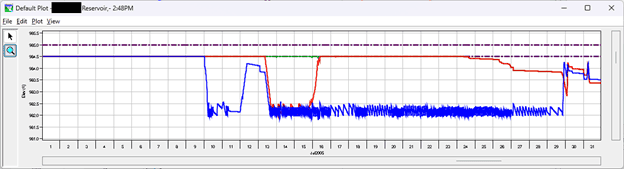
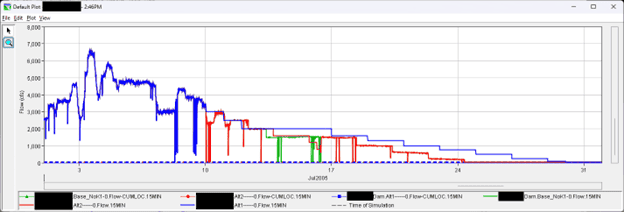
Using simulation platforms such as HEC-ResSim, engineers can evaluate how reservoirs respond to varying inflows, operating rules, demands, and constraints over time. The model translates these inputs into projected reservoir elevations, releases, flows, and system performance metrics.
The concept is straightforward: create a digital environment where operational decisions can be explored without real-world consequences.
Rather than stress testing operational changes in real-time, operators can ask the question “What happens if we make this change?” beforehand and evaluate potential outcomes under hundreds or even thousands of scenarios.
This ability to test decisions before acting reduces uncertainty and improves confidence in operational planning.
The Growing Challenge of Competing Objectives
Most reservoirs serve multiple purposes simultaneously. Hydropower projects, in particular, often operate at the intersection of numerous, and sometimes conflicting, priorities.
Common objectives may include:
- Flood risk management
- Hydropower generation
- Municipal and industrial water supply
- Irrigation demands
- Fish and wildlife protection
- Recreation
- Water quality management
Each objective carries its own operational requirements.
Consider a reservoir entering spring runoff season. Operators may want to maintain available storage capacity for potential flood events. At the same time, hydropower operators may seek to maximize generation opportunities, while environmental stakeholders may require specific flow conditions to support fish migration or spawning.
These competing demands create a balancing act that cannot always be resolved through simple operating rules.
Reservoir operations modeling helps decision-makers understand the tradeoffs involved and quantify the consequences of different operational approaches.
Instead of debating assumptions, stakeholders can evaluate defensible data.
Answering the Questions That Matter Most
Many of the most important operational decisions revolve around a surprisingly simple set of questions:
- Should inflow be stored or passed downstream?
- Is it better to preserve water for future demand or maintain flood storage capacity?
- Should reservoir levels be maintained, raised, or drawn down?
- Which outlet structures should be used?
- Which reservoir in a system should provide releases?
- How should releases be coordinated across multiple facilities?
While these questions appear straightforward, the answers often depend on rapidly changing hydrologic conditions and system constraints.
Reservoir operations modeling provides a structured framework for evaluating these decisions under both routine and extreme conditions. Operators can explore how systems perform during droughts, major storm events, changing demand patterns, infrastructure outages, emergency actions, or modified operating rules.
The result is a more informed understanding of system behavior and a stronger basis for decision-making.
Planning for an Uncertain Future
One of the most powerful applications of reservoir operations modeling is scenario analysis.
Historically, reservoir management often relied heavily on past hydrologic conditions. Increasingly, however, operators must plan for futures that may not resemble the past.
Modeling allows organizations to evaluate questions such as:
- How would operations perform during an extended drought?
- What are the impacts of more frequent extreme precipitation events?
- How would additional water withdrawals affect system reliability?
- What happens if environmental flow requirements change?
- How would storage reallocation affect project objectives?
These analyses help organizations identify vulnerabilities before they become operational challenges.
In many cases, the greatest value of modeling is not finding a single optimal answer, it is understanding the range of possible outcomes and preparing for uncertainty.
From Simple Rules to Complex Systems
Reservoir modeling capabilities have evolved significantly over the past several decades.
Early applications focused primarily on straightforward rule-based operations. Modern modeling environments can now represent highly complex systems involving multiple reservoirs, interconnected operating rules, hydropower scheduling considerations, environmental constraints, and custom scripting.
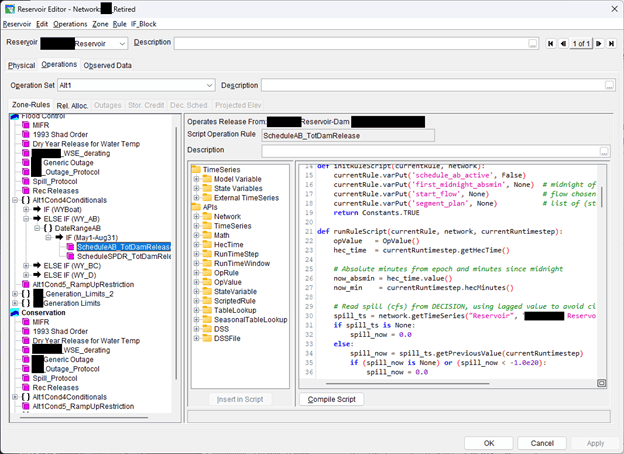
This flexibility allows models to scale from relatively simple projects to large, multi-reservoir systems spanning entire watersheds.
The sophistication of today’s tools means that operators are no longer limited to evaluating isolated decisions. Instead, they can examine how changes in one part of a system affect performance throughout the entire network.
For hydropower operators, this system-wide perspective can be particularly valuable when balancing generation objectives with regulatory requirements and environmental commitments.
Turning Data Into Better Decisions
Technology alone does not solve operational challenges.
The real value of reservoir operations modeling lies in its ability to convert complex hydrologic and operational data into actionable information.
The most effective modeling efforts combine technical rigor with practical operational understanding. Successful models account not only for hydrology and infrastructure constraints but also for regulatory requirements, stakeholder expectations, and the realities of day-to-day reservoir management.
Equally important is the ability to communicate results clearly. Decision-makers, regulators, resource agencies, and community stakeholders often need to understand the implications of operational alternatives without becoming experts in the underlying model.
When done well, reservoir operations modeling becomes more than a technical exercise. It becomes a decision-support framework that builds confidence, improves transparency, and helps organizations navigate increasingly complex water management challenges.
The Future of Reservoir Operations
As water management challenges continue to evolve, reservoir operations modeling will play an increasingly important role in supporting resilient, adaptive management strategies.
The ability to evaluate alternatives, quantify tradeoffs, and understand system performance before making operational changes provides a significant advantage in a world characterized by uncertainty.
For hydropower operators and water resource managers alike, the question is no longer whether modeling can support better decisions. The question is how organizations can best leverage these tools to balance competing objectives while maintaining reliability, sustainability, and operational flexibility.
In an era where every drop of water may serve multiple purposes, the ability to understand the consequences of operational decisions before they are made may be one of the most valuable resources of all.
To learn more visit us on the web at kleinschmidtgroup.com or reach out to Chris Goodell directly at [email protected].

