
 Back to All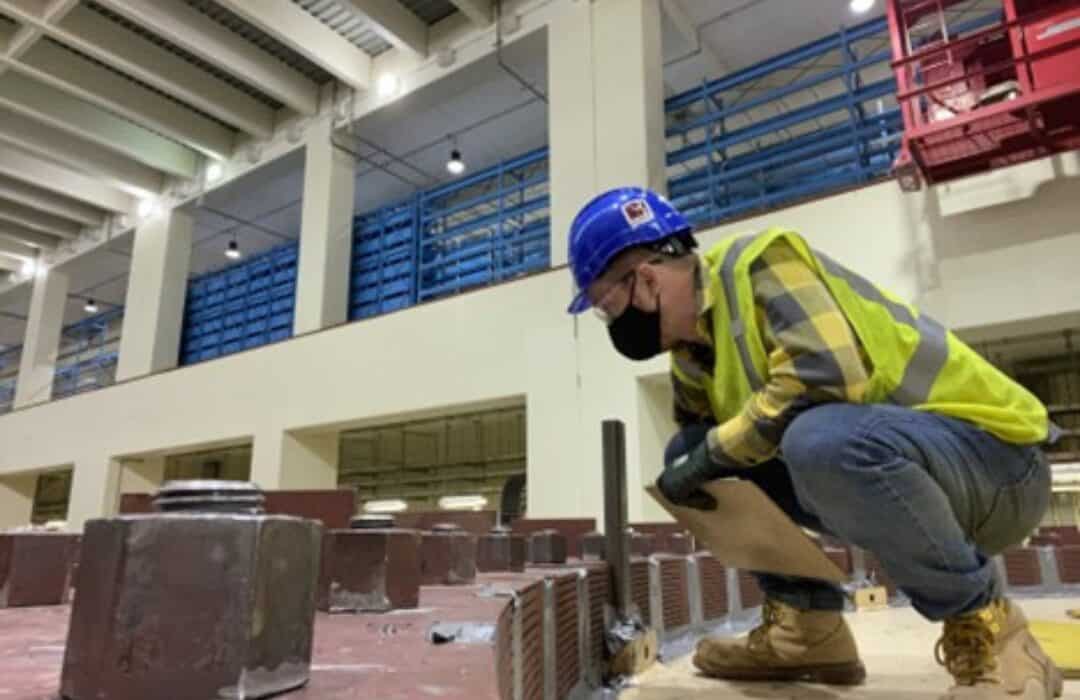
This article is part of a series titled “Shaping the Current: A Spotlight on Hydropower’s Future Leaders,” that aims to highlight voices of emerging leaders in hydropower.
Sam Doyle didn’t set out to build a career in hydropower, but what started as an unexpected opportunity quickly turned into work he genuinely cares about, fueled by curiosity, grit, and a love of solving tough problems. After earning his mechanical engineering degree at Iowa State University, he went from inspecting turbine components in Europe to helping move pumped storage projects forward across the U.S.
Today, as Deputy Turbine Team Lead at Stantec, he’s helping strengthen grid reliability and move renewable energy projects forward one megawatt at a time.
This interview is part of an ongoing spotlight series highlighting early-career professionals shaping the future of hydropower. The series aims to elevate emerging leaders within the industry and to amplify their voices. It intends to give students and early-career professionals a clearer picture of the breadth and depth of opportunities in hydropower — from engineering and environmental science to grid operations, project management, regulatory affairs, and beyond.

POWERHOUSE: Tell us about yourself, your education, and what brought you to the hydropower industry.
Sam: I graduated from Iowa State University with a mechanical engineering degree. During school, I had internships in mechanical piping and worked closely with a pipefitter for about two years. I also became a certified welder through the National Institute of Metalworking Skills while I was still in high school.
When I graduated, I didn’t know much about hydropower. I thought renewable energy meant solar panels and wind turbines. I applied on Stantec’s website, interviewed shortly after they had acquired MWH (formerly Harza), and was hired in 2019. Honestly, I lucked into the industry, but once I learned about hydropower, I realized how impactful and clean it is, not just environmentally, but also in terms of working conditions compared to coal or gas.
Hydropower wasn’t something I had planned on, but it quickly became something I truly valued.
POWERHOUSE: What is your current role?
Sam Doyle: I’m the Deputy Turbine Team Lead in Stantec’s Chicago office. I’m also a mechanical engineer and classified internally as an associate. At the end of the day, I’m an engineer focused on solving problems. I specialize in turbines—understanding how they’re designed, how they function, and how to optimize them for our clients’ goals. That might mean maximizing megawatts, supporting grid stability, or meeting economic targets.
What was the biggest obstacle in entering the field?
Sam Doyle: There’s no handbook for hydropower. Every project is essentially a case study. You can know fluid mechanics, manufacturing, or CFD, but hydropower projects are influenced by unique site conditions, environmental constraints (like fish passage or zebra mussels), economic models, regulatory factors, and grid needs. I’ve worked with economists, biologists, welders, iron workers, executives, and more. The learning curve is steep because the industry is multidisciplinary. You get what you make of this industry.
POWERHOUSE: Has anything surprised you about the industry?
Sam Doyle: How interconnected everything is. On the turbine side, I need to understand the mechanical details. But I also have to consider economics—how clients make money, renewable energy credits, grid services like reactive power and inertia. You quickly realize hydropower isn’t just engineering—it’s business, environmental science, and grid operations all combined.
POWERHOUSE: You mentioned travel. Where has your career taken you?
Sam Doyle: I’ve traveled domestically to states like Oklahoma, Alabama, Tennessee, Georgia, New York, and Massachusetts. Internationally, I’ve inspected turbine components in Spain and recently attended a model test in the Czech Republic. That was especially rewarding because I’ve followed that project from its early conceptual phase in 2021 to seeing the model turbine physically spinning five years later.
One trip I missed—but still hope to make—is to the Hoover Dam. I was supposed to present there in 2020, but COVID moved it virtual. That’s still on my bucket list as a hydropower engineer.
POWERHOUSE: What’s been most helpful for your success?
Sam Doyle: Being a self-starter and staying curious. I don’t aim to be the smartest person in the room, I want to be the person listening, learning, and asking questions. I see myself as the “kid in the mailroom” who worked his way up.
Grit matters. Asking questions matters. Wanting to understand the “why” behind something matters.
POWERHOUSE: How does your work contribute to the broader goals of hydropower?
Sam Doyle: Pumped storage. At Stantec, we’ve historically been leaders in hydropower, and I’ve become something of a “librarian” for our pumped storage experience. Pumped storage is essentially a water battery. Everyone talks about batteries, but the best large-scale battery is water. My goal is to help move projects forward, even if that means shaving two weeks off a timeline. These projects take years to build, so incremental progress matters.
It’s about adding clean megawatts to the grid and strengthening grid reliability.
POWERHOUSE: Why is hydropower so important for the future of energy?
Sam Doyle: Inertia. Inertia is important for balancing the grid. Hydropower has inertia. Solar and wind are critical, but they don’t provide inertia in the same way. Hydropower can respond instantly to fluctuations in demand. It provides reactive power, spinning reserve, and grid stability. That flexibility is essential as we integrate more renewables.
There’s also something historic about hydropower in America. Think about the role projects like the Hoover Dam played during the Great Depression. Hydropower has always been foundational, and now it’s being repurposed for modern grid needs.
POWERHOUSE: Can you share a memorable career moment?
Sam Doyle: One difficult lesson was being part of a small hydropower project that ultimately didn’t get completed. I followed it from start to near-finish, and it never came online. That was tough, but it reinforced my commitment to seeing projects through successfully.
On the positive side, I’ve worked closely with the Grand River Dam Authority on the Salina Pumped Storage project. I’ve been involved since early discussions in 2021, and now turbines are being designed and tested. It’s rewarding to see something evolve from concept to physical reality, and to feel trusted to contribute meaningfully even with fewer years of experience.
POWERHOUSE: How important has mentorship been in your career?
Sam Doyle: My mentor, Ron Israelsen, made me love what we do. He was patient, supportive, and always available. He didn’t just teach technical knowledge, but he also modeled integrity and commitment to doing things the right way. He gave me confidence. I wouldn’t be where I am without him.
POWERHOUSE: What’s a fun fact about hydropower?
Sam Doyle:
The “Duck Curve.” The Duck Curve describes how electricity demand fluctuates throughout the day: high in the morning and evening, lower midday when solar production peaks. It literally looks like a duck. Pumped storage helps “follow the duck,” filling in gaps and balancing the grid when demand spikes.
As hydropower adapts to a changing energy landscape, it’s clear the future is in good hands. Sam’s story is a reminder that there’s no single path into this industry — just a willingness to stay curious, work hard, and keep asking questions. For students and early-career professionals wondering where they might fit, hydropower is full of opportunities to make a real impact.
To learn more about NHA’s early-career professional network, Future Leaders of Waterpower (FLOW), click here.