

 Back to All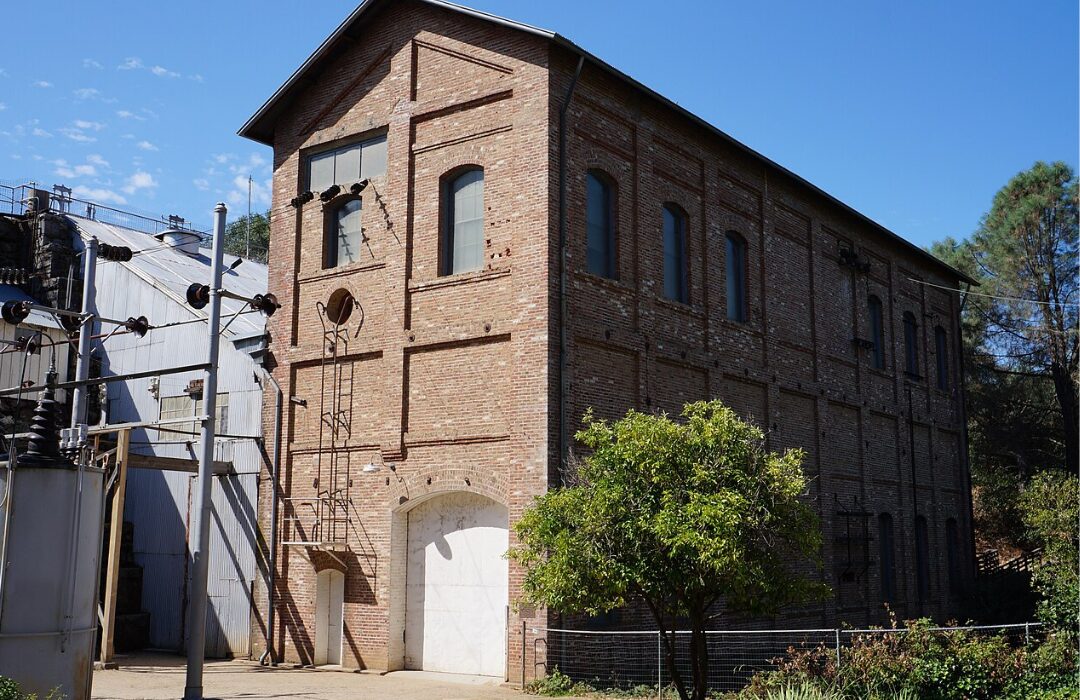
*Editor’s Note: This article was written by an Interpretative Park Aide from the California State Parks and all photos are credited to California State Parks.
With the water power industry focused on the future, the industry benefits from the importance of looking to the past to appreciate the efforts it took to achieve the technological and electrical advances we have today.
The Folsom Powerhouse State Historic Park in California provides a perfect place to learn about the origins of electricity, hydropower, and how these technologies transformed Sacramento and the world.
Located 22 miles from its substation in Sacramento, the Folsom Powerhouse is nestled along the beautiful shores of Lake Natoma, originally the American River, before operation of the Nimbus and Folsom Dams began in 1955.
Generating electricity from 1895 to 1952, the Folsom Powerhouse energized Sacramento throughout two world wars and still retains most of its original equipment. This powerhouse was built and operated by the Sacramento Electric Power and Light Company, which later became part of the Pacific Gas and Electric System (PG&E) in 1905. It was shut down in 1952 due to construction of the New Folsom Dam and was donated by PG&E to the State of California Park system in 1958.
The Folsom Powerhouse gives visitors the chance to look back at one of the earliest powerplants in the U.S., a testbed for electrification in the modern era.
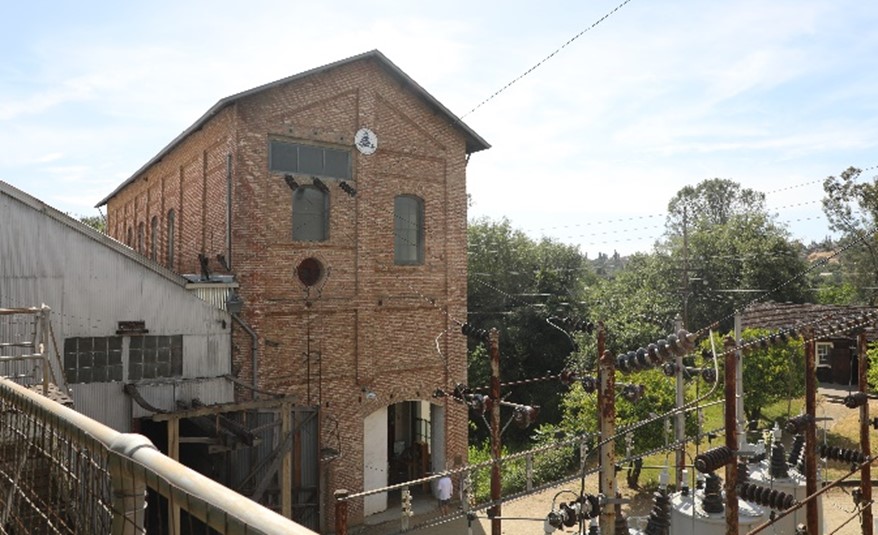
View of the Folsom Powerhouse from above.
A BRIEF TOUR OF THE FOLSOM POWERHOUSE
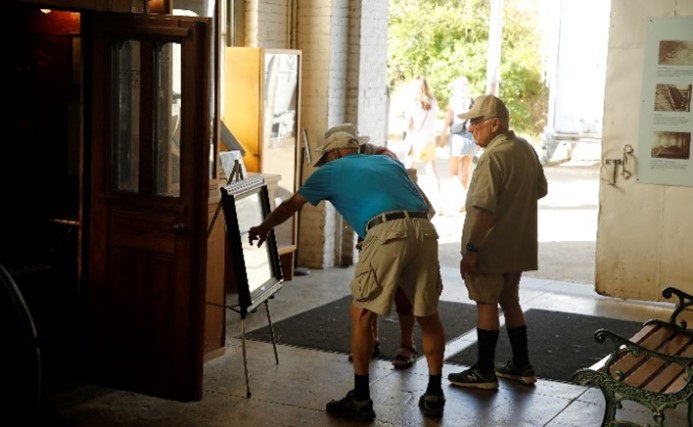
Docent giving a tour at the Powerhouse entrance.
At the Folsom Powerhouse, visitors have the option to take a guided tour or set up a group tour in advance. Guided tours are a great introduction to the history of ingenuity that this place holds, with our docents leading tours of the facility five days per week.
Pre-arranged tours dive into much more detail, and they are often led by our docents, who have a background in electrical engineering and hydropower. If these tours aren’t your speed, you can also take a self-guided tour of the park at your own pace.
Here is a brief look at what a group would be able to see along a tour of this historic powerhouse:
As the tour begins, the docent will delve into the history of the Folsom area prior to the building of the Powerhouse, including the California Gold Rush and the plans of the Livermore family to bring power to Folsom.
Visitors will see the remaining sections of the original canal that transported water two miles from the Historic Folsom Dam to the Powerhouse forebay. Built to slow and settle incoming water, the forebay still has its original hydraulic gates, which controlled the flow of water entering the penstocks.
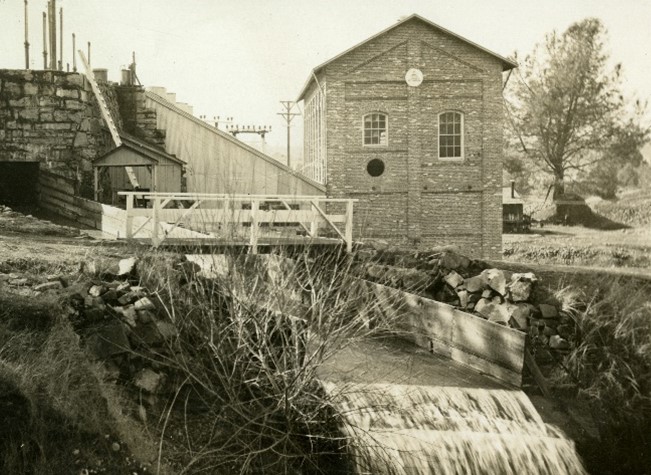
Photo of the Powerhouse in 1911.
A short trip down a hill into the park provides a beautiful view of the wildlife and plant life, which established themselves in the tailraces returning water to the American River. Here, the docent will take you by the Machine Shop and Superintendent’s Office, where equipment was repaired and Powerhouse operations were managed, respectively.
From there, a walk to the Penstock/Turbine room displays the four large 8 foot diameter Penstocks and the housings of the dual McCormick turbines, which operated with a head of 55 feet. These dual turbines are both on a single horizontal shaft on one side of the generator. This drive shaft goes through the brick wall to the next room, where each of the four generators produced 750 kW of AC at 800 volts.
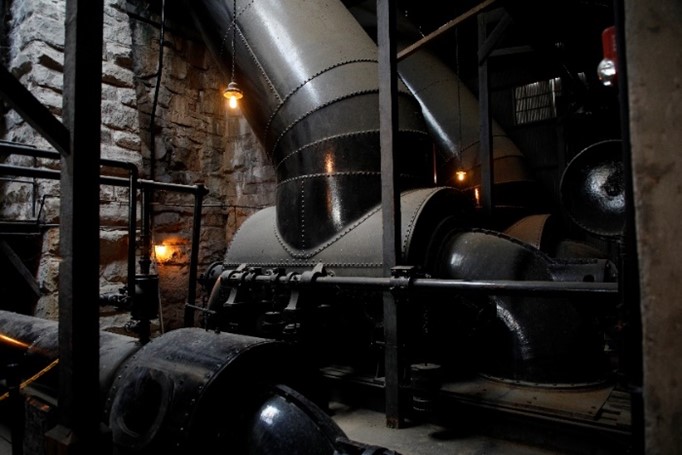
Penstocks with dual McCormick Turbines.
These four generators, constructed by the General Electric Company, are over 8 feet tall and weigh 28.5 tons. One unusual aspect of the generators is that the DC field winding is on the stator and the three phase AC power is brought out by carbon brushes from three collector rings on the rotor.
After leaving the generators, the 800 volts of AC was stepped up to 11,000 volts in the facilities’ transformers to be sent 22 miles to Sacramento with minimal line loss. On July 13, 1895, at 4 am, the first successful long-distance transmission of electricity to California’s capital was celebrated with a 100-gun salute.
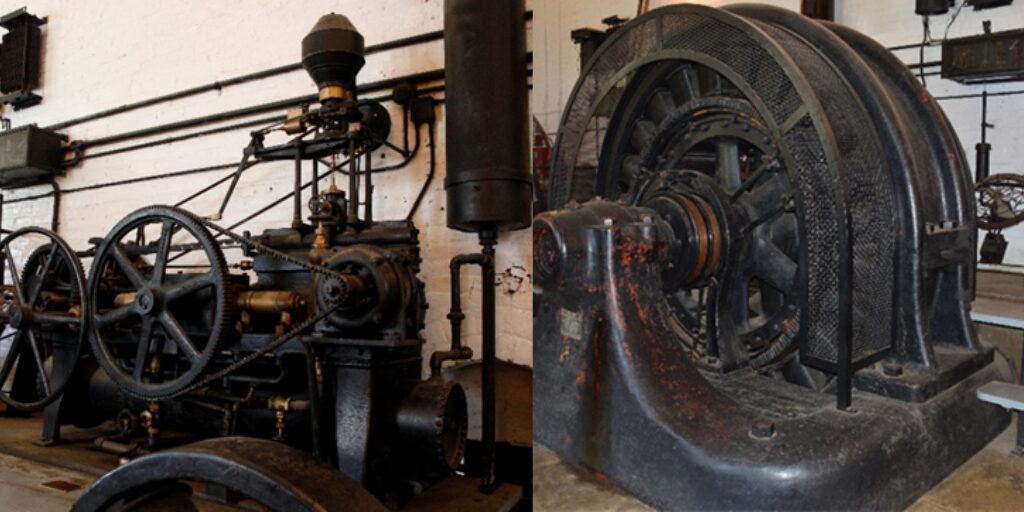
Lombard Governor and Generators.
At the end of the tour, the group may get special access to the Lower Powerhouse, which was constructed to adapt to the seasonal flow of the American River throughout the years. The Lower Powerhouse uses an unusual rope drive system to couple the turbine to the generator to avoid flooding it during high water conditions. The rope drive has been restored with 2,200 feet of 2-inch diameter continuous hemp rope that makes 26 turns around grooved drums between the turbine and generator shafts.
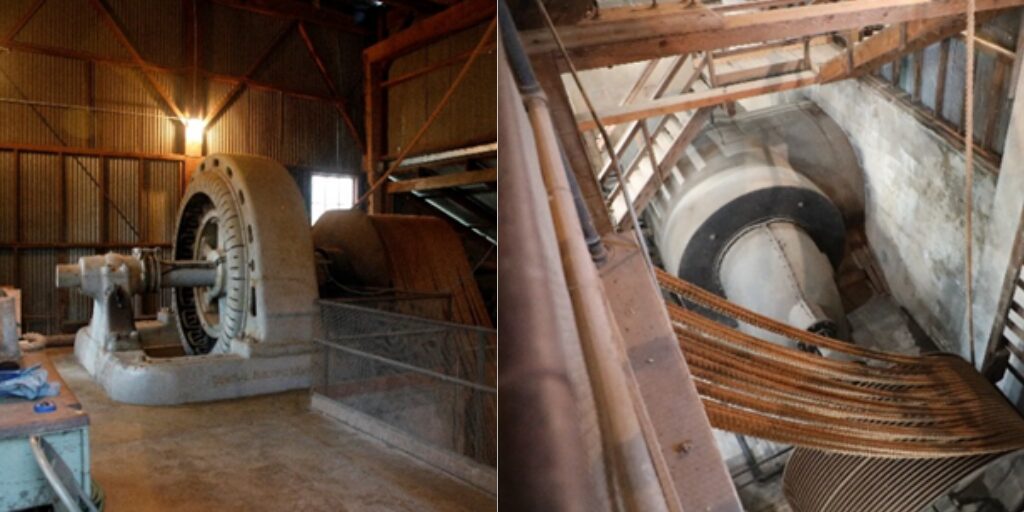
View of the rope drive in the lower powerhouse.
Initially, the Powerhouse fed electricity to streetcars, streetlights, the Southern Pacific Railyards, the largest brewery west of the Mississippi River, and other heavy industry in Sacramento via distribution from a substation, Sacramento Station A, briefly the largest in California.
Sacramento Station A fed DC circuits for arc lamps and the electric streetcar system and several different AC voltages to customers in the area. This success spurred on the construction of more hydroelectric projects throughout California, eventually bringing electricity into people’s homes and shaping the California state capital into the city it is today.
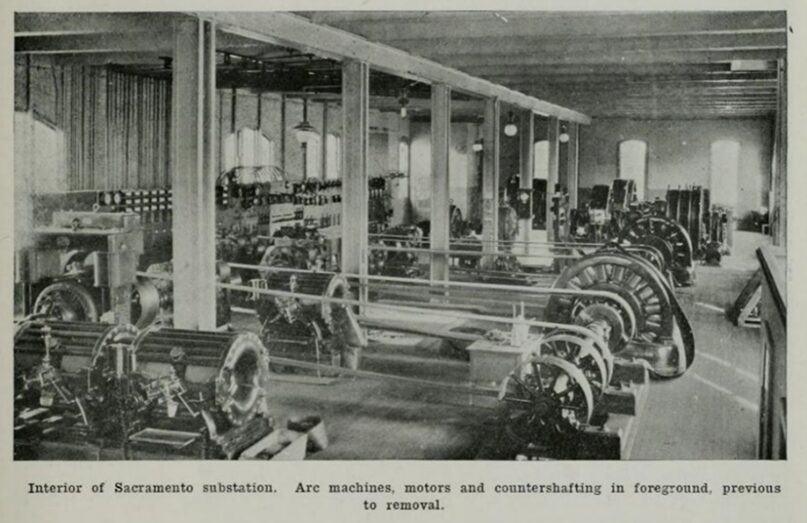
Interior of Sacramento substation.
Due to the historic significance of the Folsom Powerhouse, the site has been recognized nationally and by all the major engineering societies as an historic landmark.
FOR MORE INFORMATION
If you are in the area or happen to be visiting in or near Sacramento, come stop by the Folsom Powerhouse State Historic Park, and say “Hi!”
For more information and park hours, check out the Folsom Powerhouse State Historic Park’s website.
Pre-arranged group tours can be set up by submitting this form.
Please submit your request at least two weeks before the desired date of the tour.
Our cooperating association, Friends of the Folsom Powerhouse Association (FFPA), aids the preservation and interpretation of this State Historic Park and national landmark. Follow this link to their website for more information and upcoming events.
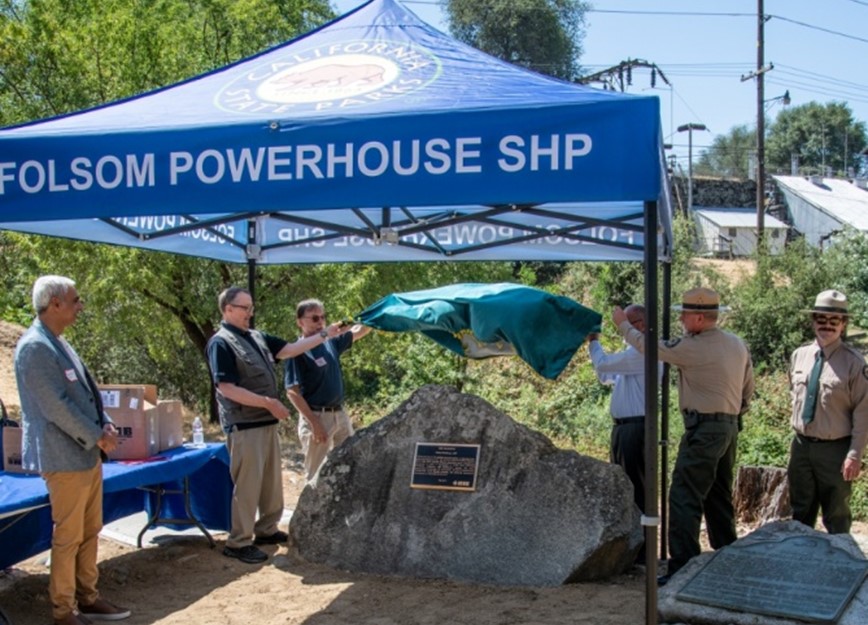
An unveiling at the Folsom Powerhouse site.

