



 Back to All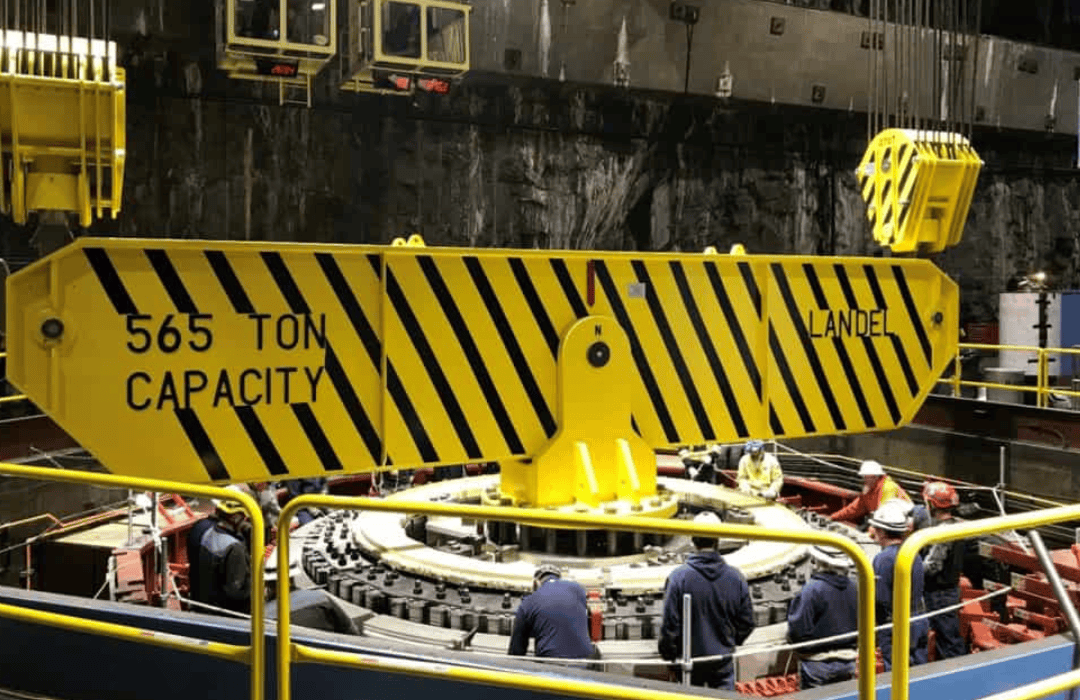
Below the Sierra Nevada Mountains, fifty miles east of Fresno, Pacific Gas and Electric’s (PG&E) Helms Pumped Storage Plant has been helping California meet peak energy demand since 1984.
At the end of 2023, PG&E filed its Helms Uprate Cost application with the California Public Utilities Commission (CPUC) to increase the generation and pumping capacity of the Helms hydroelectric facility.
This capacity increase comes at a critical time when national demand for electricity is expected to grow by 1% in 2026 and 3% in 2027, marking the first time since 2007 that power demand has risen for four years in a row (Energy Information Authority).
By increasing the capacity of Helms, PG&E is expanding the availability of renewable energy while increasing electricity reliability for its customers. With large computing centers driving the nation’s power demand, and as California’s grid becomes increasingly diversified, long-duration energy storage is a vital component in guaranteeing reliability.
Pumped storage hydropower (PSH) is uniquely suited for this growing challenge, as it provides an unmatched ability to optimize the output of existing energy technologies by converting intermittent generation into firm, dispatchable capacity without requiring additional baseload or variable resources.
California, which has some of the nation’s most ambitious energy goals, has established the Renewables Portfolio Standard (RPS) in conjunction with the CPUC, seeking to achieve 100% zero-carbon energy planning by 2045.
By undertaking the uprating project at Helms, PG&E is helping California meet its goals while ensuring that the facility can continue to serve residents for generations to come.

Helms Machine Hall (Photo Credit: Charles Bellenie of PG&E)
PROJECT HISTORY
The concept for the Helms Pumped Storage Hydroelectric Plant began more than 60 years ago, and the project’s design, permitting, and construction took place throughout the 70’s before being commissioned in 1984. Helms was initially envisioned as a complement to PG&E’s Diablo Canyon Power Plant, a 2,200-MW nuclear facility that began operation in 1985.
The rise of pumped storage hydropower in the United States mirrors the nature of this relationship, as most PSH in the nation was constructed between 1960 and 1990. This building boom occurred due to the inherent inflexibility of nuclear power, making pumped storage an ideal companion for the nightly offloading of surplus nuclear generation to meet the following day’s peak demand. (Energy Information Authority)
When Helms came online, the project represented the leading edge of pumped storage technology. Helms’ generators featured advanced water-cooled stator windings and specialized thrust bearings, while its pump-turbines ranked among the largest and highest-head machines in the world, capable of operating across an exceptionally wide range.
This relationship between Helms and Diablo Canyon, one defined by Helms’ ability to provide low-cost, reliable energy capture while converting it into dispatchable, peaking power when needed, underscores the project’s enduring value to the state’s grid.
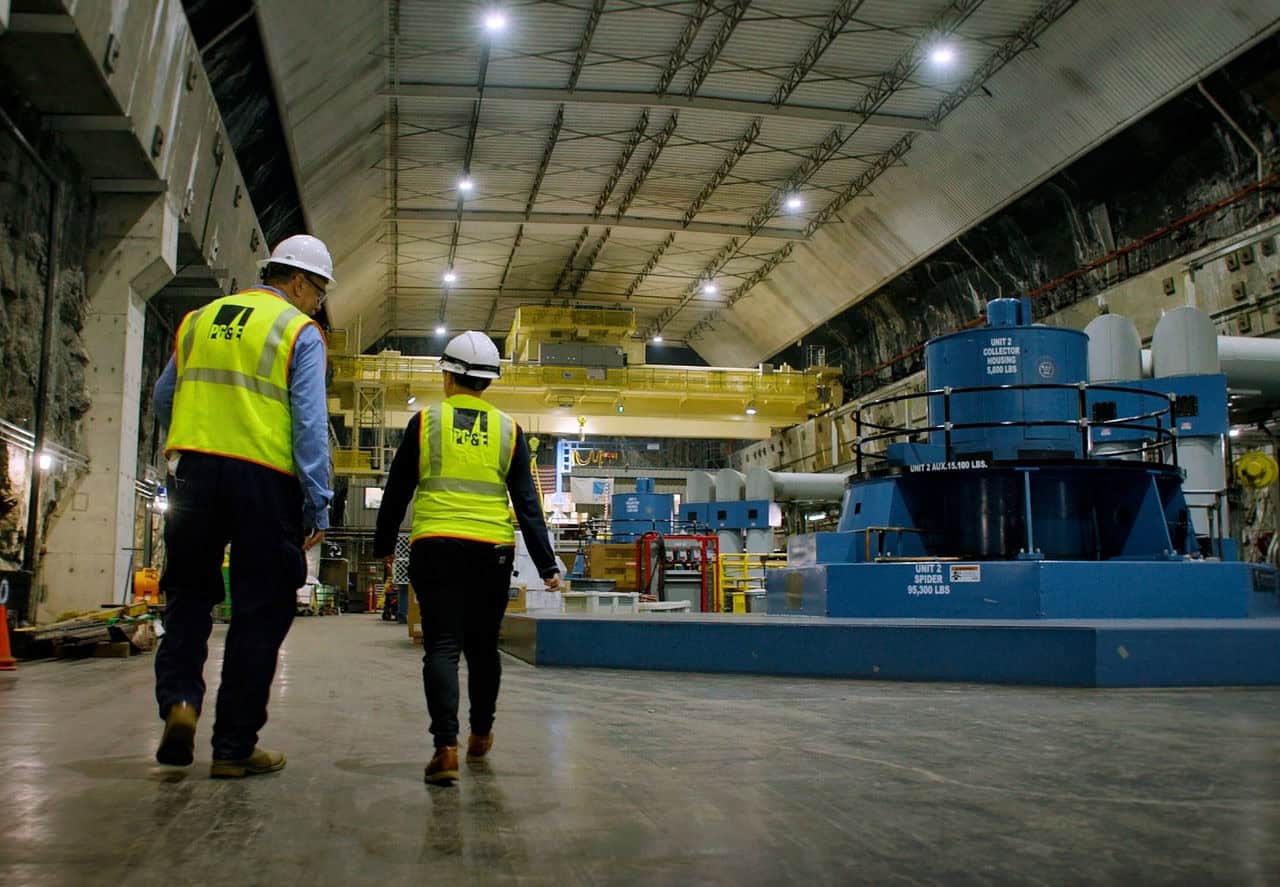
PG&E staff walk through Helm’s machine hall. (Photo Credit – PG&E)
HELMS AND THE DUCK CURVE
More than four decades after commissioning, Helms finds itself operating in a fundamentally different energy landscape. To understand why the Helms uprate matters, then it helps to explore the challenge reshaping California’s grid known to operators as the “the duck curve.”
If you trace California’s net daily electricity demand over 24 hours, then a distinctive, duck-like’ shape emerges. Starting at midnight, demand follows the belly of a duck downward toward midday, when solar generation is at its peak and net load drops to its lowest point. Then, as the sun sets and evening demand surges, the curve sweeps sharply upward to form the duck’s head and bill. According to the California Independent System Operator (CALISO), that steep late-afternoon ramp represents one of the most acute reliability challenges facing grid operators today.
California, which is heavily reliant on solar power, has an RPS mandate to achieve carbon-free energy by 2045, but meeting those targets requires more than adding new generation. To satisfy this need, the state is embracing resource solutions capable of absorbing surplus energy when supply exceeds demand, and then rapidly releasing it when the evening ramp arrives, which is where Helms, and by extension pumped storage hydropower, delivers.
Over the past decade, as solar generation has grown to the point of regularly oversupplying the grid, Helms’ scheduling has changed, and the facility now pumps through much of the day, capitalizing on the negative electricity prices that occur when excess solar floods the market. Later, Helms flips to generate power while sometimes pumping on the weekend, demonstrating the unparalleled versatility and flexibility that only pumped storage hydropower can provide.
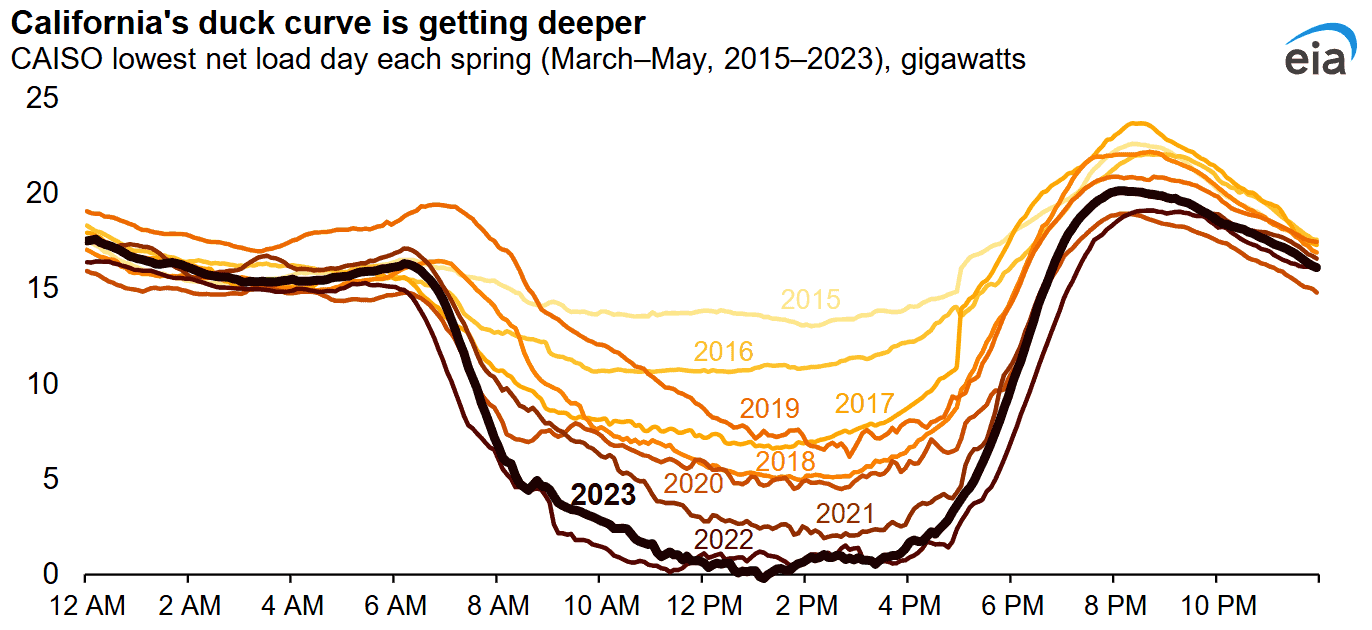
Graph from EIA depicting the California duck curve from 2015 – 2023. (Photo Credit – EIA)
WHY UPRATE?
With refurbishment confirmed as both necessary and overdue, PG&E evaluated several strategic pathways. Options included upgrading the three existing units, adding a fourth unit, or developing an entirely new facility, with the latter still under longer-term consideration.
The foundation of PG&E’s uprate decision was a hydraulic study commissioned through an independent engineering firm. The central question asked was straightforward: is there sufficient hydraulic capacity existing within the tunnel to support meaningfully higher output? Ultimately, the firm identified approximately 400 MW of additional available hydraulic energy within the system.
Transmission, however, emerged as a leading constraint. The facility’s 60-mile transmission lines represent a substantial capital investment, and PG&E determined that avoiding modifications to that infrastructure was essential to keeping the project economically viable.
Those bounding conditions pointed to a clear solution. By extracting 60 MW of additional capacity per unit across the three existing machines, the project could deliver 180 MW of total system gain, increasing overall installed capacity from 1,212 MW to 1,392 MW, without triggering transmission upgrades or the need for full FERC relicensing.
When the plant was designed in the 1970’s, the project had specifications built to run 15% above its initial nameplate capacity, and operators confirmed that headroom early on. The current uprate targets that same 15% threshold, yet this time it’s backed by four decades of operational data and the full weight of modern engineering capability.
That engineering capability is proving decisive. Advances in CFD modeling and CAD analysis are enabling vendors to extract performance gains that would have been unachievable with 1970’s methods. The result is a more efficient use of every unit of water moving through the system, with no sacrifice at the lower operating range and meaningful gains at the top, directly addressing California’s need for greater grid flexibility across the full duck curve cycle.
The upgrades also resolve longstanding reliability and safety concerns that have accumulated over four decades of operation:
• Complex starting systems that relied on pony motors, which introduced multiple potential failure points, will be replaced with modern variable frequency drives.
• Generator circuit breakers will be added to cleanly separate pump and generation operating modes.
• Approximately 85,000 gallons of potentially flammable mineral oil in the GSU transformers will be replaced entirely with natural ester fluid, which has a much higher flashpoint and fire point, making it less flammable due to self-extinguishing properties.
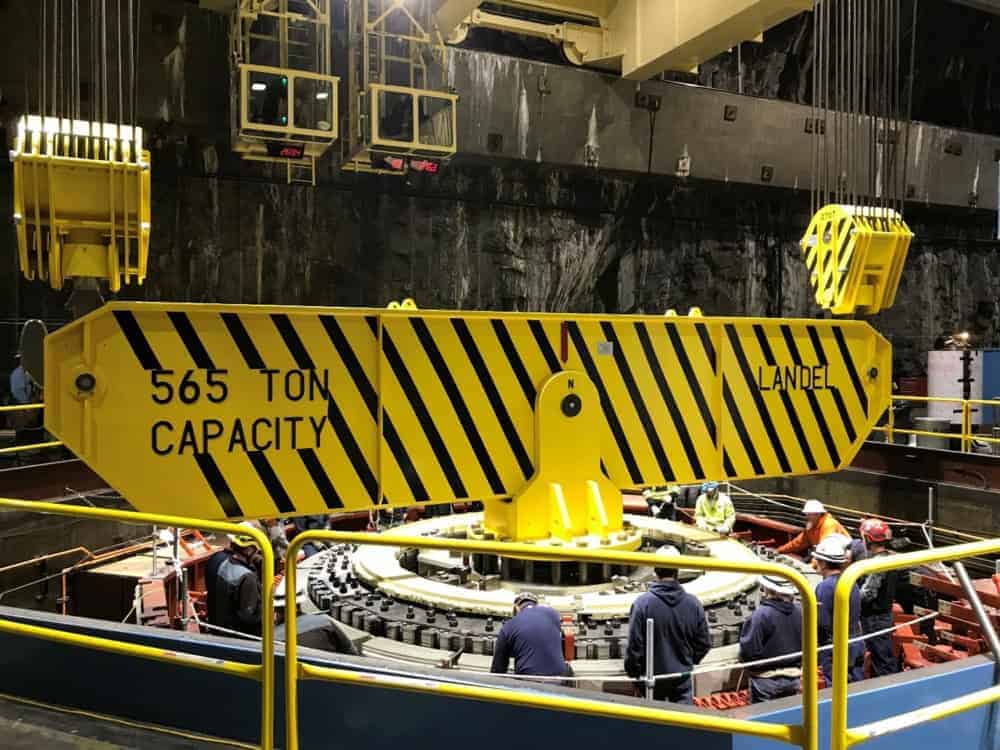
Helms rotor removal (Photo Credit: Ed Hanson of PG&E)
WHAT’S NEXT?
Engineering and specifications are on track for completion by end of year. Procurement has already begun, and then construction will occur unit-by-unit at a pace of roughly one-year-per-unit, with full project completion anticipated in 2032–2033.
When the final unit comes back online, Helms will be positioned to serve California’s grid for another 50 years!

