



 Back to All
Editor’s Note: At NHA’s upcoming Clean Currents (September 21 – 25) in Phoenix, Arizona, the “Dam Safety – Roundtable Dialogue,” offers dam safety professionals an opportunity to connect with peers, share what they’re navigating, and learn from one another!
The Interagency Team from the U.S. Army Corps of Engineers (USACE) and the U.S. Bureau of Reclamation (USBR) completed the Rapidan Hydropower Facility After-Action Investigation and Independent Forensic Team Report in June.
The report follows an incident in 2024 in which the left abutment at the Rapidan Dam in Minnesota overtopped, eroded, and breached.
The Federal Energy Regulatory Commission’s (FERC) Division of Dam Safety and Inspections (D2SI) is in the process of reviewing the forensic report, evaluating its recommendations, and determining any follow-up actions to support the safe, reliable operation of hydropower facilities under FERC jurisdiction.
The report examines the causes and contributing factors of the failure and identifies lessons for the industry, dam safety professionals, emergency management and regulatory agencies, and the public to help prevent similar failures.
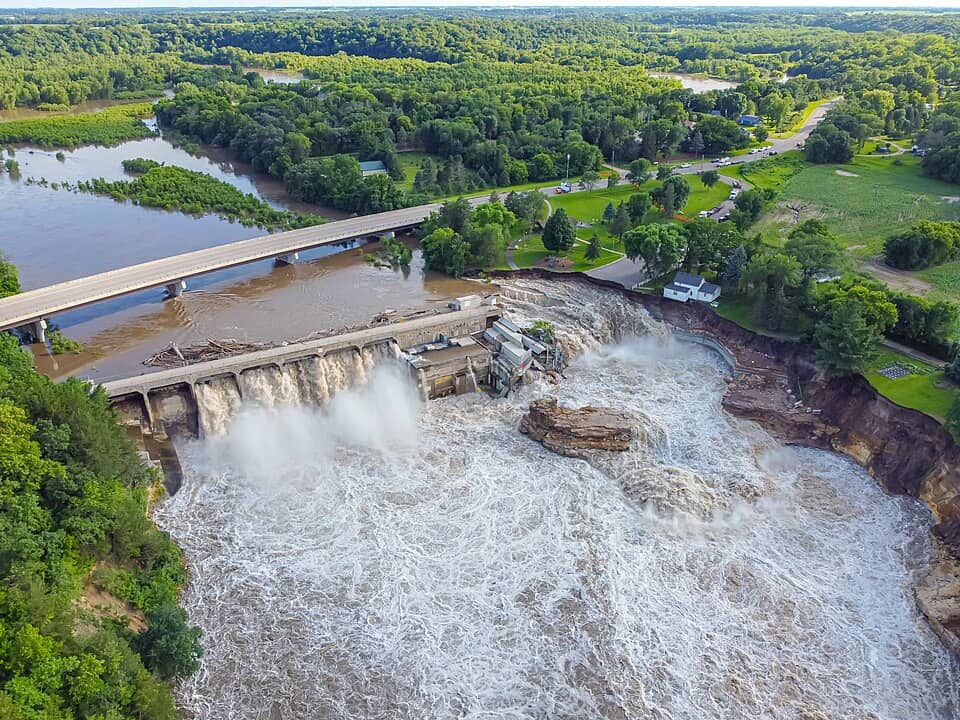
The dam on June 25, 2024, showing the ‘Dam Store’ at the edge of the precipice before its collapse. (Photo Credit – Wikideas1/Wikimedia)
BACKGROUND AND HIGHLIGHTS FROM THE REPORT
At FERC’s request, an interagency Independent Forensic Team from USACE and USBR completed its After-Action Investigation into the overtopping, erosion, and breach of Rapidan Dam’s left abutment on June 23, 2024.
The IFT found the project’s Emergency Action Plan (EAP) was generally consistent with Federal Emergency Management Agency (FEMA) Guidelines and the response largely effective:
- Notifications went out at the high-flow, potential-failure, and imminent-failure thresholds.
- The county established an on-site incident command post, which was cited in the report as a best practice, and no lives were lost.
The report also points to opportunities to strengthen future EAPs, most of them in the document and its execution rather than intent:
- Separating high-flow triggers from dam-failure triggers.
- Propagating operational changes throughout the plan.
- Adding a debris trigger.
- Initiating 24/7 monitoring to ensure notifications reach all required recipients at every level.
- Formally terminating the incident, and prioritizing coordination with the National Weather Service and standardized incident documentation.
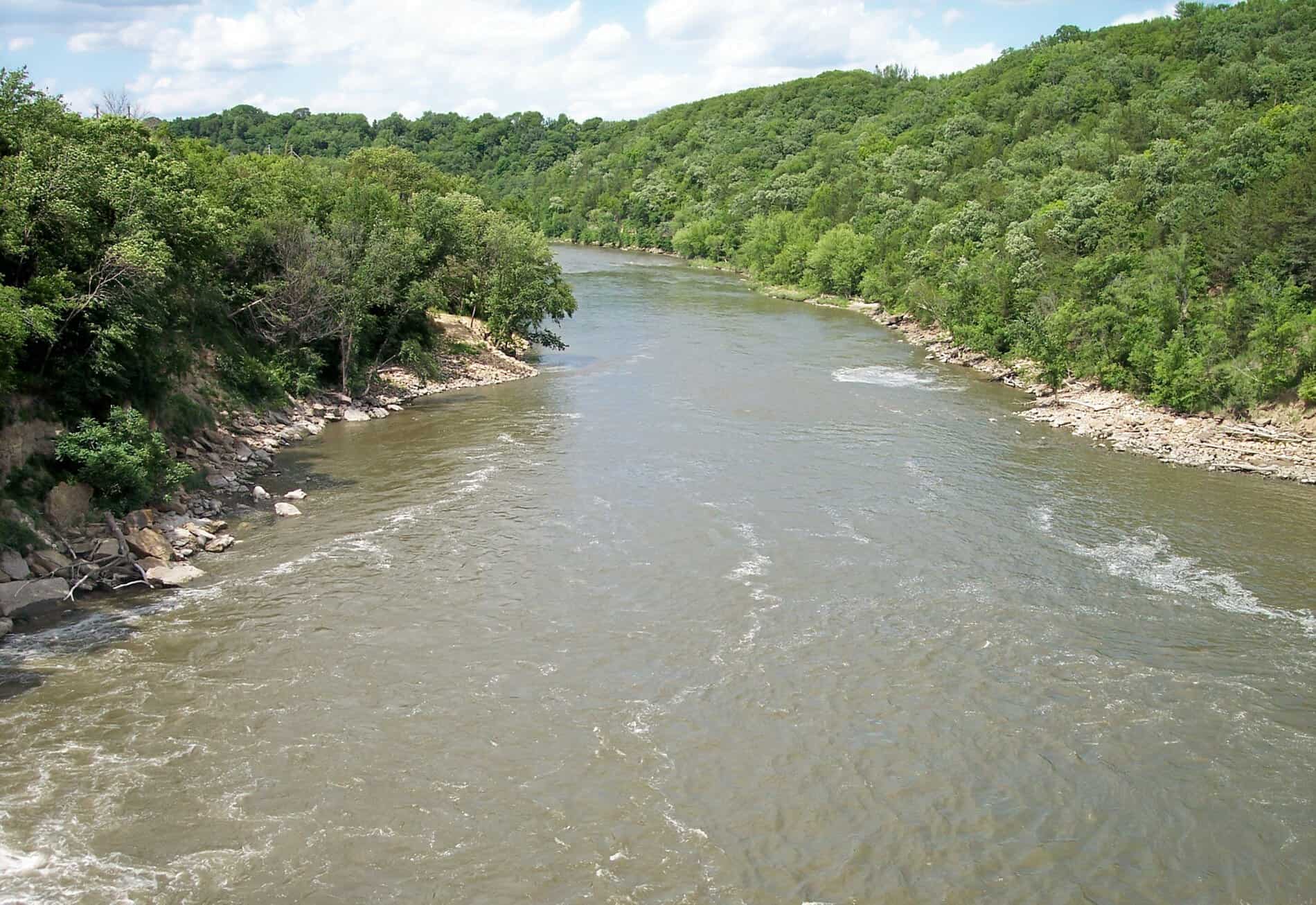
The Blue Earth River as viewed downstream from Rapidan Dam in Rapidan Township, Minnesota. (Photo Credit – Malepheasant / Wikimedia)
LESSONS FOR LICENSEES AND INDUSTRY
The following are important takeaways for industry, as they offer actionable suggestions regarding ‘best practices’ to help avoid similar incidents in the future.
- For projects with a history of debris, ice, or detached-structure blockage, maintain a written debris management plan (triggers, timing, and methods) and cross-reference its triggers into the EAP. Develop SOPs wherever human intervention is integral to mitigating a potential failure mode (PFM).
- Evaluate every intervention-dependent PFM both with and without successful intervention; a track record of “we’ve always handled it” shouldn’t lower the category.
- Pre-stage intervention equipment and overtopping/diversion materials on-site, and reference that staging in dam safety recommendations. Consider an engineered debris boom where a safety cable or undersized boom could overload and release.
- Treat ownership or O&M transfers as dam safety events: review, identify gaps, and formally document and hand off project-specific operational knowledge.
- Weigh operator safety against the hazard classification and life-loss estimates when deciding whether to intervene during an emergency.
- Keep a representative on-site around the clock during an incident to observe, document, and communicate, for situational awareness and public trust.
WHAT COMES NEXT?
As FERC’s D2SI reviews the forensic report, NHA will stay closely engaged throughout. NHA’s Hydropower Technical Community and CDSE Roundtable will continue to monitor this work and maintain direct lines with D2SI.

