



 Back to All
Sponsored Content
When it comes to dam safety, modeling isn’t an academic exercise, it’s a life-safety tool. For years, breach studies have generally followed a deterministic recipe: select a single, “conservative but reasonable” combination of breach dimensions and timing, run the model, and use the resulting hydrograph and inundation footprint to guide emergency planning. That approach has value, but it also hides the very thing decision-makers most need to understand: uncertainty.
As dams age, hydrologic extremes intensify, and risk-informed decision-making becomes the norm across infrastructure sectors, we need a better lens. Probabilistic dam breach modeling provides that lens. It does not discard traditional deterministic studies; rather, it enhances them— revealing the range of plausible outcomes and the likelihood of each. The result is more transparent risk communication, smarter emergency preparedness, and better-targeted investments.
WHY ONE NUMBER ISN’T ENOUGH
Deterministic breach analyses lock in fixed values for breach width, side slopes, formation time, and other key inputs—typically guided by documents from agencies such as FERC and the U.S. Army Corps of Engineers. Those values are, in truth, estimates layered with judgment and conservatism. Even when intentionally skewed toward a severe-but-plausible case, a single set of parameters can still miss the mark in either direction: overstating downstream hazard (driving unnecessary cost) or understating it (eroding safety margins).
A deterministic result is a snapshot of one assumed future. Actual failures—thankfully rare— arrive with all the variability of real soils, reservoir conditions, weather, hydraulic controls, and breach processes. When we plan emergency response or prioritize capital spending on the basis of just one outcome, we’re implicitly betting that the chosen assumptions align with what nature delivers. That’s a risky wager.
ENTER PROBABLISTIC BREACH MODELING
A probabilistic framework treats breach parameters as distributions instead of single values. Through Monte Carlo simulation (or similar sampling methods), thousands of breach realizations are generated. Each realization produces a peak outflow, hydrograph shape, and downstream consequence footprint that is logged with its probability of occurrence.
The combined results form exceedance curves and families of hydrographs that illustrate not only what could happen, but how likely each outcome is. Figure 1 shows a conceptual example: instead of one discharge trace, we see a band of hydrographs representing a spectrum from modest erosion to rapid, wide breach development.
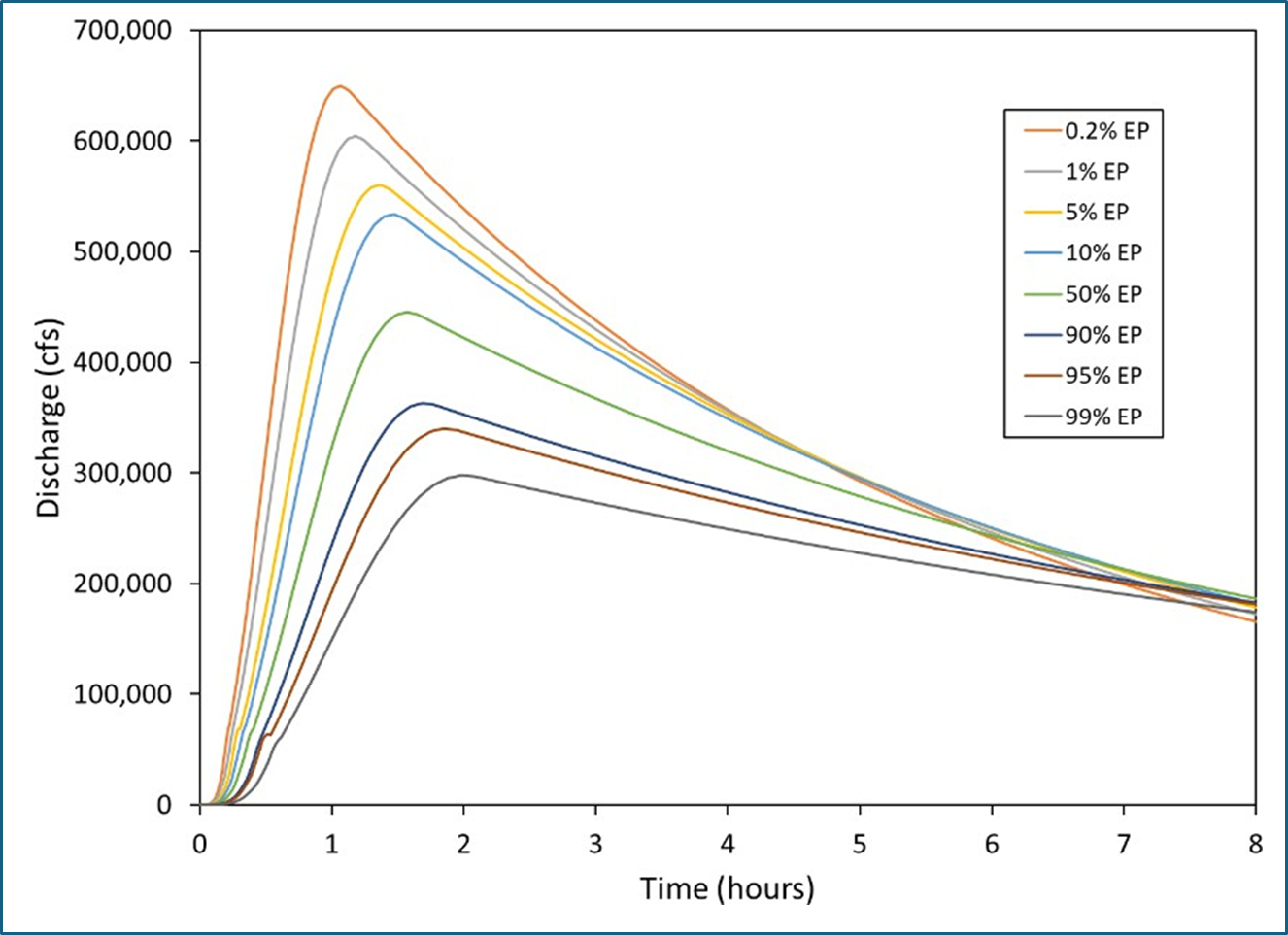
Figure 1. Example probabilistic breach discharge hydrographs.
PUTTING THE METHOD TO WORK: EBMUD’S DIKE 2 AT CAMANCHE RESERVOIR
The East Bay Municipal Utility District (EBMUD) recently applied a probabilistic breach analysis to Dike 2 at Camanche Reservoir in Northern California in collaboration with Kleinschmidt Associates. Camanche Reservoir is impounded by multiple earthen embankments, including the main Mokelumne River dam and a series of auxiliary dikes along the reservoir perimeter. Dike 2, located along the southern margin, is lower in height than the main structure—but it still retains a substantial volume of stored water.
Earlier, a conventional deterministic breach study had suggested that a failure at Dike 2 would produce relatively moderate downstream effects when compared to a breach of the main dam. The probabilistic study challenged that assumption. By sampling across a realistic range of breach geometries and formation times, the team found that a nontrivial portion of simulated breaches produced peak discharges and downstream stages notably higher than the deterministic case.
This insight mattered. It indicated that the original deterministic parameter set—selected in good faith using standard guidance—likely under-represented potential consequences. Armed with the probabilistic results, the team recalibrated the deterministic scenario to better align with higher- end, yet still credible, breach behavior at the site. That update produced a more conservative and defensible planning basis for emergency action development and downstream risk communication.
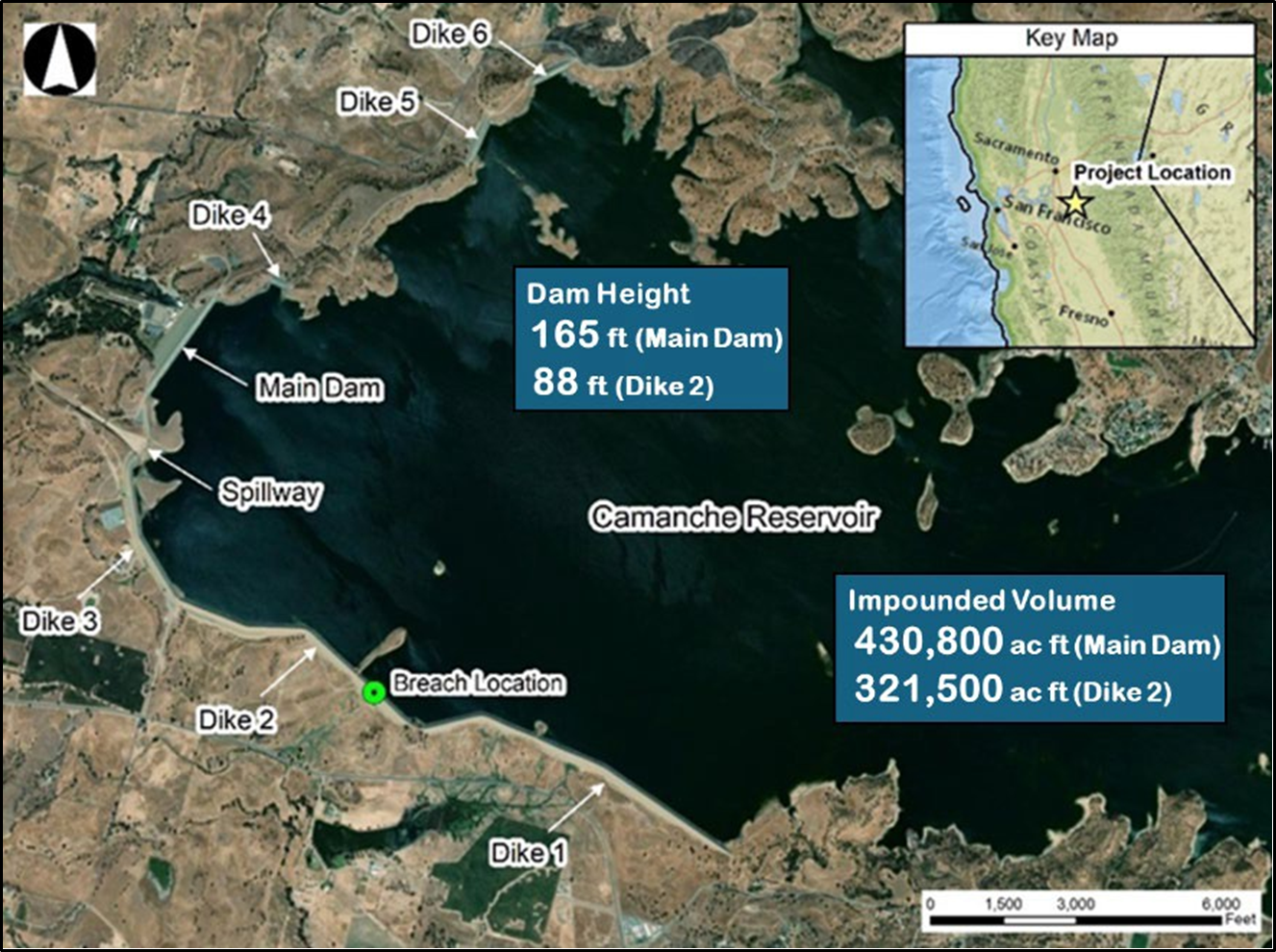
Figure 2. Site location map of Camanche Reservoir and Dike 2.
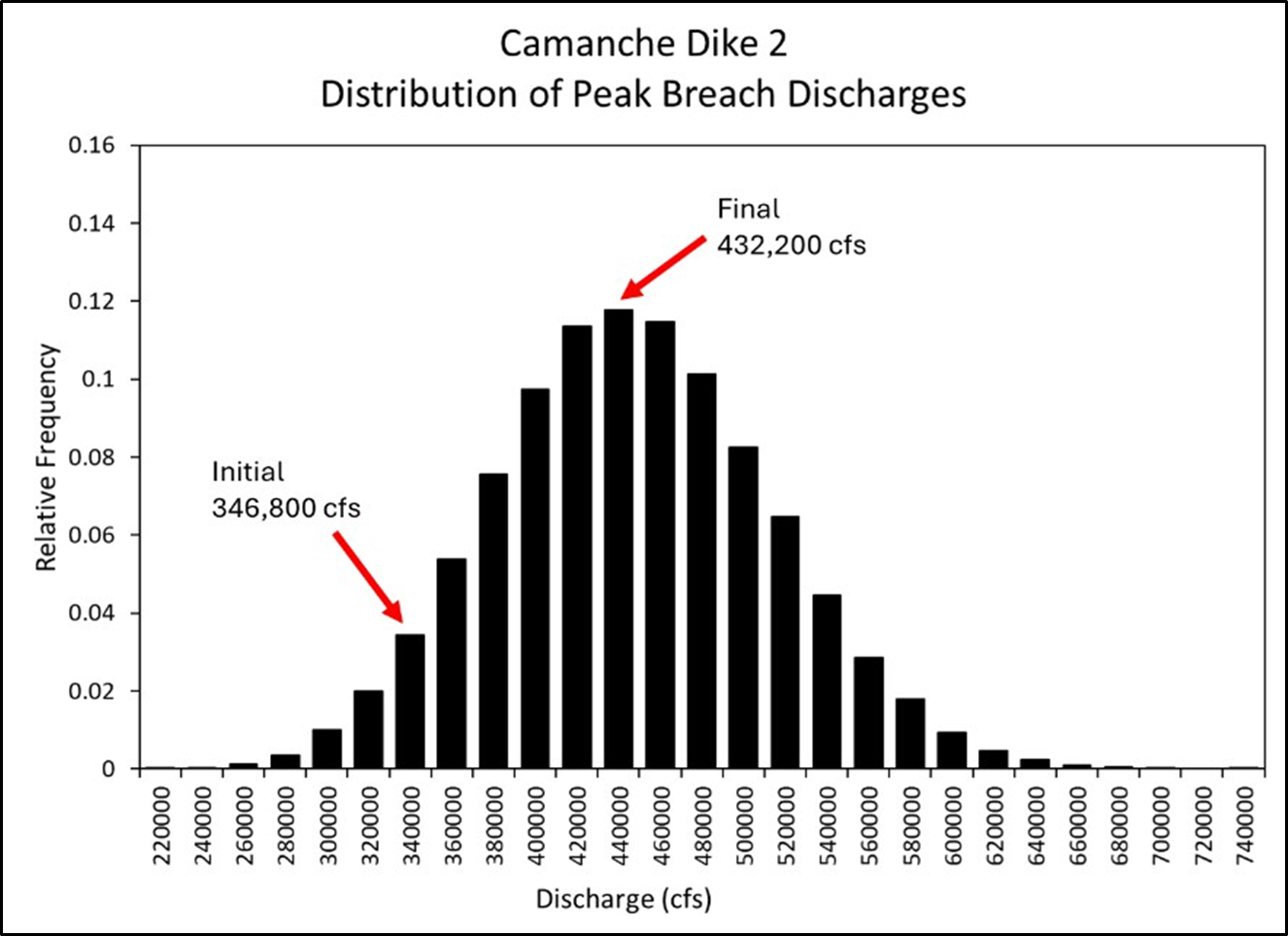
Figure 3. Distribution of Peak Breach Discharges
WHAT PROBABLITIES MAKE POSSIBLE
Blending probabilistic and deterministic perspectives equips stakeholders with a fuller picture of risk:
• Emergency Planning: Inundation maps can be paired with exceedance probabilities (e.g., 10%, 1%, 0.2% likelihood breach conditions), giving responders clarity about which areas are at higher conditional risk and how response priorities might scale.
• Investment Decisions: Dam owners can evaluate mitigation alternatives—such as armoring, monitoring upgrades, or raising low sections—against reductions in the probability of severe breach outcomes, helping justify capital spend.
• Regulatory Dialogue: Regulators gain a transparent view into the uncertainty surrounding breach parameters and can work with owners to identify which scenarios must be explicitly addressed in Emergency Action Plans (EAPs) and risk assessments.
A PRACTICAL PATH FORWARD
Adopting probabilistic breach modeling across the industry doesn’t require discarding existing guidance. A phased approach works:
1. Start with Data Ranges: Compile plausible low/most-likely/high values for breach width, side slope, and formation time from site data, historical performance, and agency guidance.
2. Assign Distributions: Translate those ranges into statistical distributions (uniform, triangular, lognormal—whatever best represents available knowledge).
3. Run Simulations: Use Monte Carlo or Latin Hypercube sampling to generate multiple breach realizations in your hydraulic model.
4. Summarize Results: Develop exceedance curves for peak discharge, breach volume, and key downstream stage locations; identify percentile-based scenarios (e.g., median, 90th percentile) to inform deterministic updates.
5. Integrate Into EAPs & Risk Studies: Map probabilistic outcomes to consequence categories and emergency triggers.
This workflow lets practitioners introduce probabilistic thinking without overhauling every step of their current dam safety program.
THE INDUSTRY IS MOVING
Across water resources disciplines, risk-informed frameworks are steadily replacing one-size- fits-all prescriptions. Probabilistic dam breach analysis fits squarely within that shift. By explicitly grappling with uncertainty, we produce models—and management decisions—that better reflect real-world complexity. That’s good for communities downstream, for resource agencies charged with oversight, and for dam owners balancing safety, cost, and environmental stewardship.
Uncertainty will always be part of dam safety. Choosing to understand it—and plan accordingly—is the responsible evolution of practice.
ABOUT THE AUTHORS
Eric M. Toth, PE and Priyanka K. Jain, PE are civil engineers in the Water Resources Planning Division at the East Bay Municipal Utility District.
Chris Goodell, PE, BC.WRE and Ben Cary, PE are hydraulic engineers with Kleinschmidt Associates and frequent educators on HEC-RAS modeling and applied risk analysis.
For more information, visit the Kleinschmidt Associates website.

