



 Back to All
Sponsored Content
The average age of a hydro generator in North America is over 50 years. The turbines still turn. The water still flows. But inside the generators, something less visible is happening and it has significant implications for the reliability and longevity of the fleet.
High-voltage windings (bars and coils), the copper windings at the heart of every hydro generator, degrade over decades of operation. The degradation is gradual, often invisible to routine inspection, and only detectable through specialized electrical testing. When it is finally detected, the consequences can be significant: unplanned outages, accelerated fleet-wide failures, and costly emergency interventions.
The question facing asset owners across the North American hydro sector is not whether this degradation is happening. It is whether they are measuring it and whether they are acting on what the data tells them.
The Chief Joseph Project: A Case Study in What the Data Reveals
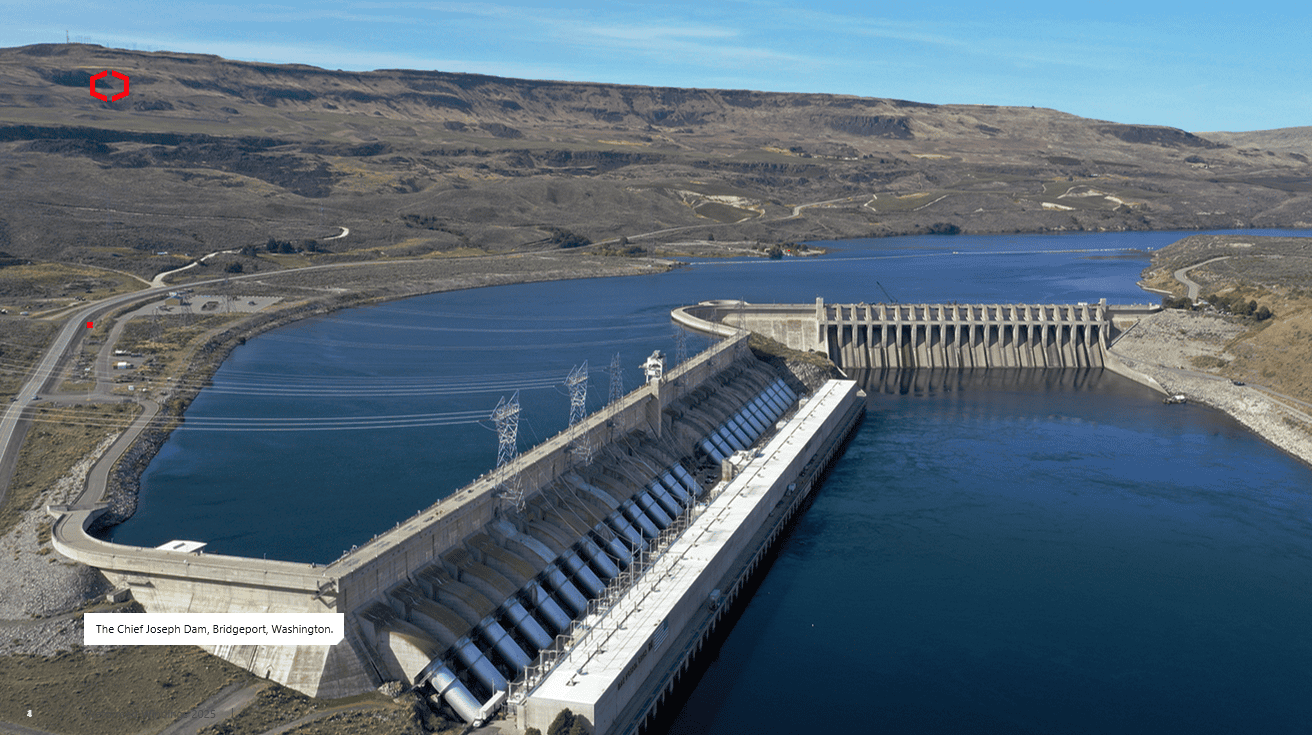
Chief Joseph Dam in Washington State is one of the largest hydroelectric facilities operated by the US Army Corps of Engineers, with 16 generator units rated at 92,920 kVA at 13,800V. The original winding sets were manufactured between 1983 and 1988. They ran, largely uninterrupted, for 38 years.
The rewind program was triggered by elevated Partial Discharge (PD) readings on the C-phase of Unit 10. PD – tiny electrical sparks within insulation voids – is one of the most reliable early indicators of insulation degradation. When PD levels on a single unit began rising above normal fleet levels, the decision was made to rewind all 16 units, with Preformed Windings contracted to supply the new bars and coils.
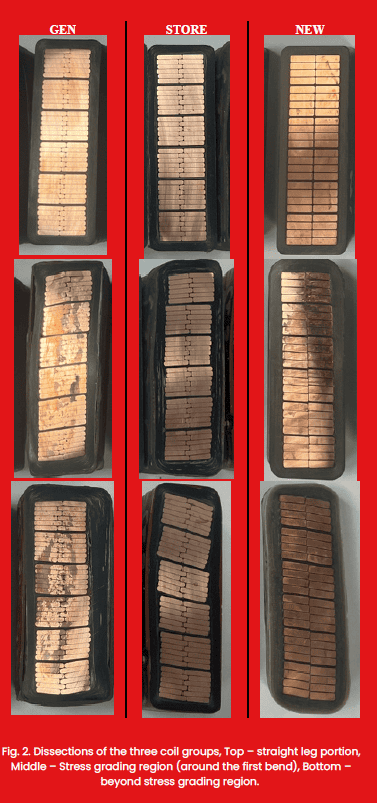
This presented a rare research opportunity: three distinct winding populations from the same generator design could be tested side by side. The first group comprised windings removed after 38 years of active service (GEN). The second group was windings manufactured at the same time but held in storage since 1988 in a suitably controlled environment, never installed (STORE). The third was newly manufactured replacement bars and coils produced by Preformed Windings in 2024 using modern resin-rich technology (NEW).
The results were instructive.
What 38 Years of Service Does to Insulation
Visual inspection and 3D laser scanning confirmed that the aged windings remained dimensionally close to specification. To the naked eye, and under standard inspection protocols, the bars and coils in the straight sections appeared structurally sound. This is precisely the problem.
Microscopic dissection told a different story. Cross-sectional analysis of the original winding sets, both the service-aged GEN windings and the stored STORE windings, revealed significant void content and delamination in the ground wall insulation, particularly in the stress grading regions. These voids, measuring around 0.15mm in the radial direction, were present consistently across all corners of the slot section. The new bars and coils showed none.
The electrical testing reinforced this. PD measurements across the voltage range showed the NEW bars and coils with substantially lower and more tightly distributed discharge values compared to both original groups. Critically, when PD Inception Voltage (PDIV) was compared, the service-aged GEN windings showed a mean reduction of 1.8 kV relative to the stored windings manufactured to the same specification: a direct fingerprint of 38 years of operational ageing.
One winding, GEN4, showed PD levels dramatically higher than the rest of the fleet. This is consistent with a well-established failure pattern: a small number of windings within a generator age faster than the fleet average, drive overall PD levels upward, and ultimately trigger the decision to rewind. The rest of the generator may appear healthy. But the weak links have already formed.
Why Manufacturing Quality Determines Long-Term Performance
The most significant finding from the Chief Joseph study is not about ageing – it is about the baseline quality from which ageing begins.
The stored STORE windings, never installed, never subjected to thermal cycling or electrical stress, already showed higher variance in PD measurements and void content compared to the newly manufactured bars and coils. This suggests that the original manufacturing process produced windings with inherent inconsistencies in insulation consolidation that were present from day one.
The resin-rich manufacturing process used to produce the Chief Joseph replacement bars and coils applies insulation tapes pre-impregnated with resin before application, then subjects them to controlled heat and pressure to ensure full void elimination during cure. The result is a more uniform ground wall, better copper strand alignment, and, critically, a much narrower distribution of PD values across the whole winding set.
This matters because winding sets fail at their weakest member. A generator rewound with bars and coils of tightly controlled, consistently low PD performance will age more uniformly, give clearer early warning signals when degradation begins, and extend the interval before the next intervention is required.
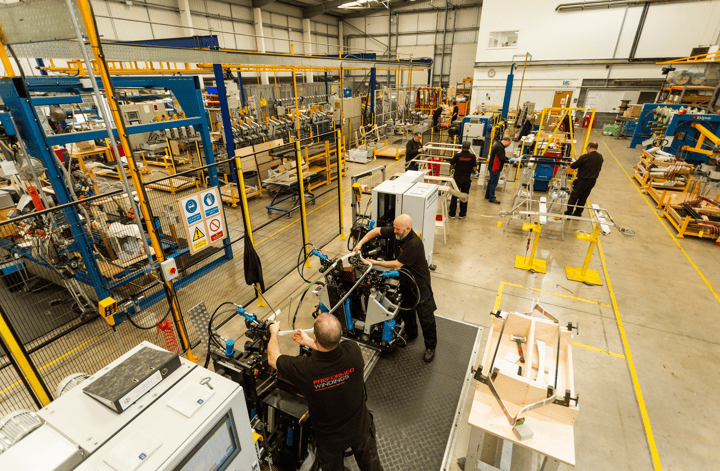
The shop floor. (Photo Credit – Preformed Windings)
Implications for the Aging North American Hydro Fleet
The Chief Joseph program is not an isolated case. It is a preview of decisions that asset owners across the North American hydro sector will face in the coming decade.
With the average hydro generator age exceeding 50 years, a significant proportion of the fleet is operating with insulation systems manufactured to the standards of the 1970s and 1980s. PD monitoring is the most reliable tool available for tracking insulation health but it requires a baseline. Owners who are not yet measuring PD have no reference point against which to detect the kind of gradual trend that preceded the Unit 10 failure.
The data from Chief Joseph supports several practical conclusions for fleet operators. First, visual inspection alone is insufficient: the most significant degradation in these windings was not visible without microscopic dissection. Second, PD monitoring should be part of routine asset management, not just a response to suspected problems. Third, when the decision to rewind is made, the quality and consistency of the replacement bars and coils is as important as the decision itself: a rewind with windings of wide PD variance simply resets the same failure clock.
Finally, the data demonstrates that rigorous, high-quality manufacturing processes, with precise control over insulation consolidation, void elimination, and consistency across every bar and coil in a set, have a measurable impact on long-term generator performance. Owners rewinding today are not simply replacing like-for-like. They are installing bars and coils with demonstrably better insulation integrity, lower baseline PD, and tighter manufacturing consistency, giving their generators a better foundation for the next 40 years of operation.
The energy transition is placing new demands on the existing hydroelectric fleet. Refurbishment is increasingly preferable to replacement, both economically and in terms of carbon footprint. But refurbishment only delivers its full value if the components going back into the machine are of the highest quality.
At Chief Joseph Dam, the data makes that case clearly.
Preformed Windings is a specialist manufacturer of high-voltage bars and coils for critical generators and motors, supplying OEMs, utilities, and service providers globally. The full technical paper on the Chief Joseph Dam winding comparison study, co-authored with the US Army Corps of Engineers, is available at www.preformedwindings.com

