

 Back to All
*Sponsored Content
Hydroelectric plants with synchronous condense capability are an effective tool for grid stability as energy security challenges surge.
An opportunity to leverage existing facilities for grid resilience
The electric grid, while critical infrastructure, is vulnerable to debilitating risks.
Prime example: On April 28, 2025, a failing substation facility in Granada, Spain prompted a cascading blackout across the Iberian Peninsula. The failure, along with subsequent disconnections, led to a drop in grid frequency below 50 Hz, launching protection systems and severing the interconnection with France. Approximately 15 GW of generation – nearly 60% of the region’s online capacity – was lost. The collapse happened in seconds.
The risks extend beyond aging and outdated facilities. Extreme climate- and weather-related events can trigger blackouts. Solar and wind power intermittency can destabilize grid operations. Explosive energy demand – from artificial-intelligence empowered data centers, electric vehicles, cryptocurrency mining and electrification– is straining the grid to deliver more than ever.
Amid these vulnerabilities is an opportunity for hydropower operators to leverage their existing infrastructure. By upgrading their facilities to operate as synchronous condensers, they can enhance grid stability while also supporting increased electricity demand.
Hydro promotes a grid in sync, providing inertia, voltage regulation and reactive power
Grid stability is about keeping electricity generation and consumption in balance. Synchronous condensers support stability by providing:
- Inertia, to fend off frequency swings. Referring to the kinetic energy stored in plant generators, inertia buffers against sudden changes in frequency from shifts in supply or demand.
- Voltage regulation, to keep power flowing smoothly. Synchronous condensers address transmission congestion, high impedance or lack of reactive power, helping to maintain acceptable voltage levels throughout the grid.
- Reactive power, to support voltage regulation. Without sufficient reactive power, voltage can sag or swell, leading to equipment damage or blackouts.
The rotating machinery in traditional power generation facilities provides these critical services. However, as power providers transition to inverter-based systems – as used in wind and solar power – inertia, voltage regulation and reactive power are diminishing.
Hydropower is well-suited for this role, with synchronous condense capability often being a consideration in the original plant’s design. Some facilities already have evacuation air systems that allow water to be held below the runner, letting the unit spin freely. Others are being expanded to enable more units to operate in condense mode simultaneously. These upgrades increase grid inertia and improve the system’s ability to absorb fluctuations while delivering strong economic returns to the plant owner.
Modernizing grid support comes with technical, financial and infrastructure challenges
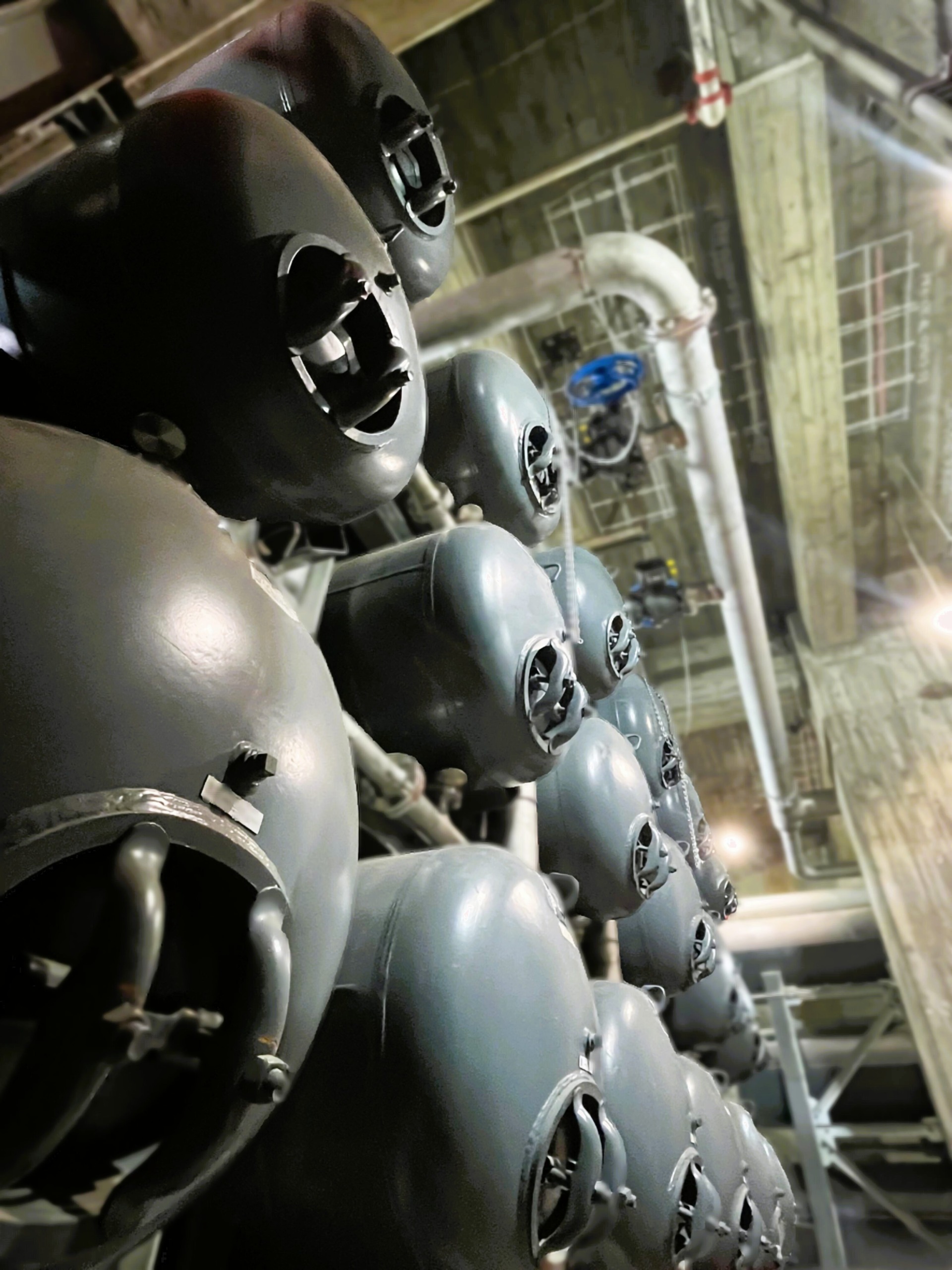
To support synchronous condense operations, a compressed air system (sometimes called an evacuation air system) is required to hold the tailwater water level below the runner elevation, which allows the turbine/generator to spin freely. These compressed air systems are often undersized and outdated, and upgrades to support the growing demand are not simple. Challenges include:
- Aging or outdated facilities. Many evacuation air systems have been abandoned for 50-plus years. Corrosion and excessive sediment build-up are common issues in piping and instrument lines. An overhaul might be needed – even likely. Major equipment including wicket gates, head covers and bottom rings might need to be refurbished or replaced.
- Space limitations. Floor space in a powerhouse is minimal. Synchronous condense equipment can be substantial in size and lower in priority compared to equipment essential for keeping the plant operational.
- Financial constraints. Upgrades can be capital-intensive and may require extended outages, which can be a barrier for utilities with tight budgets or high demand obligations. The absence of clear, modern guidelines also makes it challenging to keep the scope and budget within manageable limits.
- Operational constraints. Upgrading level monitoring equipment in the draft tube, which is essential for safe and effective operation in condense mode, might require units to be dewatered. Meticulous planning and coordination are necessary to minimize disruptions to operations.
- System complexity. Upgrades require careful integration into a plant’s existing infrastructure.
Innovative design approaches minimize disruptions, expand capabilities
Hydropower facilities must undergo a strategic transformation to modernize operations and enhance reliability of synchronous condense systems. To support this evolution, a suite of innovative solutions is being deployed:
- Dual-use air systems, reconfigured from existing systems, can improve system performance and reduce the compressor capacity required to support synchronous condense operations.
- Compact modular frames can fit compressors and receivers into tight spaces without compromising performance. External installations are also possible in certain situations, bypassing powerhouse constraints.
- Digital monitoring and control systems enable real-time control and proactive maintenance of draft tube levels, air pressure and unit performance. Even auxiliary systems—governor systems, cooling water, HVAC, control boards—are being modernized to support condense operations.
Synchronous condense upgrades position hydropower to support grid modernization
Evacuation air system upgrades for increased synchronous condense operation are a forward-thinking approach to grid modernization. While implementation poses challenges, innovative engineering and adaptive solutions have helped hydropower operators overcome operational obstacles and enhance the inertia and voltage support services of their facilities.
Interested in exploring synchronous condense upgrades further? Contact Black & Veatch. Let’s talk about how your plant can support grid reliability—without compromising performance.

