



 Back to All
Sponsored Content
Across the United States, many hydropower facilities have been generating renewable electricity for decades. As these assets reach the point where equipment needs to be replaced or modernized, repowering presents an opportunity that goes beyond simply extending plant life.
It is also an opportunity to reconsider whether the existing generating technology remains the best fit for the site.
Hydropower is inherently site-specific. Head, flow duration, water quality, hydraulic arrangements and operational requirements all influence turbine selection. Equipment installed decades ago, or originally selected around a particular design point, may not necessarily provide the best solution across the full operating range of the plant today.
For owners considering a replant or repowering project, returning to these fundamentals can reveal opportunities to recover previously unused energy and improve the long-term performance of an existing asset.
Gilkes has more than 50 Turgo units recorded in the United States, spanning a wide variety of applications and operating conditions. Experience from projects including Farmers Irrigation District in Oregon and Rocky Brook in Washington demonstrates how reassessing turbine selection can be an important part of the repowering process.
Start with the Water Resource, Not the Existing Machine
Like-for-like replacement of aging hydro equipment may appear to be the straightforward option. However, a replant provides an opportunity to reconsider the hydraulic characteristics of the site.
Gilkes’ approach starts with site conditions, water flow and operational requirements. Engineering analysis can include energy calculations, hydraulic design and system integration to develop a solution around the characteristics of the individual project.
The objective is not simply high efficiency at one operating point. Particularly for run-of-river plants with variable flows, annual energy production also depends on how effectively available water can be utilized throughout the year.
This becomes especially important when repowering older facilities.
Farmers Irrigation District: Changing the Turbine Technology
Farmers Irrigation District in Oregon provides a useful example.
The existing plant incorporated two differently sized Francis turbines dating from the mid-1980s. Although the configuration addressed peak energy production, the Francis turbines were limited to certain flow ranges. Consequently, some lower flows available during the April-to-October irrigation season could not be recovered for generation.
Water originating from the northeast slope of Mount Hood also contained sediment that presented an operational challenge.
Rather than simply replacing the existing equipment with equivalent machines, Gilkes evaluated the site conditions and available technologies with Farmers Irrigation District. A 2.6 MW, 31-inch high-capacity twin-jet Turgo was selected. The new turbine could recover flows previously unavailable for generation, while the Turgo’s suitability for sediment-laden water was another important factor in its selection.
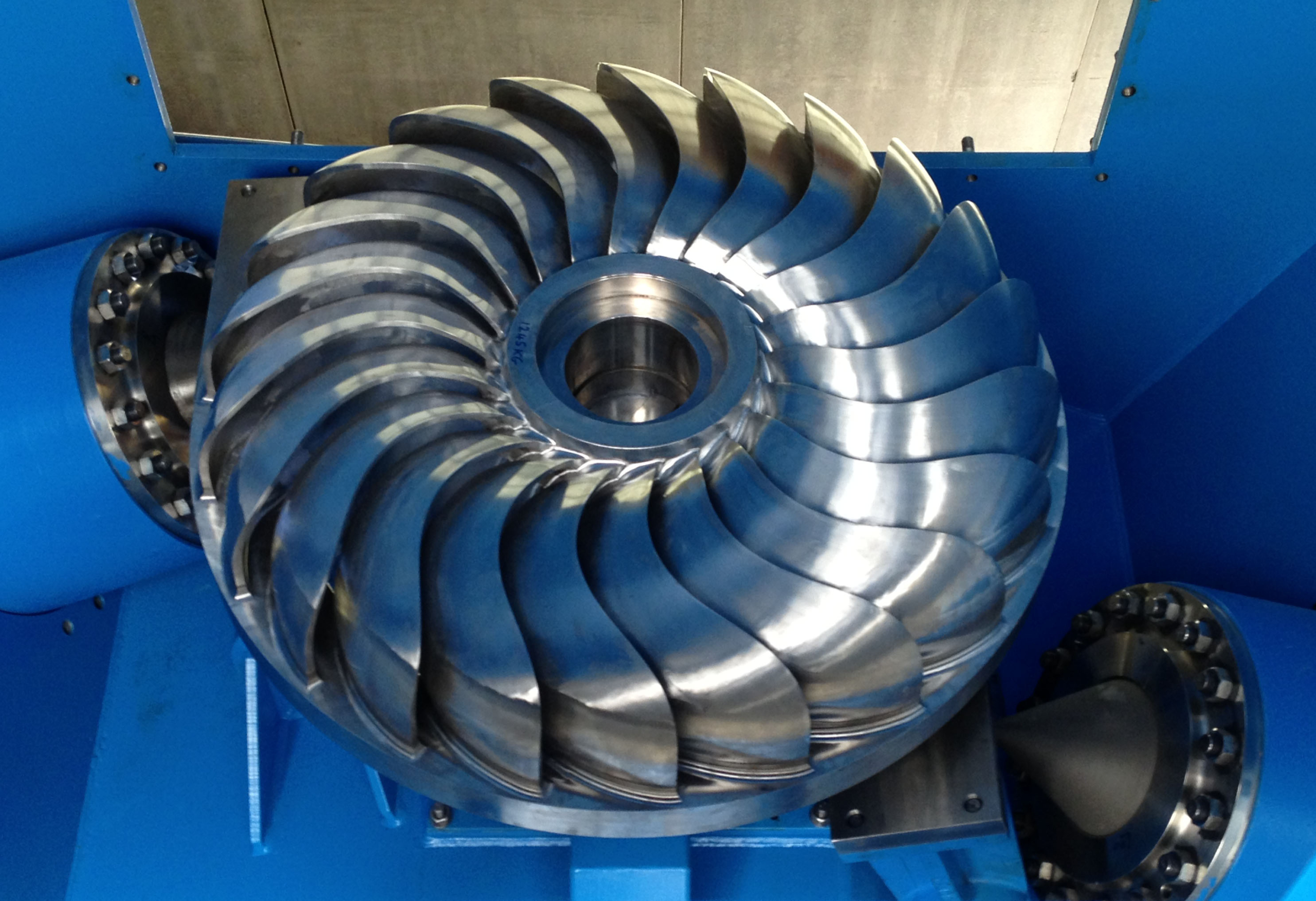
Farmers Irrigation District’s runner.
The project demonstrates that the technology best suited to an existing hydro site today may not be the technology already installed there.
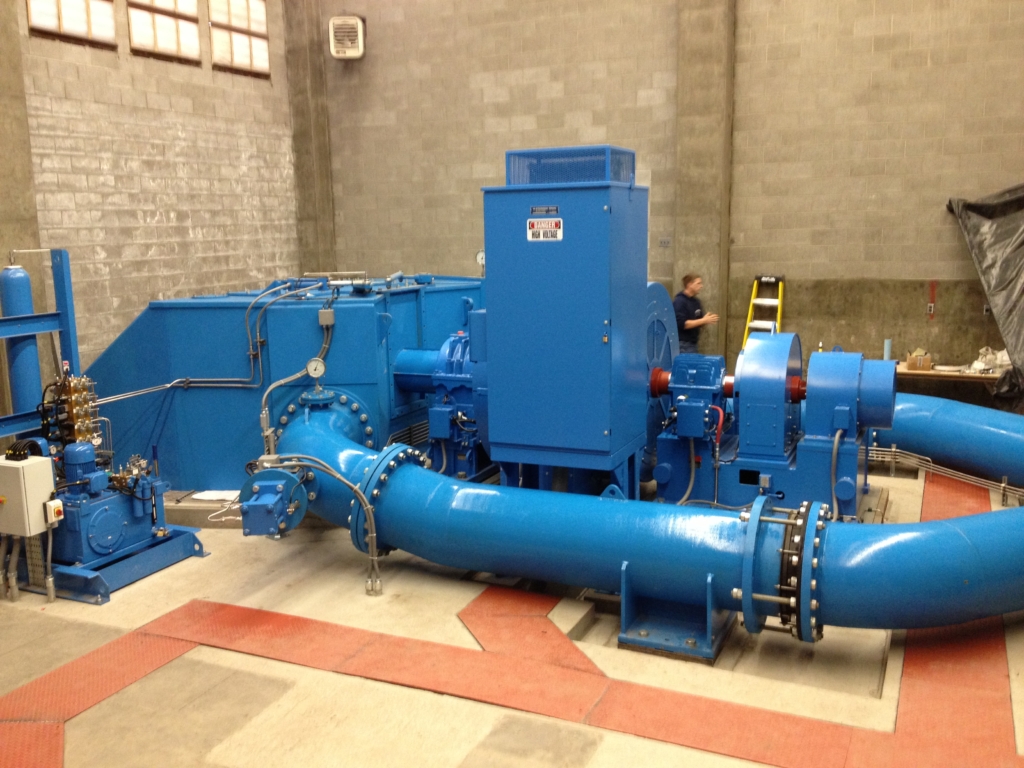
Farmers Irrigation District’s Turgo Turbine.
Rocky Brook: Looking at the Whole Plant
Rocky Brook on Washington’s Olympic Peninsula provides another example, but with a different set of challenges.
The existing generating plant used four vertical reaction machines configured as pumps operating in reverse. The issue was not simply aging equipment. The existing configuration introduced limitations across the wider generating system.
The pumps-as-turbines had narrow operating ranges, with approximately 17–22 cfs required to operate even the smallest unit. Available water below that threshold could therefore not be used for generation. The Turgo can operate as low as 5 cfs.
The existing hydraulic arrangement compounded the problem. An uphill tailrace created backpressure and negative head, while the manifold arrangement introduced turbulence and additional head losses as further units came online.
Older induction generators also placed significant reactive-power demand on the grid, while Intake and screening problems also contributed to breakdowns and reduced plant availability.
Operation was another constraint. Intake gates and turbine sequencing could not be reliably automated, requiring operator attendance when flows became sufficient for generation and creating further opportunities for lost production.
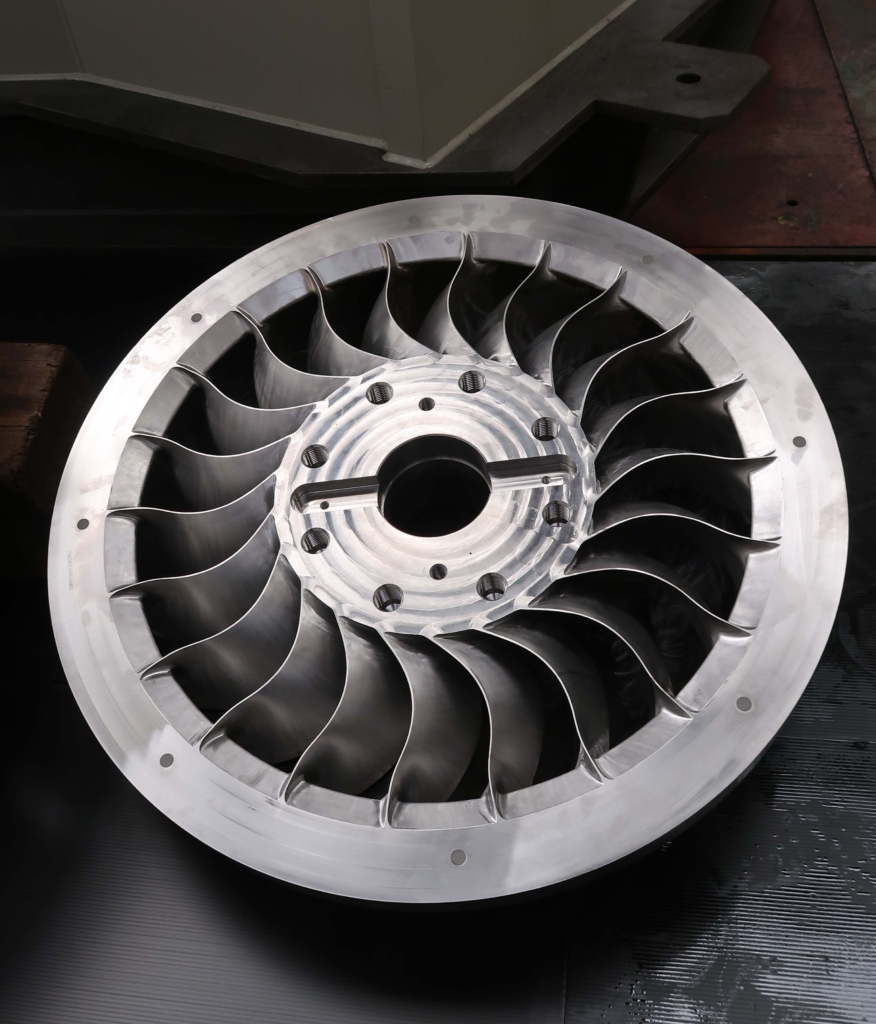
The runner at Rocky Brook.
Taken together, the initial assessment estimated that the existing turbine selection and block-loading arrangement alone resulted in 50–66% less potential generation compared with an impulse-turbine solution.
The repowering therefore provided an opportunity to consider the complete system rather than simply replacing four existing machines.
A 1.8 MW twin-jet Turgo has been selected for the replant, replacing the previous four-unit pumps-as-turbines configuration.
Rocky Brook illustrates why a repowering assessment should extend beyond individual turbine efficiency. Available flow, hydraulic losses, generation equipment, controls and plant availability can all determine how effectively a site converts its water resource into electricity.
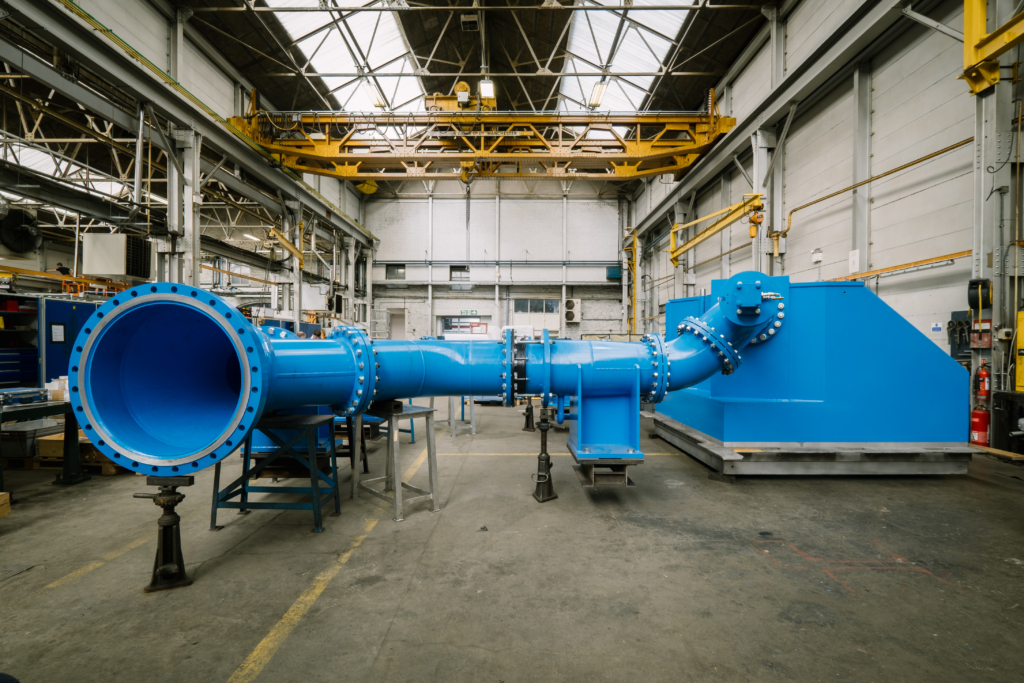
Rocky Brook Turbine Assembly.
Where the Turgo Fits
Originally developed by Gilkes in 1919, the Turgo is a side-entry impulse turbine. The current range covers the boundary between Francis and Pelton applications, with heads from 50 to 250 m and outputs up to 10 MW.
Several characteristics can make it particularly relevant when evaluating a repowering project.
The Turgo maintains high efficiency across a wide flow range and offers abrasion resistance and straightforward operation and maintenance. Its higher rotational speed compared with a Pelton operating under the same head can also help reduce generator size and cost. In the case of the Rocky Brook project, the low profile of the Turgo ideally suited the existing powerhouse layout.
For run-of-river installations where flows vary, Gilkes identifies the Turgo as a practical alternative to Francis technology.
That does not make the Turgo the correct choice for every repowering project. Francis, Pelton and other turbine types all have operating conditions to which they may be better suited. The important step is reassessing those conditions before deciding which technology to install.
Repowering as an Engineering Opportunity
America’s existing hydropower infrastructure represents assets intended to operate over long timescales. Aging equipment inevitably creates a need for investment, but it can also provide an opportunity to reconsider how effectively the plant uses the resource available to it.
Farmers Irrigation District and Rocky Brook reached that point with very different existing equipment and operating challenges. Yet both illustrate the value of returning to the fundamentals of head, flow, water quality, hydraulics and operational requirements before making a replacement decision.
Repowering provides an opportunity to look beyond like-for-like replacement and reassess the generating equipment against the site’s current operating conditions and available water resource. The optimum solution will vary from site to site, but the objective remains the same: selecting technology that makes effective use of the available resource and supports reliable, efficient operation over the next generation of the plant’s life.
About Gilkes
Gilkes is a UK-based manufacturer of hydropower turbines and engine cooling pumps, with more than 170 years of design and manufacturing experience and equipment operating in over 85 countries. Gilkes provides tailored hydropower solutions, from turbine selection and hydraulic design through to manufacturing, installation, commissioning and lifecycle support. Working closely with customers, its engineering teams develop solutions around individual site conditions and operational requirements, with a focus on reliable performance, product quality and long-term value.

