
 Back to All
The hydropower industry has been slowly lurching towards a distant problem for decades, one that is often overlooked in Washington D.C. as it grows ever larger in size and urgency – the reality that hundreds of water power facilities are staring down the barrel of expiring licenses. That challenge is now coming into focus, bringing with it real concerns for the future of affordable hydroelectricity across the country.
Over 400 federally licensed water power facilities are set to expire between 2020-2035, representing 40% of all non-federal hydropower in the U.S. These generators contribute 15.6 GW to the grid, which is around three times the capacity currently under development to power the multibillion-dollar Stargate AI datacenter in Abeline, Texas.
Most of these hydropower plants were licensed 40-50 years ago when major environmental statutes were still in their infancy. The landscape today is quite different, and obtaining a license for hydropower is more complex and costly than ever.
Yet, despite the increase in workload and difficulty, the Federal Energy Regulatory Commission (FERC) is largely operating with the same resources as it did over a decade ago. The number of full-time employees at FERC tasked with hydropower issues has hovered around 320 people since 2012, never straying more than 5% above or below that mark. Their budget tells a similar story, with real purchasing power only growing a modest 2% per year on average.
Now, with so many relicenses underway, the Commission must do more with less. Absent any changes, this will likely worsen backlogs and add uncertainty to hydropower permitting. Fortunately, a new policy has emerged that may assist the Commission in completing environmental reviews under the National Environmental Policy Act (NEPA): project-sponsor opt-in fees.
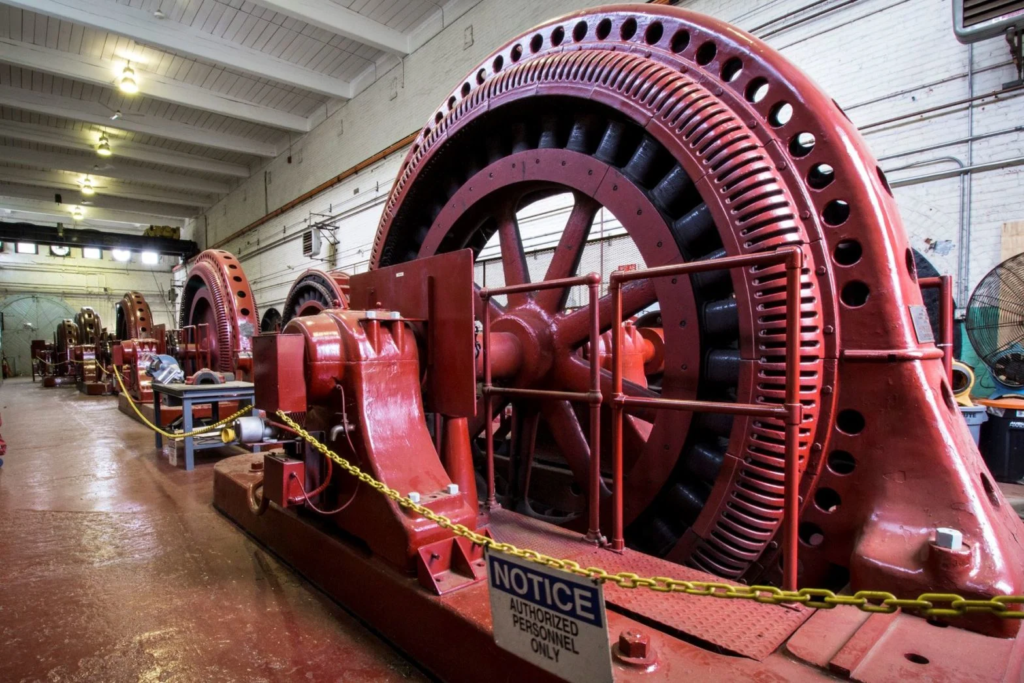
Inside FirstLight’s Turner Falls Generating Station, which is in the midst of the relicensing process. (Photo credit to FirstLight)
WHAT IS THE PROJECT OPT-IN FEE?
Passed into law as part of the One Big Beautiful Bill Act, Section 60026 amends NEPA to provide project sponsors with the opportunity to expedite Environmental Assessments (EA) and Environmental Impact Statements (EIS) by paying an opt-in fee.
Under NEPA, an EA is a focused review to determine whether the action of licensing a project will have significant environmental effects. It is typically used to relicense or amend the license of an existing facility whose impacts are largely understood and accounted for. If the agency determines the impacts are minor, then it issues a Finding of No Significant Impact; if not, the process moves to a full EIS.
An EIS is a comprehensive analysis that evaluates the significant impacts of a project and those of its potential alternatives. It is typically used for entirely new hydropower or pumped storage projects, but it can also be evoked if a relicense or license surrender creates a significant impact due to actions like major operational changes or decommissioning.
Both documents are a key source of the delay in the overall licensing process. The project sponsor opt-in fee seeks to change that. The opt-in fee is equal to 125% of the anticipated agency costs for the EA or EIS. For those who pay the fee, an EA must be completed within 180 days from the date of payment, and an EIS must be completed within one year of the publication date of the notice of intent to prepare the EIS. This is 50% faster than the timelines set by the Fiscal Responsibility Act of 2023, which are one and two years for an EA and EIS respectively.
The program is managed by the Council on Environmental Quality (CEQ), which was established within the executive office for the purpose of overseeing NEPA in 1970. CEQ determines the opt-in fee amount based on agency cost estimates and collects the fee from the project sponsor. CEQ must provide the sponsor with a fee amount within 15 days of receiving the project description.
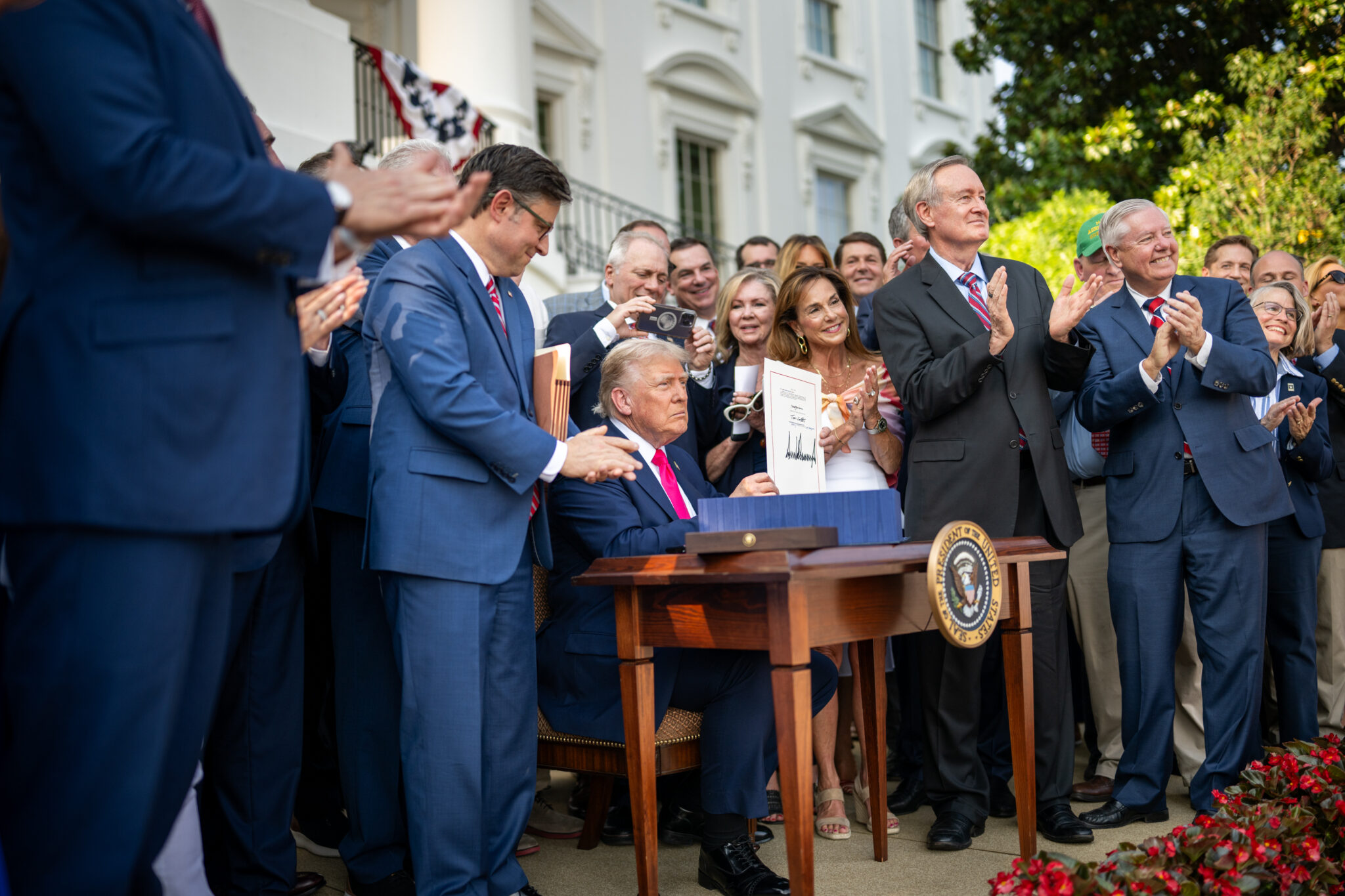
President Donald Trump signs the One Big Beautiful Bill Act on the South Lawn of the White House, Friday, July 4, 2025. (Official White House Photo by Daniel Torok)
HOW COULD IT HELP HYDRO?
For prospective FERC hydropower licensees, the opt-in fee could work in two ways.
First, the applicant could pay 125% of the costs that FERC incurs to prepare an EA or EIS internally, with its own staff. This may help fund agency activities and processes that would otherwise be delayed awaiting budget allocations. Alternatively, the applicant could prepare the EA or EIS themselves, or through a consultant, and pay 125% of the costs for FERC supervision and review.
The latter approach has several advantages. For one, it likely reduces the direct cost of the fee while preserving greater administrative control over the drafting process. Beyond that, however, there is a much more significant benefit: enhanced collaboration between industry and agency.
Under the Federal Power Act (FPA), once an application is formally filed, FERC staff are prohibited from having off-the-record communications with the applicant about the merits of the proceeding. These ex parte restrictions are intended to preserve the integrity of the regulators. However, in doing so, these rules limit information sharing to multiple rounds of formal, one-sided requests – ultimately hampering the speed at which even simple problems can be solved.
By preparing NEPA reviews themselves and subsidizing 125% of FERC oversight costs, the project sponsor is able to work alongside the Commission throughout the process prior to filing. This avoids ex parte restrictions and improves the quality of the filing the first time around, increasing the likelihood it will be accepted without prolonged editing. Ultimately, the Commission still evaluates and takes responsibility for the contents of an EA or EIS after it is submitted. This approach simply allows industry and agency to solve their problems in a transparent and efficient manner, together.
As hydropower relicenses build, FERC and industry must find a way to make real progress quickly. Yet, the Commission lacks the resources internally to address this wave alone. While it might prove costly, allowing the industry to supplement the labor and expense necessary to complete these environmental reviews provides a path forward in the short term. In exchange, the project sponsor opt-in fee promises a faster, more certain return.
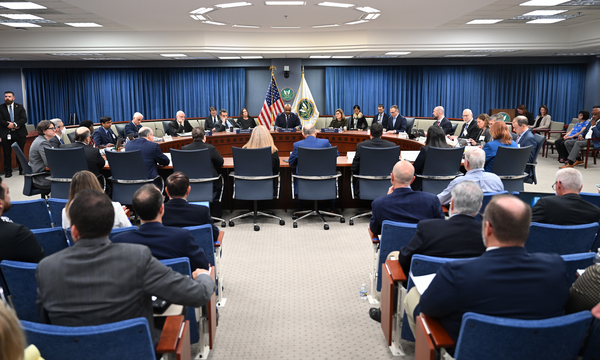
A meeting of members of the Federal Energy Regulatory Commission.
THE UNCERTAIN ROLE OF CEQ
Although it sounds promising, the project sponsor opt-in fee is a policy without an implementation plan or budget. Additionally, it also comes at a time when the role and authority of CEQ has dramatically changed, led by both the executive and judicial branches of government. This presents both a challenge and an opportunity for industry to help shape a policy outcome. To understand where CEQ is headed, and what that means for the opt-in fee and hydropower, we must understand its recent history.
The passage of the Fiscal Responsibility Act of 2023 (FRA) was an important step forward for permitting reform. It established deadlines and page limits for EAs/EISs, and allowed project sponsors to prepare their own reviews under agency supervision. Beyond that, the FRA sought to reign in the scope of review, specifying that agencies need only consider “reasonably foreseeable environmental effects” in an EIS. Finally, it directed agencies to use only scientifically reliable data and required the designation of a lead federal agency for EA/EIS preparation.
In response, rather than each agency promulgating its own regulations, CEQ took the lead and issued binding agencywide rules called CEQ Phase 2 in July 2023. Within CEQ Phase 2, the Biden Administration incorporated the FRA’s deadlines, page limits, and sponsor preparation provisions.
However, at the same time, it also diluted the efforts to narrow the scope of review by packing in Administration priories around climate change and environmental justice. In doing so, the White House contradicted the FRA and left CEQ Phase 2 vulnerable to legal challenges. It also exacerbated some of the more problematic aspects of hydropower permitting, which is already burdened by scope creep and climate speculation.
The return of the Trump Administration brought drastic change to CEQ. President Trump began his term in January with a flurry of Executive Orders, including EO 14154 “Unleashing American Energy.” In addition to shouting out hydropower, this Order explicitly removed CEQ’s regulatory authority over NEPA and directed CEQ to rescind its NEPA regulations within 30 days.
Shortly thereafter, a District court found in the case of Iowa v. CEQ that CEQ lacked the statutory authority to impose binding NEPA rules and vacated CEQ Phase 2 entirely. As a result, individual agencies are now issuing their own NEPA rules in accordance with the narrower interpretation of environmental review found in the FRA and elsewhere.
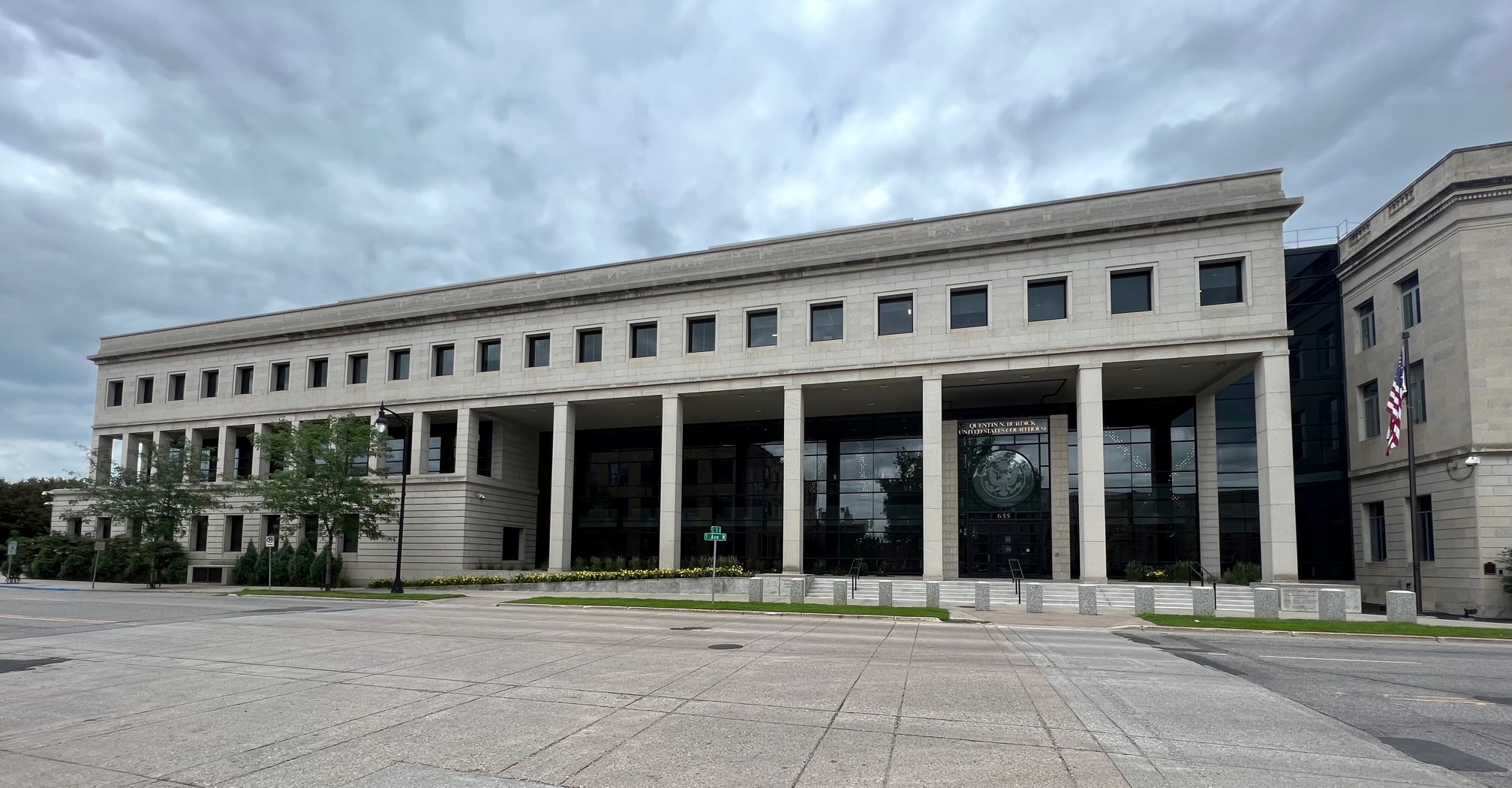
The Quentin N. Burdick U.S. Courthouse in North Dakota, where the ruling regarding Iowa v. CEQ was made.
WHAT’S NEXT FOR CEQ?
Now, with the passage of the reconciliation bill in July, the legislative branch seems keen on joining the fun. The project sponsor opt-in fee re-envisions the role of CEQ from environmental regulator to project facilitator, with ambitions to cut environmental review in half. This bold vision managed to make it through the reconciliation process, past the parliamentarian, and into law. As such, it deserves the attention of the industry as a viable vehicle for modest permitting reform.
With so many details yet to be settled on how this program will work there is a real opportunity for NHA to shape its direction. As the wave of relicensing continues its slow march forward, we must look for creative solutions and, if necessary, take action into our own hands. NHA will continue to monitor this issue as it develops.