
 Back to All
For decades, the hydropower industry has been calling for common sense licensing reforms that preserve environmental protections while restoring predictability, affordability, and fairness to the federal licensing process. The Hydropower Licensing Affordability Act (H.R. 9337) aims to do exactly that.
Introduced in the House of Representatives on June 18, 2026, by Representative Cliff Bentz (R-OR), the bill modernizes key provisions of the Federal Power Act – the primary federal statute governing both the wholesale transmission and sale of electric power, as well as the regulation of hydroelectric power – to ensure that mandatory federal license conditions are directly tied to the actual impacts of a hydropower project.
The bill forces agencies to limit the conditions to the effects of the applicable project when imposing requirements. In short, this bill aims to restores balance to a system that has steadily drifted away from the original intent of the Federal Power Act – project-specific mitigation – and towards open‑ended mandates.
If you work for a utility that owns or operates hydropower facilities, this bill matters to you.
The Hydropower Licensing Affordability Act has the potential to reduce unnecessary costs, shorten licensing timelines, lower operational risk, and refocus your day‑to‑day work on managing generation and environmental performance, not navigating unpredictable regulatory demands, but it needs your support.
WHAT THE BILL DOES AND WHY IT MATTERS
At its core, the Hydropower Licensing Affordability Act makes two targeted but powerful changes to the Federal Power Act.
First, the bill clarifies that mandatory conditions imposed on hydropower licenses under Section 4e of the Federal Power Act must be limited to mitigating the direct effects of a project on federal reservations. Today, licensees frequently face conditions that extend well beyond a project’s actual footprint or impacts – these conditions can drive up costs without clear environmental benefit. By restoring a direct nexus between project effects and license conditions, the bill re-establishes a principle long assumed but rarely enforced in practice.
Second, the bill reforms how federal agencies prescribe fish passage requirements. By again limiting the application of the mandatory conditions under Sec. 18 to direct effects of the project in the applicable river system, the bill would ensure that federal resource agencies are only prescribing passage at the applicable dam undergoing relicensing.
This bill does not represent a rollback of environmental protections; rather, it is a recognition that good environmental outcomes depend on site‑specific analysis, proportional responses, and economically viable solutions.
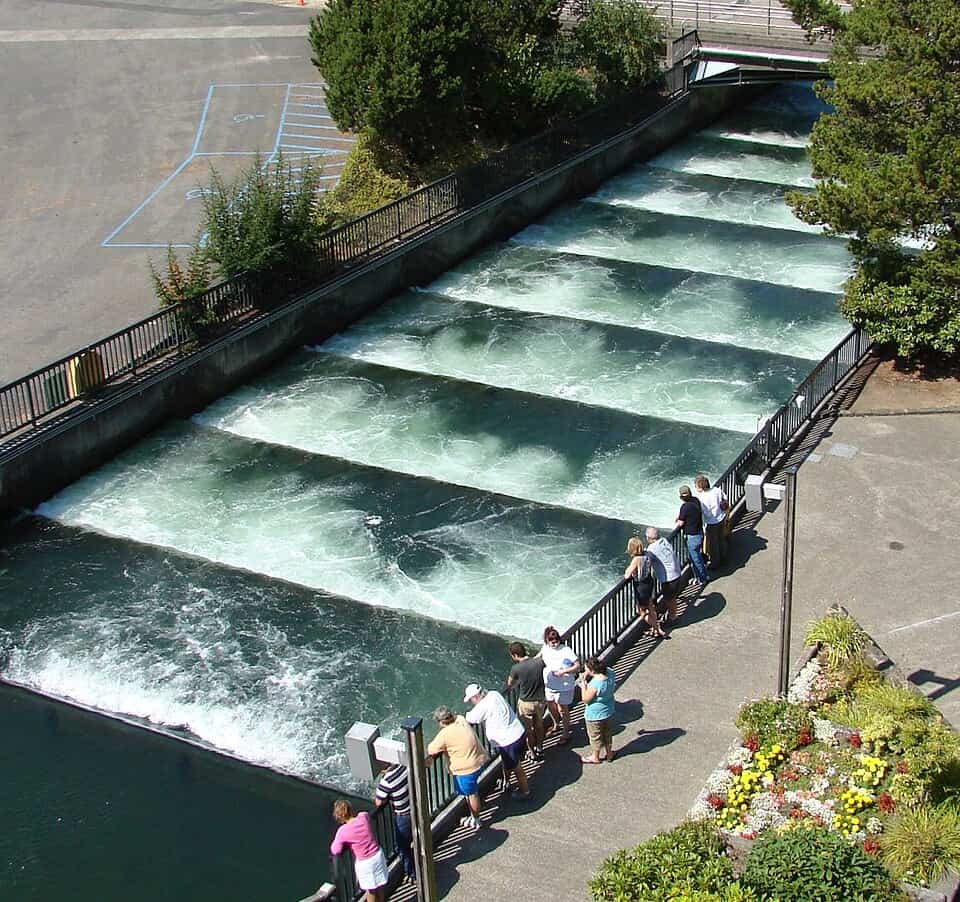
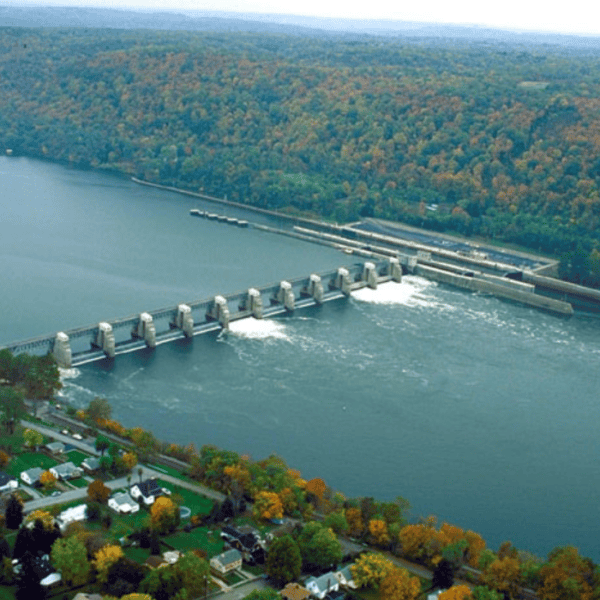
The fish ladder at Bonneville Dam in Oregon. (Photo credit: Don Graham / Wikimedia)
A REFORM THE INDUSTRY HAS SOUGHT FOR YEARS
Hydropower asset owners and operators have been raising concerns about licensing affordability and scope for decades. Yet, despite recognition that the process is costly, time‑consuming, and unpredictable, meaningful reform has been elusive. Incremental changes have come and gone, but the fundamental problem has remained: mandatory conditions are often imposed without adequate consideration of causation, alternatives, or cost.
The result has been a steady escalation in licensing expenses and complexity especially for existing projects undergoing relicensing. Facilities that have operated for generations suddenly face multimillion‑dollar or even billion-dollar requirements unrelated to their actual environmental footprint. For many operators, this has translated into difficult tradeoffs between continued operation, capital reinvestment, and compliance.
The Hydropower Licensing Affordability Act represents one of the clearest attempts yet to address this issue at its source by tightening statutory guardrails around mandatory conditions.
WHY COST MATTERS FOR BOTH PROJECTS AND PEOPLE
Licensing costs are not abstract, and the implications have very real impacts on people and jobs.
When license conditions expand beyond project effects, utility staff spend more time managing consultants, redesigning facilities, and negotiating compliance schedules – often with limited flexibility. Capital budgets that could support modernization, dam safety improvements, or environmental enhancements instead get absorbed by requirements that offer little measurable benefit.
For instance, fish passage requirements can impose significant long‑term financial obligations, with construction costs representing only the beginning, as operation, maintenance, and lost generation can persist for decades. By requiring agencies to only prescribe passage at the applicable project on the applicable river system, the Hydropower Licensing Affordability Act helps ensure that mitigation measures are both effective and responsive to the effects of only the project in question over the life of a license.
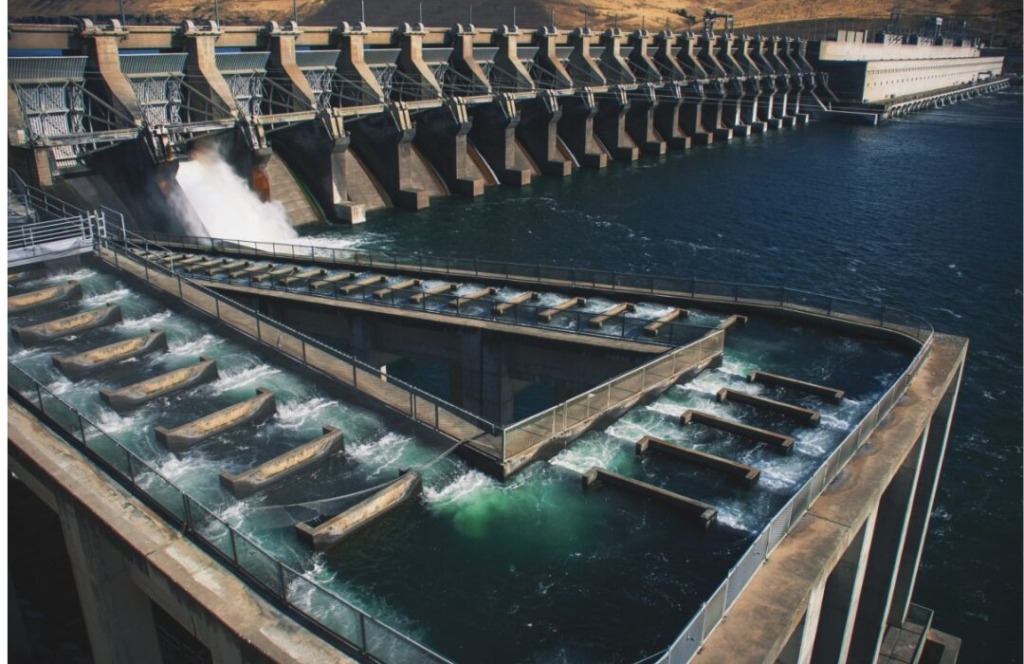
Fish ladder at John Day Dam in Oregon. (Photo Credit: USACE)
For utility employees, this could mean fewer emergency budget reallocations, clearer long‑term planning, and greater confidence that regulatory obligations align with project realities.
WHAT PASSAGE MEANS FOR DAY-TO-DAY HYDROPOWER WORK
If enacted, the Hydropower Licensing Affordability Act would bring practical, day‑to‑day benefits across hydropower asset-owning organizations regulated by FERC.
- Licensing teams would operate with clearer expectations about what agencies can require, and why.
- Engineers and environmental staff could focus on solutions tailored to actual project impacts rather than speculative or system‑wide issues.
- Managers would gain greater certainty when planning capital investments and maintenance schedules.
Most importantly, the bill would help restore trust in the licensing process itself.
When conditions are grounded in evidence, alternatives are evaluated fairly, costs are acknowledged, and collaboration improves, leading to better outcomes for projects, communities, and the environment alike.

A CALL TO ACTION: MAKE YOUR VOICE HEARD!
The Hydropower Licensing Affordability Act reflects years of industry experience and hard‑earned lessons from the field, but its success depends on engagement.
If you work with hydropower assets, whether in operations, engineering, regulatory compliance, or management, then now is the time to speak up.
Contact your U.S. Representative and urge them to cosponsor the Hydropower Licensing Affordability Act.
Visit NHA’s VoterVoice page here to speak up for the industry and urge your Member of Congress to support the bill today!
Share how licensing costs affect your projects, your planning, and your ability to deliver reliable, clean energy.
Targeted reform is within reach. With your voice, this long‑sought improvement to the hydropower licensing process can finally become law.