

 Back to All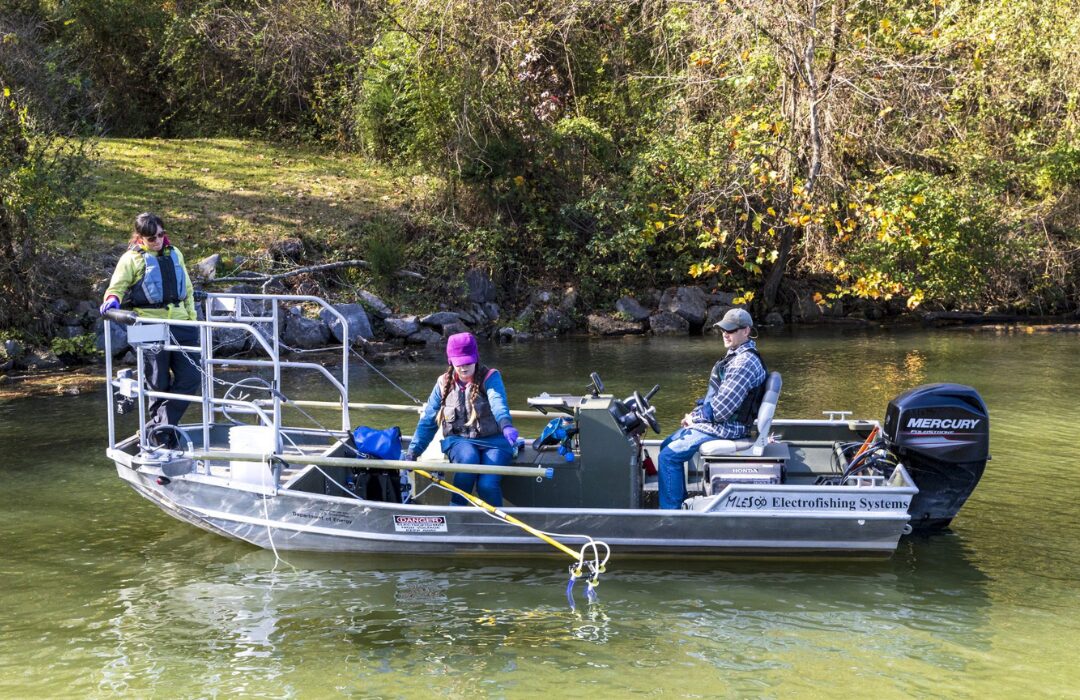
Hydropower operators have a new tool to add to their repertoire: environmental DNA sampling, which could lower the cost of biological monitoring required for licensing by over 80%. The 15-year-old method, known as eDNA for short, has reached a state of refinement that allows for widespread deployment in the field.
“This industry is regulatory driven, and because of that there’s a threshold of accuracy that you need,” said Kristine Moody, a molecular ecologist at the Department of Energy’s Oak Ridge National Laboratory (ORNL). “It needs to be at least as good or better than conventional methods. The burden of proof is on us as scientists.”
In 2025, eDNA’s day may have finally arrived, said Moody and longtime collaborator, Brenda Pracheil, a fisheries biologist at Pacific Northwest National Laboratory (PNNL), and it could play an important role in expanding hydropower as the U.S. ramps up domestic energy production.
The researchers recently released a paper in Biological Reviews summarizing the state of the science behind the technology. The publication was the result of a collaboration between the national laboratories, DOE Water Power Technologies Office staff, and scientists from Norway, working under a Memorandum of Understanding that was recently renewed for another five years. The paper shares key analysis, along with suggestions about developing guidelines to facilitate broader adoption of eDNA testing among hydropower stakeholders.
“From a scientific perspective, the technology is ready for primetime. It’s being used all the time,” Pracheil said. “We looked at the regulatory records and people in the industry are using it because it saves them a ton of time and money.”
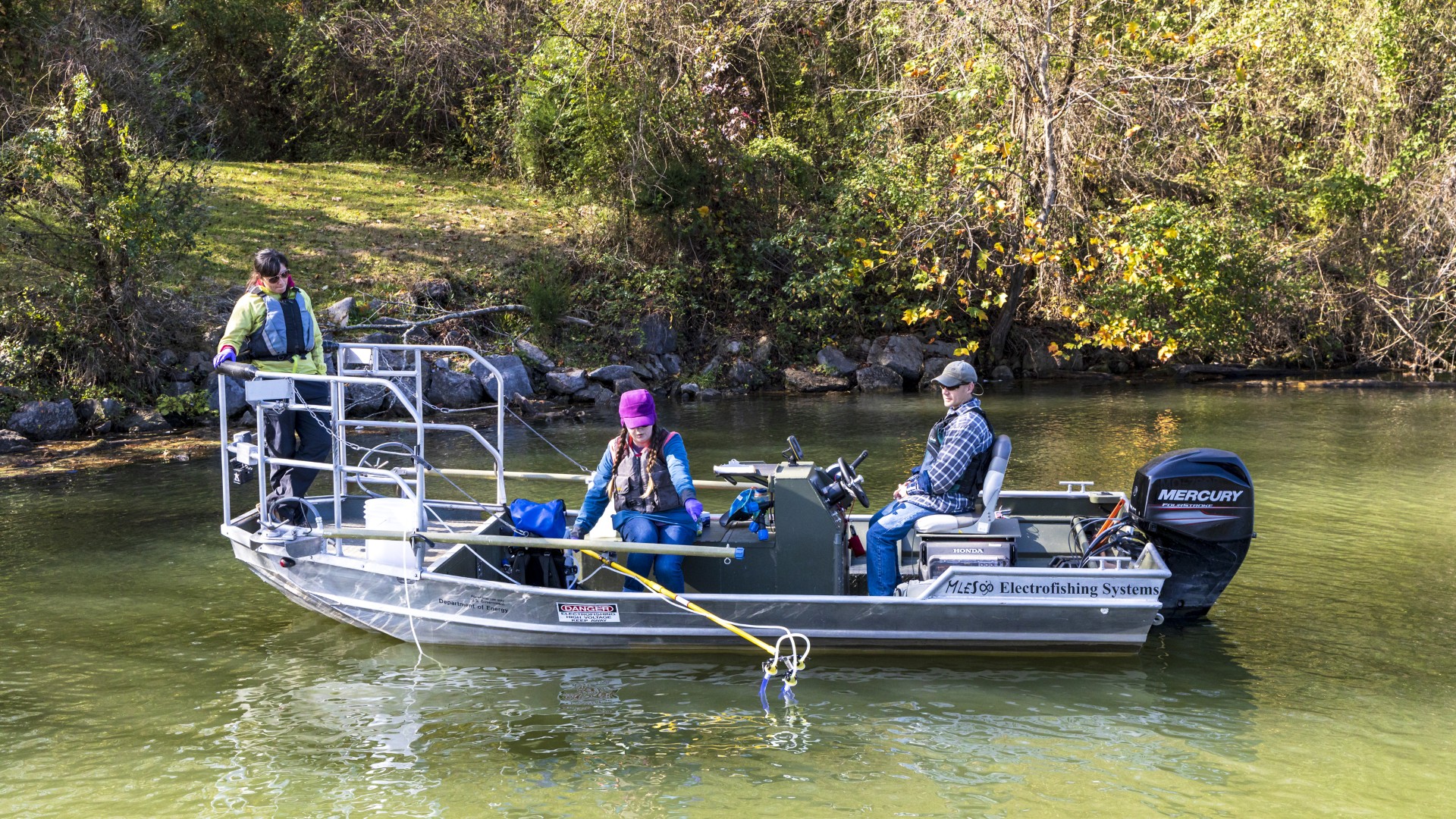
Brenda Pracheil (left), Kristine Moody (middle) and Trent Jett (right) use an eDNA collection device at Melton Hill Reservoir near Oak Ridge, Tennessee. Credit: Carlos Jones/ORNL, U.S. Dept. of Energy
FASTER, CHEAPER, SAFER BIOMONITORING
Environmental DNA is genetic material that organisms leave behind as they live in or move through a habitat, and it is found in water, air, soil and sediment. From vial-sized samples the genes are sequenced, analyzed and compared to a reference library of known genomes, thus providing insight into what aquatic life is or is not present in a habitat. The process will be transformative to the field of biological monitoring, according to Moody, and offers practical benefits to hydropower operators tasked with conducting ecological surveys to satisfy regulatory requirements.
Collecting eDNA is less cumbersome and labor intensive than methods currently in use, such as electrofishing, gill netting, or trapping, which require hours of time and a team of skilled professionals to go out to the field to obtain the data. By contrast, eDNA sampling can be done by a single person with a small pack of equipment. The task is a good candidate for automation as well. There are robotic collectors on the market or in active development, which would be especially useful at sites that are too hazardous or too remote for human surveyors.
Taking eDNA samples is also less invasive to animals and their habitat, as it does not require taking tissue samples from the organisms themselves and has little impact on the site.
All of this translates to big savings. A conventional survey at Pacific Gas and Electric’s Kerckhoff Hydroelectric Dam in Fresno County, California, for example, came with an estimated price tag of $294,012, while a comparable eDNA survey at this facility came to $42,086, according to Federal Energy Regulatory Commission documents cited by the review paper authors. That works out to an 86% reduction in cost.
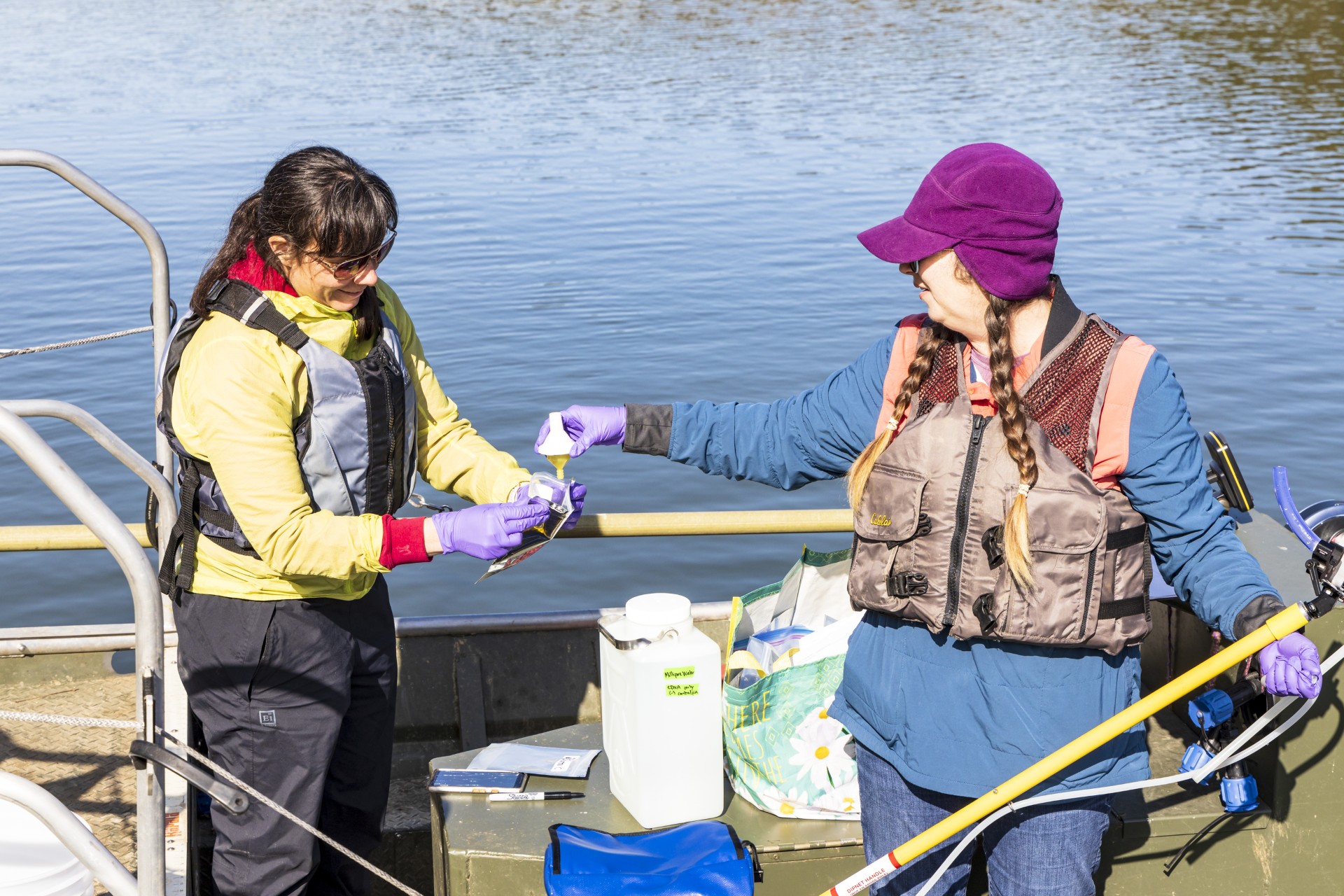
Brenda Pracheil (left) and Kristine Moody (right) collect samples at Melton Hill Reservoir near Oak Ridge, Tennessee. Credit: Carlos Jones/ORNL, U.S. Dept. of Energy
METHOD CATCHES A BIG FISH IN THE HYDROPOWER POND
But is eDNA better at species detection? For five years Moody and colleagues have put it to the test, and the answer is yes. The evidence is compelling enough to get a major hydropower operator to become an active collaborator in their work.
In 2020, Moody and Pracheil launched a pilot study at Melton Hill Reservoir in Tennessee designed to see how well eDNA sampling performed in hydropower reservoirs. During an early field expedition, they happened to cross paths with a team of biological surveyors who were netting fish. The group was employed by the dam’s operator, the Tennessee Valley Authority, the largest public power provider in the nation. The utility’s holdings include 49 dams in the Tennessee River watershed, a system that encompasses 40,000 miles of rivers, streams and tributaries threading through seven states. Each year, it conducts biological surveys at about 200 stations in the watershed.
The surveying team was intrigued by the possibilities eDNA offered and accepted ORNL’s invitation to join the study. TVA’s participation made it possible to do a direct comparison of eDNA sampling and conventional surveying techniques. The study also benefited from the utility’s 30 years of archival data.
The results were encouraging: 59 species were detected through eDNA sampling, nine of which had not been observed before with conventional surveys, suggesting that eDNA sampling could be used to create a more comprehensive picture of aquatic life at a site.
In 2024, Moody teamed up with TVA and the Electrical Power Research Institute, or EPRI, for a new project. This time the testing ground was the Apalachia Dam on the Hiwassee River, deep in the mountains of western North Carolina. The site’s isolation makes conventional biomonitoring particularly difficult. In addition to demonstrating that eDNA sampling could alleviate these logistical challenges, researchers expanded the scope of their inquiry by testing eDNA with another type of molecule called environmental RNA, or eRNA, to see if they could detect and count organisms other than fish, such as mussels, amphibians and aquatic plants.
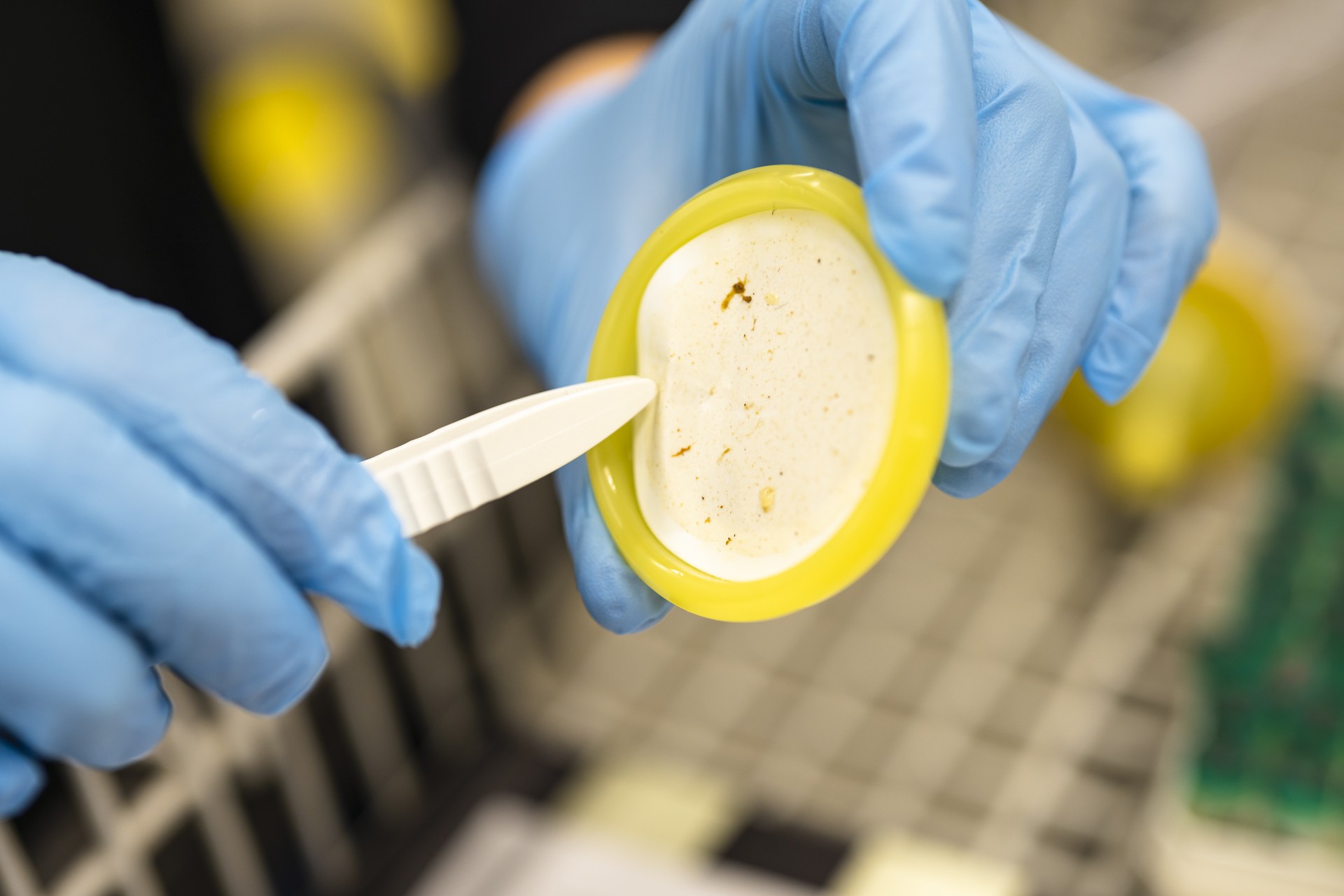
Researcher Kristine Moody removes a filter from an eDNA collection device. Credit: Carlos Jones/ORNL, U.S. Dept. of Energy
Compared to eDNA, eRNA sampling and analysis is still in its infancy, but ORNL’s work shows that it has the potential to offer even better results than eDNA. Unlike eDNA, eRNA is shed only by living creatures, and once dispersed into the environment it breaks down quickly, in just a few hours. This means eRNA could be a more accurate indicator that a live animal is truly present in the environment, or was very recently, and as such it could be used for real-time monitoring.
The experiment was a success, demonstrating the power of combining eDNA and eRNA.
“Our science is sound, especially when it comes to species detection, and we are expanding the toolbox for species enumeration with eRNA,” Moody said. “This new approach will help propel the broader use of environmental nucleotides into regulatory compliance.”
For its part, TVA has added eDNA sampling equipment to its biomonitoring arsenal. The utility is currently evaluating how it would best be incorporated into its existing programs.
“The promise of this approach is significant because eDNA can dramatically increase the sensitivity and spatial extent of detecting species,” said Aaron Coons, an aquatic zoologist with TVA. “By continuing to work with technical experts like those at ORNL, eDNA may ultimately increase the value of our aquatic monitoring programs.”
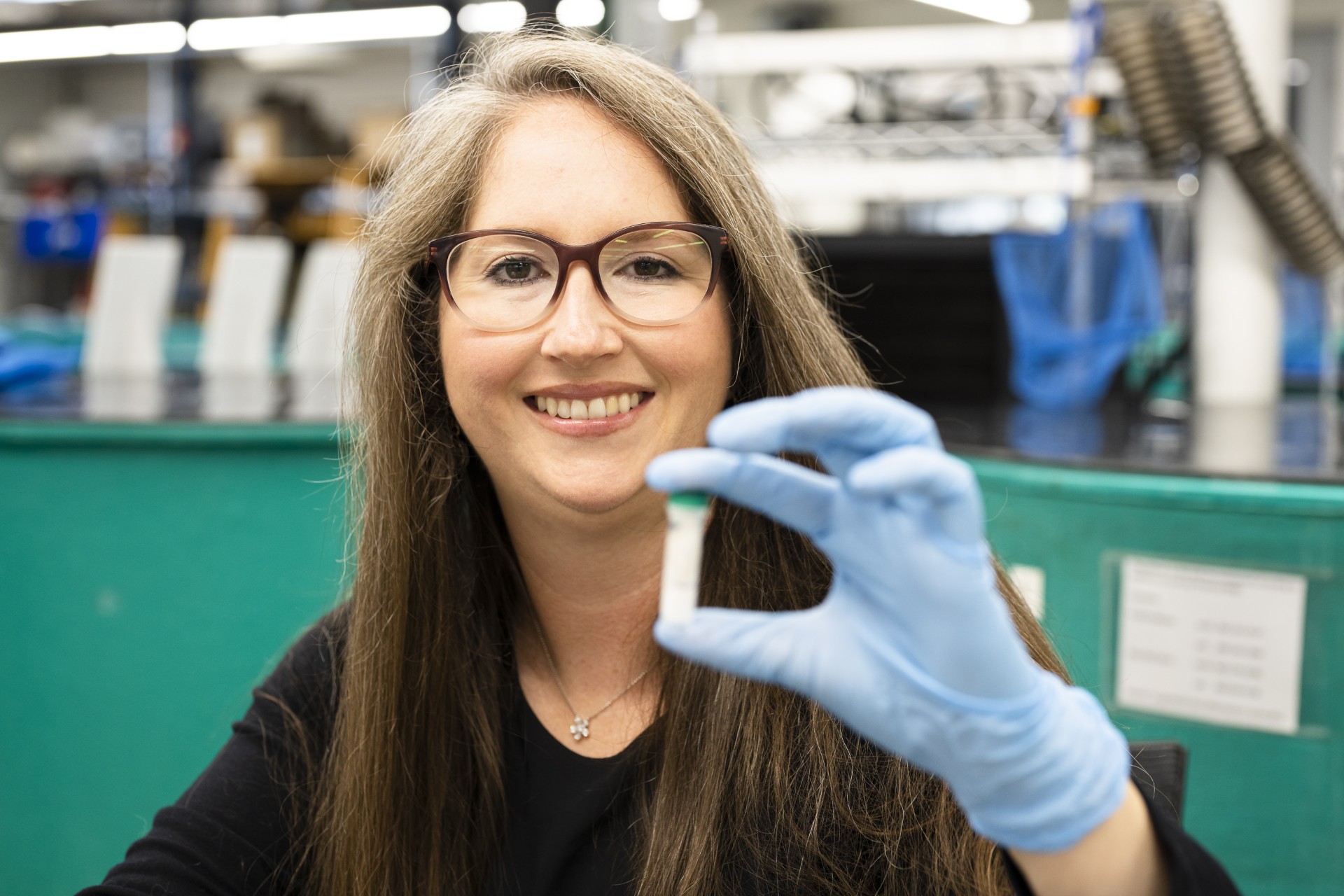
Kristine Moody holds up a sample in the aquatics laboratory at Oak Ridge National Laboratory. Credit: Carlos Jones/ORNL, U.S. Dept. of Energy
AUTOMATING eDNA
Moody said the fundamental science exploring eDNA’s effectiveness and potential use is well established. Now Moody and her colleagues are innovating new ways to apply the technology. They recently patented an autonomous sampler called eDNA-bot and are developing a prototype with the firm Smith-Root, Inc.
Once market-ready, eDNA-bot will be the size of a suitcase, and could be left in the field for several months at a time. The bot will effectively be a mobile laboratory, able to collect samples, process and analyze the eDNA, and transmit the data to a remote, external device, like a hydropower employee’s laptop or office computer. It would allow hydropower operators to conduct constant, real-time monitoring in a streamlined way. In addition to facilitating biodiversity surveys, eDNA-bot could provide early warning of the encroachment of an invasive species or an incipient algae bloom.
Overall, these collaborations will bring about better resolution for aquatic species detection, distribution and abundance estimates in hydropower-regulated rivers.
The review paper the team just published gives a thorough overview of the technology’s strengths, challenges and potential. In addition to Moody and Pracheil, co-authors on the paper include Steven Gardner of ORNL; Dana McCoskey of the DOE Water Power Technologies Office; Katherine Morrice of PNNL; and Line Sundt-Hansen and Frode Fossøy from the Norwegian Institute for Nature Research in Trondheim, Norway.
This research was funded by the DOE Water Power Technologies Office.
UT-Battelle manages ORNL for DOE’s Office of Science, the single largest supporter of basic research in the physical sciences in the United States. The Office of Science is working to address some of the most pressing challenges of our time.
For more information, please visit energy.gov/science.

