

 Back to All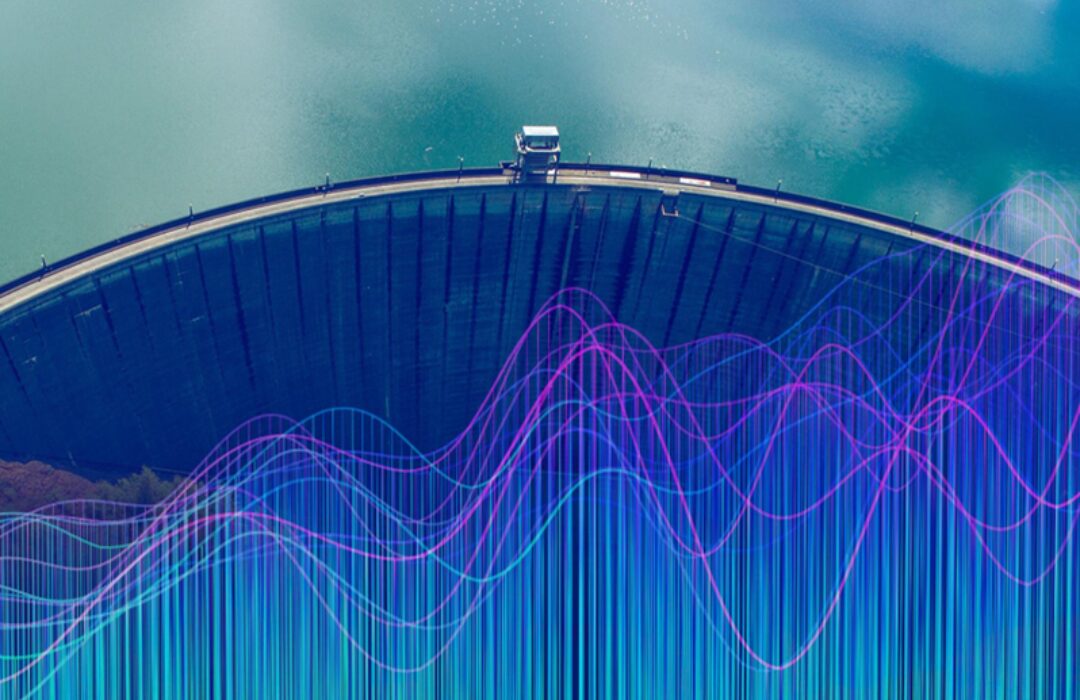
From assembly lines to aircraft design, key industries are increasingly operationalizing digital twins: precise virtual doppelgangers of equipment and facilities informed by real-time, real-world data.
Digital twins allow engineers and operators to efficiently monitor and control their assets—and they also allow any modifications to be realistically tested in a simulated environment before making changes to physical equipment.
At the Department of Energy’s (DOE) Pacific Northwest National Laboratory (PNNL) and Oak Ridge National Laboratory (ORNL), researchers are helping hydropower facilities implement custom digital twins to optimize their operations and reduce outages.
HOW CAN HYDRO BENEFIT FROM DIGITAL TWINS?
The domestic hydropower fleet is aging. At an average age of 60+ years, many U.S. hydropower facilities are in desperate need of modernization.
Digital twins offer an extremely cost-effective pathway for smart modernization of these critical facilities with virtually no modifications to physical infrastructure.
A bespoke digital twin for a hydropower facility, built using data from the facility itself, can enable a range of new functionality:
- High-resolution, real-time performance monitoring that intelligently flags deviations from expected operations.
- Accurate predictions of equipment failures and maintenance needs, reducing unplanned outages.
- Optimized energy production based on patterns in operational data and realistic simulations of multiple operation scenarios.
ONGOING SUCCESS
PNNL has already worked with multiple hydropower facilities to successfully implement digital twins, achieving real-world results in operations and planning.
At Alder Dam in western Washington state, PNNL, in collaboration with ORNL and Tacoma Power, implemented a digital twin solution for two of their 25 MW units. The twin, based on a physics-informed neural network, was trained using robust data from the facility and is currently being validated and can be used to improve monitoring. The twin’s outputs are visible on a user-friendly, web-accessible dashboard.
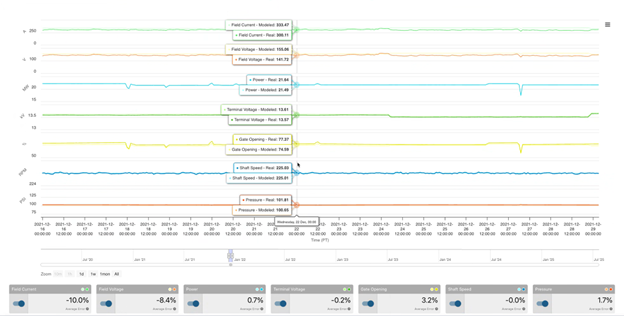
For the Rocky Reach Dam in north-central Washington state, PNNL worked with the Chelan County Public Utility District to build a digital twin of two generating units with a Kaplan turbine using high-resolution operational data. The digital twin now allows operators to simulate scenarios, optimize operations, and explore potential outcomes before making any physical changes to the facility. The team is working on developing models of vibration, bearing, and cooling systems for Francis and Kaplan units and integrating those models with the digital twin to enable predictive maintenance tools.
IMPLEMENTING DIGITAL TWINS
If you’re interested in seeing how a digital twin could improve operations at your hydropower facility, PNNL is actively seeking new partners for its work on digital twins. A custom digital twin—built using your facility’s unique data and characteristics—could bring significant benefits to operations and modernization.
For more information on working with PNNL to develop a digital twin for hydropower, email the team at [email protected].

