


 Back to All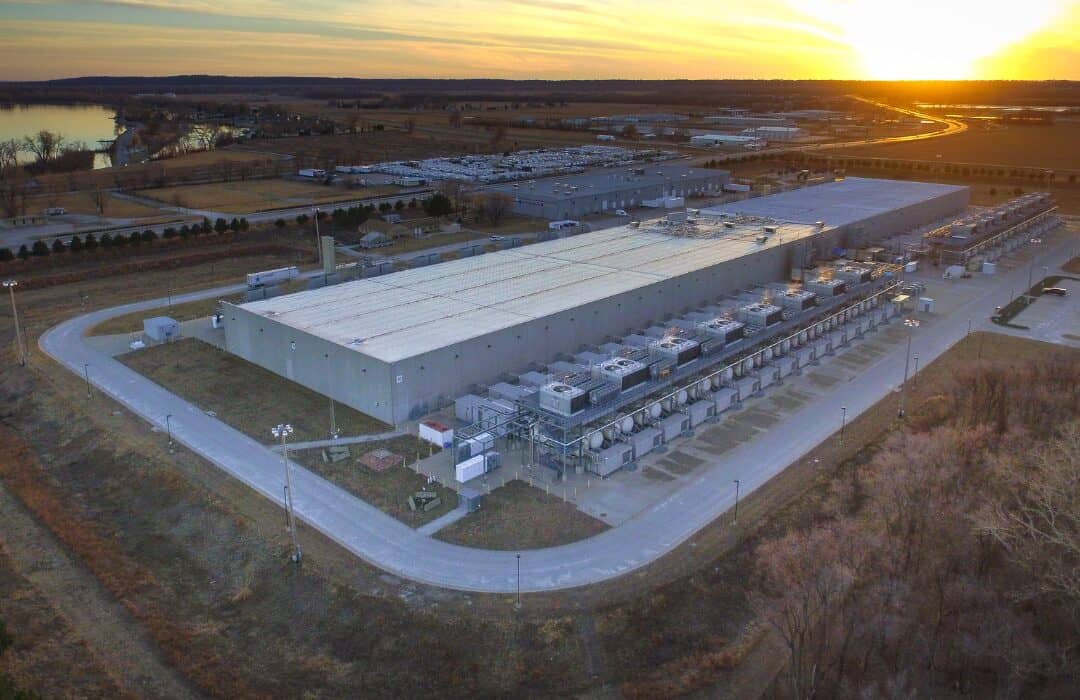
Editor’s Note: Check out NHA’s recently published white paper “Winning the AI Race: Tapping Into Pumped Storage Hydropower” to learn more.
The rapid expansion of data centers and artificial intelligence infrastructure is fundamentally reshaping electricity demand in the United States. These facilities are not only energy-intensive, but they are also reliability-sensitive, requiring continuous, predictable power at a scale the grid was not designed to deliver quickly.
According to the Federal Energy Regulatory Commission’s (FERC) “The State of the Markets Report 2025,” the U.S. had more than 50 GW of data center capacity operating at the end of 2025, representing 24% compound annual growth since 2020. Data centers are also increasing in size, growing from an average of 25 MW in 2020 to nearly 80 MW for those coming online in the last year; additionally, FERC staff noted “Facilities this large might need new generation or transmission infrastructure to reliably interconnect.”
As policymakers look for ways to accelerate “speed to power,” the central question is no longer about whether the grid can produce enough electricity, but if it can do so reliably, at the right locations, and on timelines that align with private investment.
Pumped storage hydropower (PSH) sits at the center of that challenge, as it offers an unparalleled ability to optimize the output of existing energy technologies by converting intermittent or inflexible generation into firm, dispatchable capacity without requiring additional baseload or variable resources.
Yet PSH, which has long development timelines and requires substantial upfront capital, has been hampered by a combination of restrictive regulatory policy paired with investment uncertainty.
If the United States is serious about winning the race to power advanced manufacturing and AI, then pumped storage hydropower is the obvious, reliable energy solution.
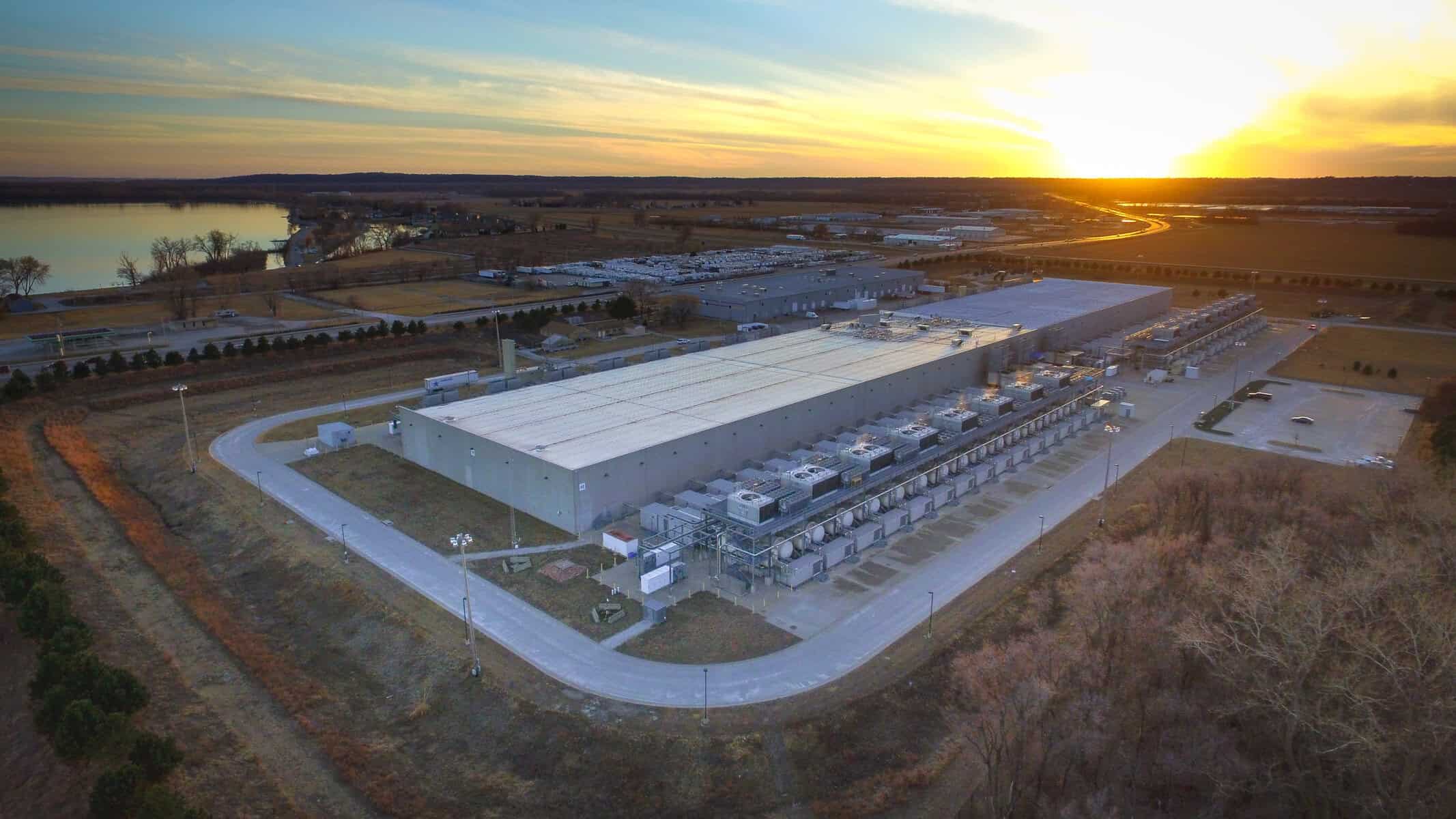
Google Data Center in Council Bluffs, Iowa. (Photo Credit – Chad Davis / Wikimedia)
LOAD GROWTH IS THE DRIVER, RELIABILITY AND CONGESTION ARE THE CONSTRAINTS
Electricity demand in the Western Interconnection is projected to grow more than 20% over the next decade, driven largely by data centers, advanced manufacturing, and electrification. At the same time, more than 24 GW of coal, natural gas, and nuclear capacity are scheduled to retire. The resource mix replacing those units is overwhelmingly variable renewables and short-duration battery storage.
This transition creates a structural reliability problem. Data centers cannot tolerate voltage instability, frequency deviations, or extended outages, yet the grid is losing the synchronous, spinning-mass generation that historically provided inertia, voltage support, and black-start capability. Inertia levels in the Western Electricity Coordinating Council (WECC) have already declined materially and are projected to fall further as conventional units retire. Pumped storage directly addresses this gap by providing physical inertia, grid-forming capability, and long-duration dispatchability that extends well beyond daily peak management.
Load growth also exposes a second, equally binding constraint: transmission congestion.
Much of the West’s new generation is located far from load centers, and chronic congestion along major transmission corridors frequently prevents low-cost energy from reaching demand; pumped storage plays a unique role here. When located near load, PSH functions as a dispatchable generator that reduces reliance on constrained imports. When located near generation, PSH absorbs surplus energy that would otherwise be curtailed. In both cases, pumped storage hydropower expands effective transfer capability without building new wires.
This dual role allows pumped storage to act as a transmission asset as much as a storage resource, unlocking incremental load growth in regions where building new transmission or baseload generation would take a decade or more. At the same time, as a long-duration energy storage resource, PSH optimizes the output of existing nuclear, wind, and solar facilities – converting intermittent or inflexible generation into firm, dispatchable capacity without requiring additional baseload or variable resources. This system-level value is precisely what can unite a broader coalition of long-duration energy storage technologies.
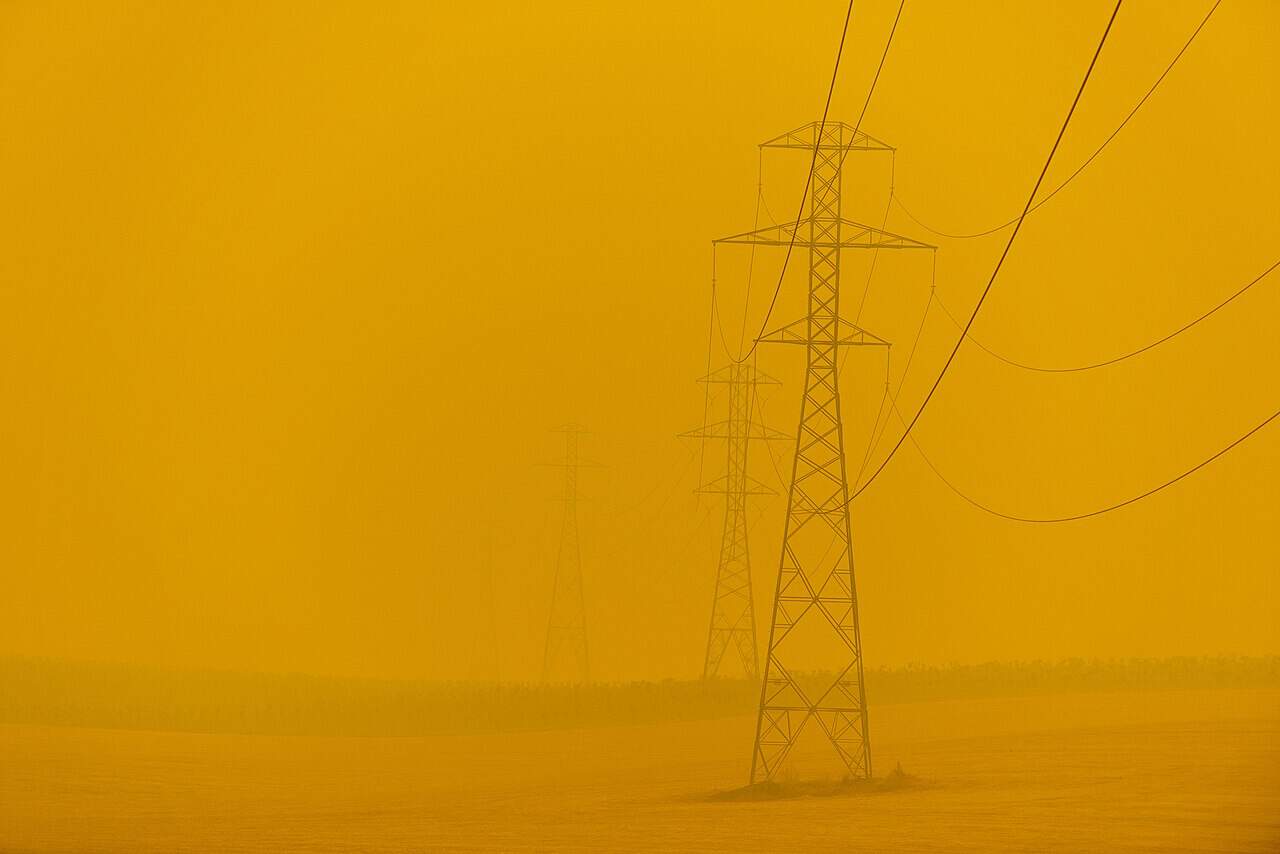
Transmission lines in Salem, Oregon. (Photo Credit – Oregon Department of Transportation / Wikimedia)
A WESTERN OPPORTUNITY READY TO MOVE
Of the roughly 60 GW of pumped storage capacity currently in the U.S. development pipeline, approximately 85% is in the Western Interconnection – one of the two wide area synchronous grids in the North American power transmission grid. Several of these projects are fully licensed and shovel-ready, yet none are under construction today. That disconnect matters.
Many proposed pumped storage facilities are located near major Western load centers, including Phoenix, Salt Lake City, Portland, and California’s coastal metros, and along transmission corridors already identified by the Department of Energy (DOE) as chronic congestion points.
For data center developers facing long interconnection queues and escalating congestion costs, these projects represent one of the few near-term options to secure firm, reliable power at scale.

The Phoenix, Arizona, metro area. (Photo Credit – Melikamp / Wikimedia)
WHAT’S HOLDING PROJECTS BACK?
Despite the clear system need and a robust development pipeline, pumped storage projects continue to stall for two related reasons.
First, pumped storage requires long construction timelines and substantial upfront capital. Civil works account for the majority of project costs, and uncertainty around subsurface conditions, schedules, and cost overruns creates financing risk that utilities, regulators, and lenders struggle to absorb. Even when projects are fully licensed, this construction risk can delay final investment decisions for years.
Second, wholesale market signals remain unstable and incomplete for long-duration storage. Capacity prices are unpredictable, participation models assume short-duration resources, and essential reliability services are undervalued or uncompensated. This suppresses long-term revenue certainty, making it difficult for developers to secure financing or for offtakers to commit to long-term contracts.
Together, these challenges explain why shovel-ready projects remain on the sidelines even as data center demand accelerates and grid reliability margins tighten.
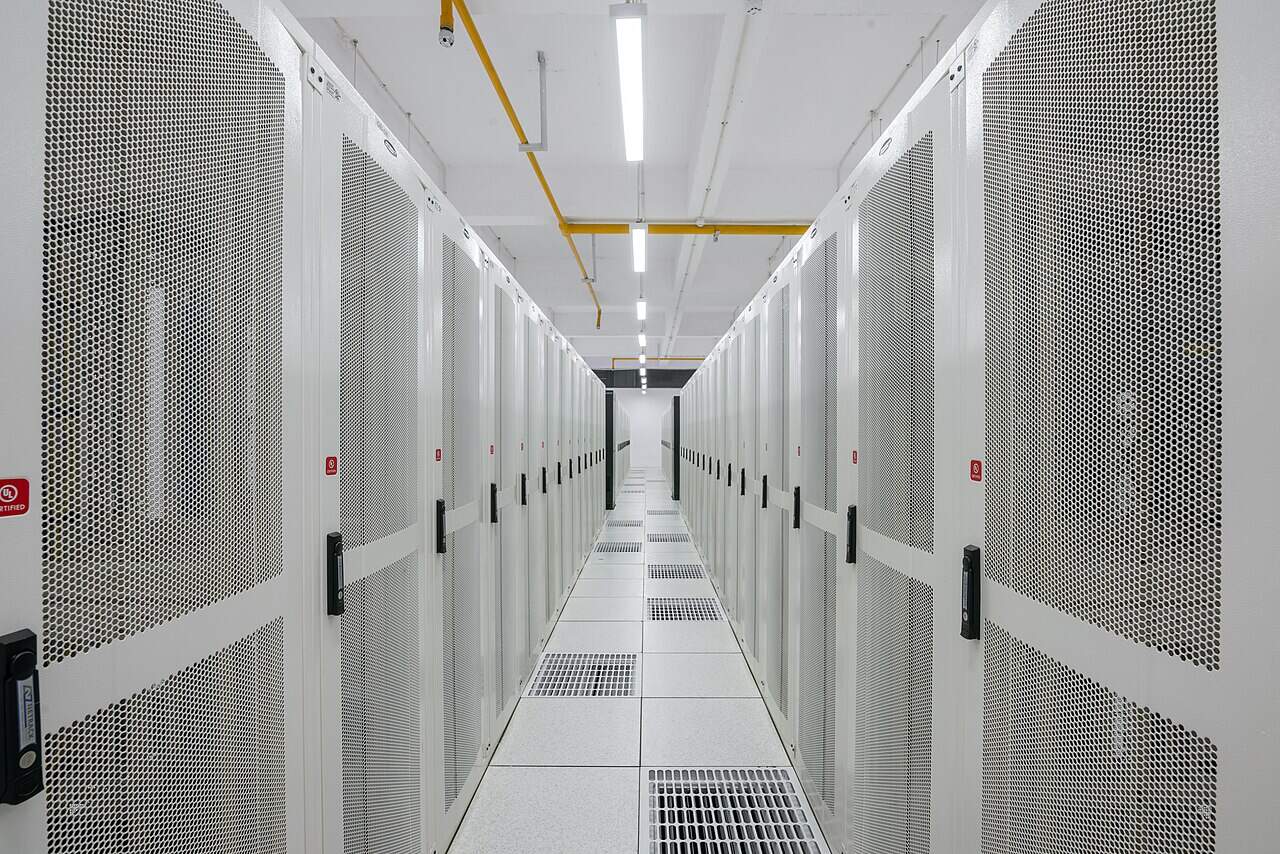
Data storage racks at Pi Data Centers. (Photo Credit – Pi Data Centers / Wikimedia)
LPO ENERGY DOMINANCE FINANCING AND THE ROLE OF LPO
DOE now has a clear tool to address the first of these barriers. Recent updates to the Title XVII program under Energy Dominance Financing explicitly recognize projects that support grid reliability and system adequacy, not just emissions reduction. This reflects an important shift: reliability is a temporal challenge as much as a capacity one.
Pumped storage hydropower fits squarely within this mandate.
One of the most impactful roles the Loan Programs Office (LPO) can play is mitigating construction risk for large, capital-intensive reliability assets. By providing targeted loan guarantees or construction-risk backstops, LPO can limit ratepayer exposure, improve state commission confidence, and enable utilities to move forward with projects that would otherwise stall.
Crucially, this support addresses a defined risk window – defined as the period between groundbreaking and commercial operation. While it does not replace private capital or long-term market revenues, LPO’s targeted loan guarantees and construction-risk backstops allow projects to reach operation so their full reliability value can be realized.

Tennessee Valley Authority’s Raccoon Mountain Pumped-Storage Plant in Marion County, Tennessee. (Photo Credit – Tennessee Valley Authority)
WHY FEDERAL INVESTMENT ALONE IS NOT ENOUGH
While Energy Dominance Financing can help bring first-mover projects online, the funding does not solve the second, more fundamental problem: market rules that fail to value long-duration reliability.
Federal financing can reduce risk, but it cannot correct structural inefficiencies in wholesale markets. As long as participation models, capacity accreditation, and ancillary service compensation are built around short-duration resources, investment in long-duration storage will remain constrained.
To enact lasting, meaningful change, it is essential for reform to occur at the Federal Energy Regulatory Commission.
FERC has clear authority under the Federal Power Act – the primary law governing the licensing of non-federal hydroelectric projects and the regulation of interstate electricity transmission and sales – to direct regional transmission organizations and independent system operators to revise unjust, unreasonable, or unduly discriminatory market rules. This reform has precedent, as past Commission orders required markets to accommodate variable renewable generation and to open participation to battery storage; long-duration storage now faces a similar inflection point.
A dedicated FERC-led effort on long duration energy storage should do the following:
- Modernize participation models to reflect long-duration operations
- Establish appropriate compensation for grid-forming services
- Reform capacity accreditation frameworks to account for duration and seasonal performance
Yet these reforms would not favor a single technology; instead, they would create market conditions that properly value reliability by enabling pumped storage, as well as a broader coalition of long-duration storage solutions, to compete on their merits.
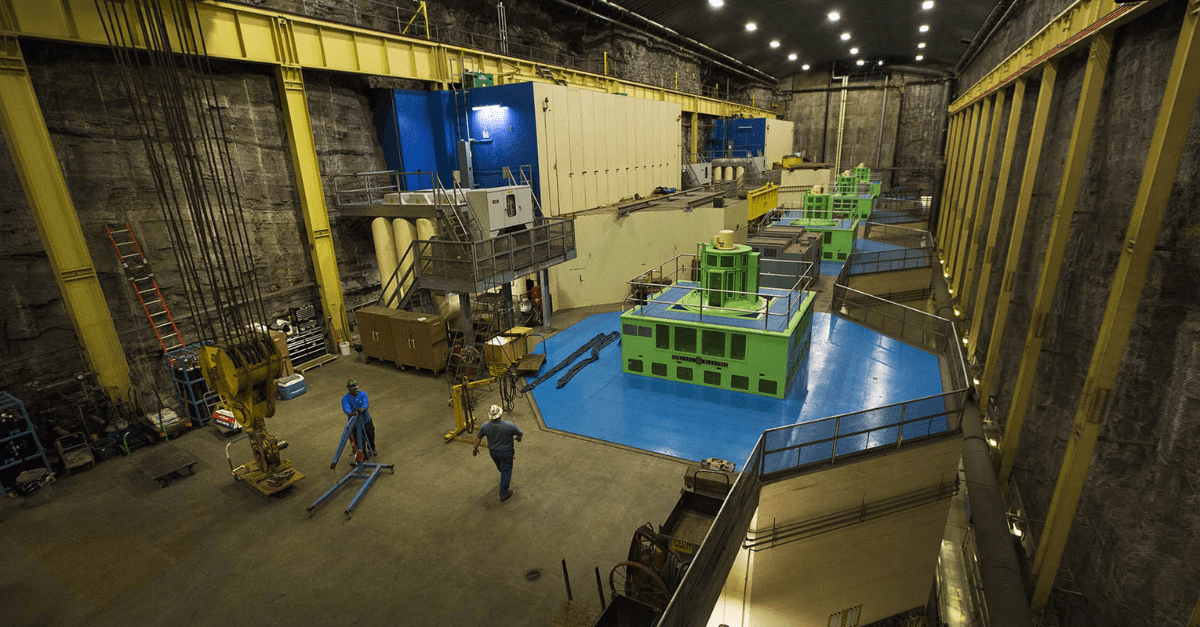
Inside FirstLight’s Northfield Mountain Pumped Hydro Storage Station in Northfield, Massachusetts (Photo Credit – FirstLight)
A CLEAR CALL TO ACTION
Pumped storage hydropower is the nation’s largest and most proven form of long-duration energy storage, representing 88% of all utility-scale energy storage capacity in the United States, and it’s uniquely positioned to support the rapid expansion of data centers and other reliability-critical loads, especially in the West.
To unlock this potential, two actions must move in parallel.
First, DOE needs to fully deploy Energy Dominance Financing to prioritize pumped storage as reliability infrastructure, utilizing the Loan Programs Office to serve a central role in mitigating construction risk for shovel-ready projects in high-growth regions.
Second, FERC must lead a focused effort to remove market barriers to long-duration energy storage so that reliability value, not just energy output, is reflected in wholesale market outcomes.
To help push this work forward, National Hydropower Association (NHA) is taking the lead by coordinating with policymakers, regulators, national laboratories and developers to ensure that pumped storage and other long-duration energy storage technologies are recognized, valued, and deployed at the scale this moment demands.
If the United States intends to win the race to power artificial intelligence and advanced manufacturing, then it must first win the race to build reliable power. Pumped storage hydropower is ready, now the policy framework needs to follow.