


 Back to All
Sponsored Content
Across the United States, hydropower operators are facing increasing pressure to modernize aging infrastructure, improve downstream river flows, enhance fish habitat, and comply with evolving environmental regulations. While turbines and generators often receive the most attention, valves play a critical role in the safe, reliable, and efficient operation of dams and water conveyance systems.
From outlet works and powerhouse systems to fish passage applications and water conveyance pipelines, specialized valves are essential for controlling and releasing water throughout hydro facilities. As many dams built in the early- to mid-1900s continue operating well beyond their original design life, utilities and water agencies are increasingly upgrading or replacing outdated valves that can no longer meet operational demands.
Many existing hydropower facilities are undertaking rehabilitation and modernization projects in order to enlarge outlet capacities, improve
How Specialized Valves Support Reliable Hydropower Operations
throttling capability, enhance cavitation resistance, and provide more reliable operation under changing environmental and regulatory requirements.
Where Valves Are Used in Hydropower Systems
Hydropower valves are found throughout both powered and non-powered dam infrastructure. Although the United States has approximately 80,000 dams, only about 2,400 include hydroelectric generation facilities.
Within hydro systems, valves are commonly installed in:
- Outlet works systems
- Water conveyance pipelines
- Valve stations
- Powerhouse cooling and drainage systems
- Turbine bypass systems
- Fish passage infrastructure
- Reservoir release systems
Among these applications, outlet works is the most common location for large hydro valves. Outlet works allow operators to safely release water downstream of a dam for environmental flows, reservoir management, maintenance activities, or emergency operations.
Increasingly, operators are required to release more water downstream to restore river ecosystems, improve fish migration conditions, and support recreational river use. In many cases, that means rehabilitating or enlarging outlet valves that may not have operated regularly for decades.
Understanding Head Conditions
Hydropower valve selection is heavily influenced by “head,” or the pressure created by water elevation.
Unlike many industrial applications where pressure is discussed primarily in PSI, hydro operators and civil engineers typically define systems in terms of head measured in feet. According to the United States Society on Dams (USSD), low-head dams are generally considered under 25 feet, medium-head dams range from 25 to 50 feet, and high-head dams exceed 50 feet.
During valve selection, both gross head and net head conditions must be carefully evaluated. Gross head represents the static elevation difference between the reservoir surface and the valve centerline, while net head accounts for pressure losses within the conveyance system during flow conditions.
Balanced versus unbalanced head conditions are also critical considerations. Unbalanced head occurs when full reservoir pressure exists on one side of the valve while atmospheric or reduced pressure exists on the other side. Balanced versus unbalanced head conditions significantly affect valve design requirements, pressure ratings, and actuation forces.
Throttling Knife Gate Valves for Low- and Medium-Head Dams
For heads ranging from 25 to around 350 feet, throttling knife gate valves have become a practical and economical solution for outlet works and guard valve service. Throttling knife gate valves are commonly used in these applications because they combine relatively simple construction with reliable throttling performance under demanding hydro conditions.
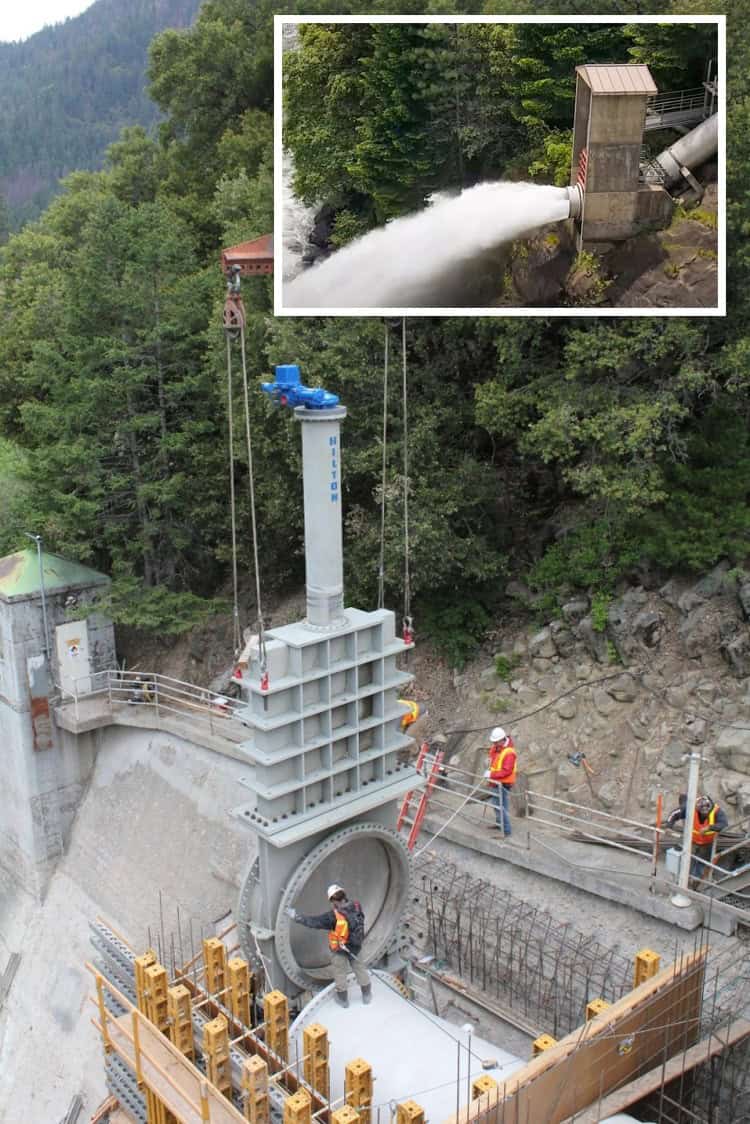
The throttling knife gate valve is an economical outlet valve for many hydro applications.
Unlike standard knife gate valves, throttling designs incorporate square gates and square-bodied configurations to help minimize vibration and cavitation during partially open operation. These features are especially important when valves must remain open at intermediate positions for extended periods to maintain environmental flow requirements.
For most hydro applications, throttling knife gate valves are not required to function as continuously modulating process control valves. Instead, they are designed for seasonal or periodic adjustments where operators may set the valve at a partially open position for days or weeks at a time.
Typical applications include:
- Outlet works
- Sluice outlet rehabilitation projects
- Fish flow management releases
- Reservoir drawdown systems
- Guard valve isolation service
Throttling knife gate valves can be manufactured in very large diameters, with installations commonly reaching 84” and larger. For the vast majority of dams, they offer a reliable and economical alternative compared to more specialized high-head valve technologies.
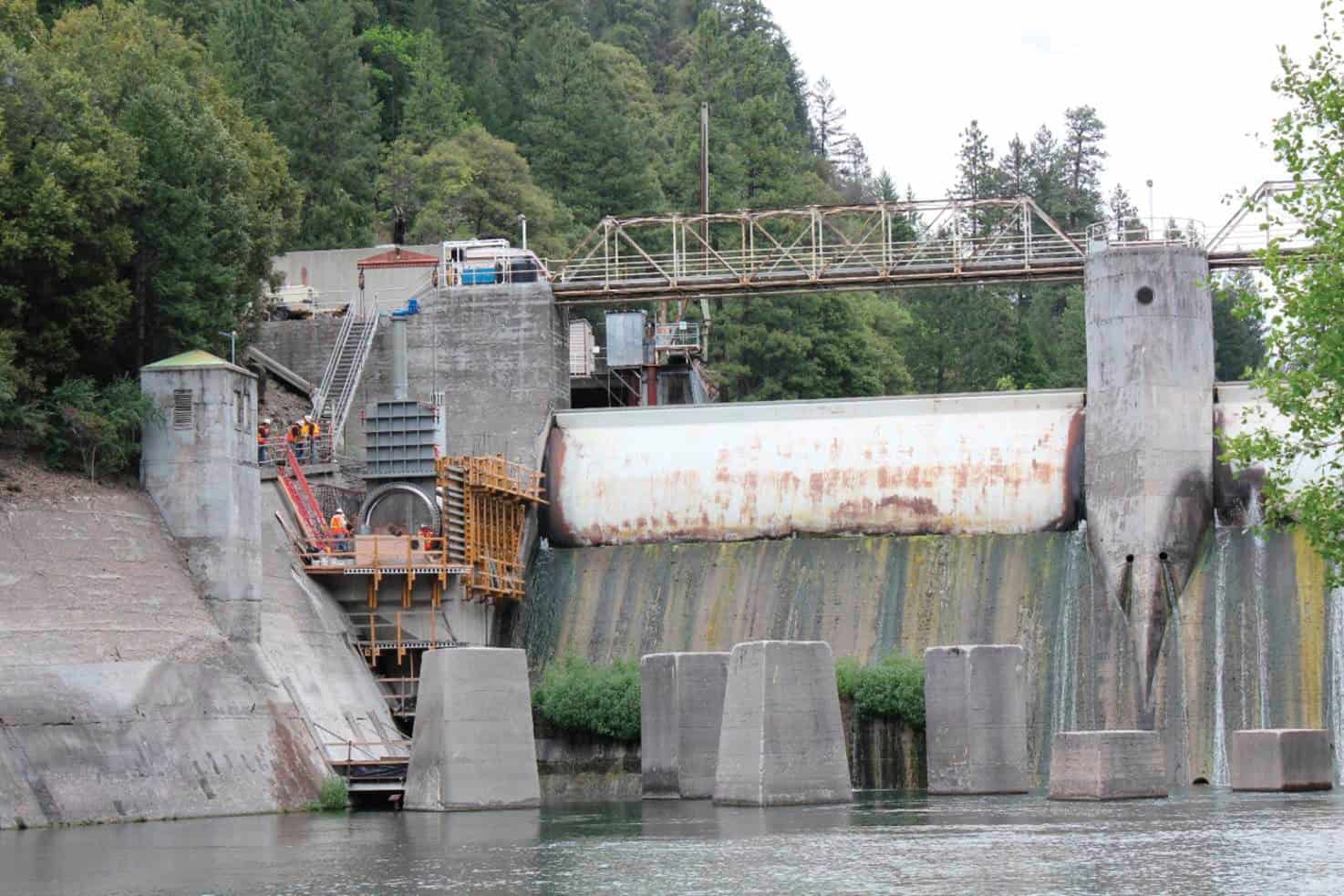
A 90″/102″ Throttling Knife Gate Valve (30 psi rating) is installed on a river in Northern California.
Jet Flow Gates for High-Energy Releases
As head pressures increase, valve requirements can become significantly more demanding. Higher head dams (greater than 350 feet) often require valves specifically designed to manage extremely energetic discharge conditions while minimizing cavitation, vibration, and structural wear. Jet flow gates are widely used in these applications.
Originally developed by the United States Bureau of Reclamation in the 1940s, jet flow gates are designed to safely dissipate energy while maintaining reliable operation under severe pressure conditions. Jet flow gates produce a highly concentrated, high-velocity discharge stream designed to move water downstream efficiently while reducing cavitation damage within the valve itself.
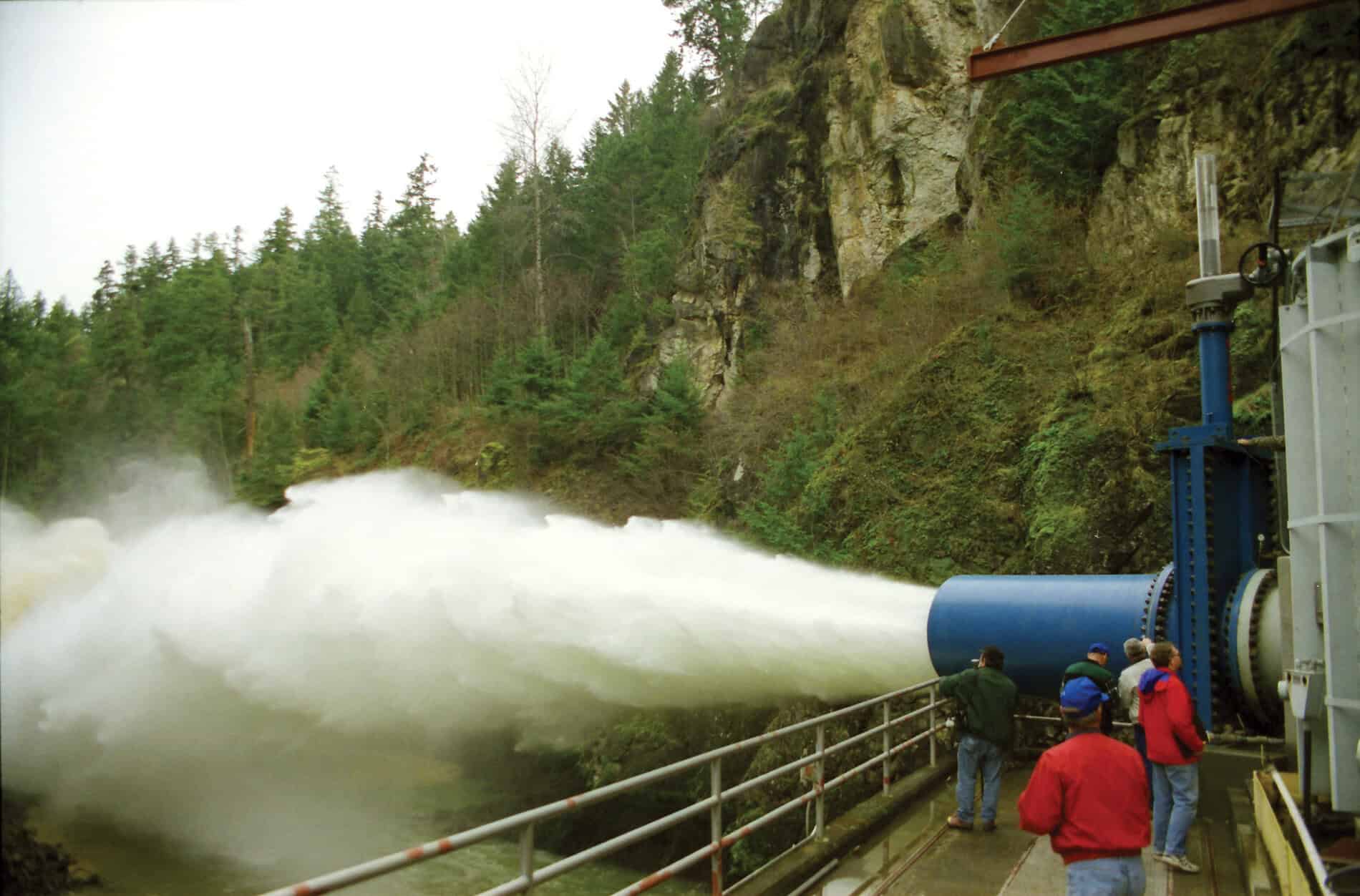
This 42″ Jet Flow Gate is installed at dam near Tacoma, Washington.
Key advantages include:
- Excellent cavitation resistance
- Reliable operation under high unbalanced head conditions
- Reduced vibration and galling
- Effective energy dissipation
- Suitability for severe service outlet applications
Although they can be installed on any height of dam, jet flow gates are more often selected for higher head dams or for facilities where operators prefer jet flow technology based on previous operational experience.
Because of their more complex construction and heavier-duty design, jet flow gates are typically more expensive than throttling knife gate valves. However, in high-head environments, their performance and durability often justify the investment.
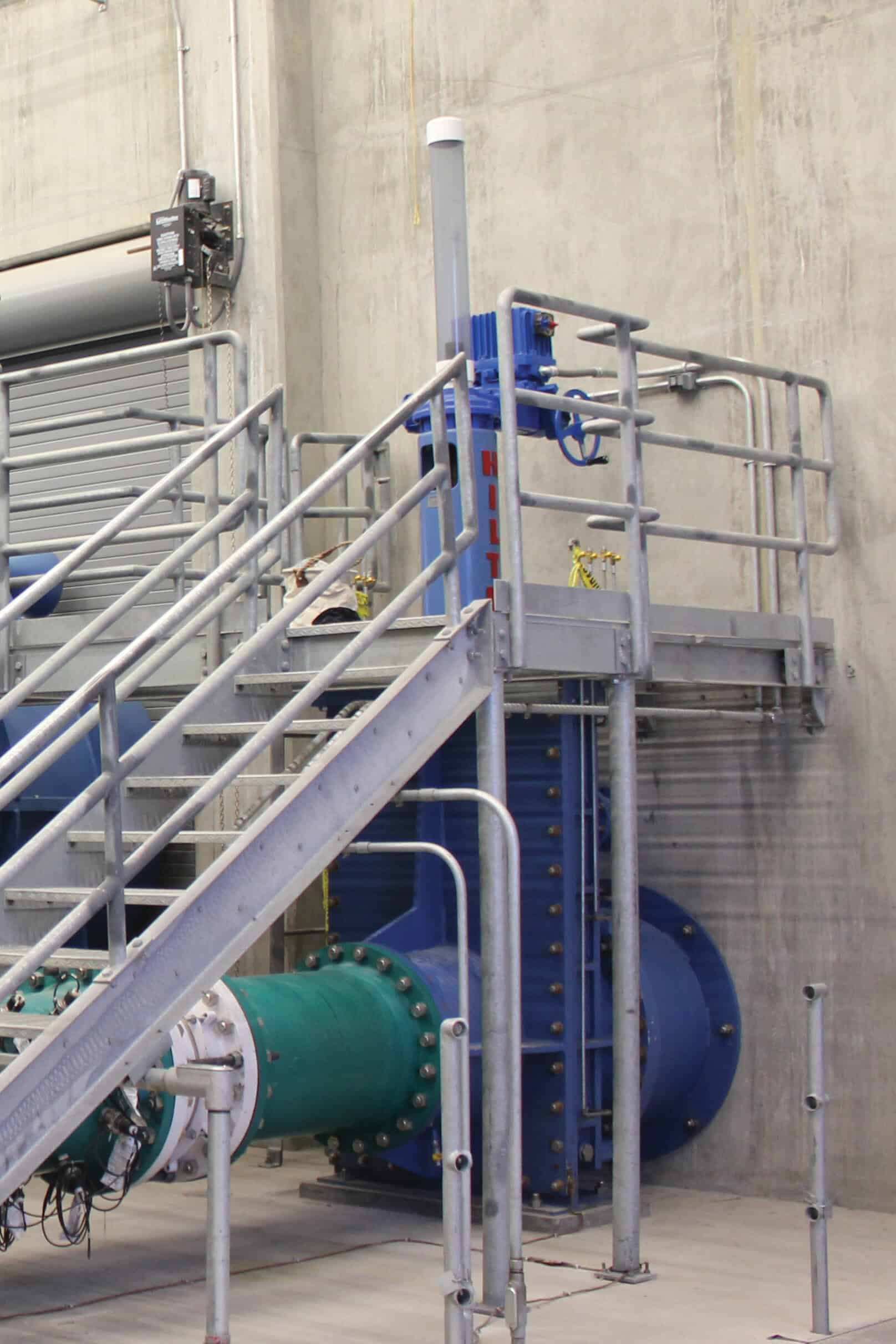
A 24″ Jet Flow Gate (150 psig rating) with motor operator on a dam in Southern California.
Fixed Cone Valves for Energy Dissipation
Fixed cone valves (also known as Howell-Bunger valves) are another important solution for higher head dam applications.
Recognizable by their dramatic cone-shaped discharge pattern, fixed cone valves are specifically engineered to dissipate large amounts of hydraulic energy safely. By discharging water outward in a radial spray pattern, these valves reduce cavitation risk and minimize structural stresses within the valve body.
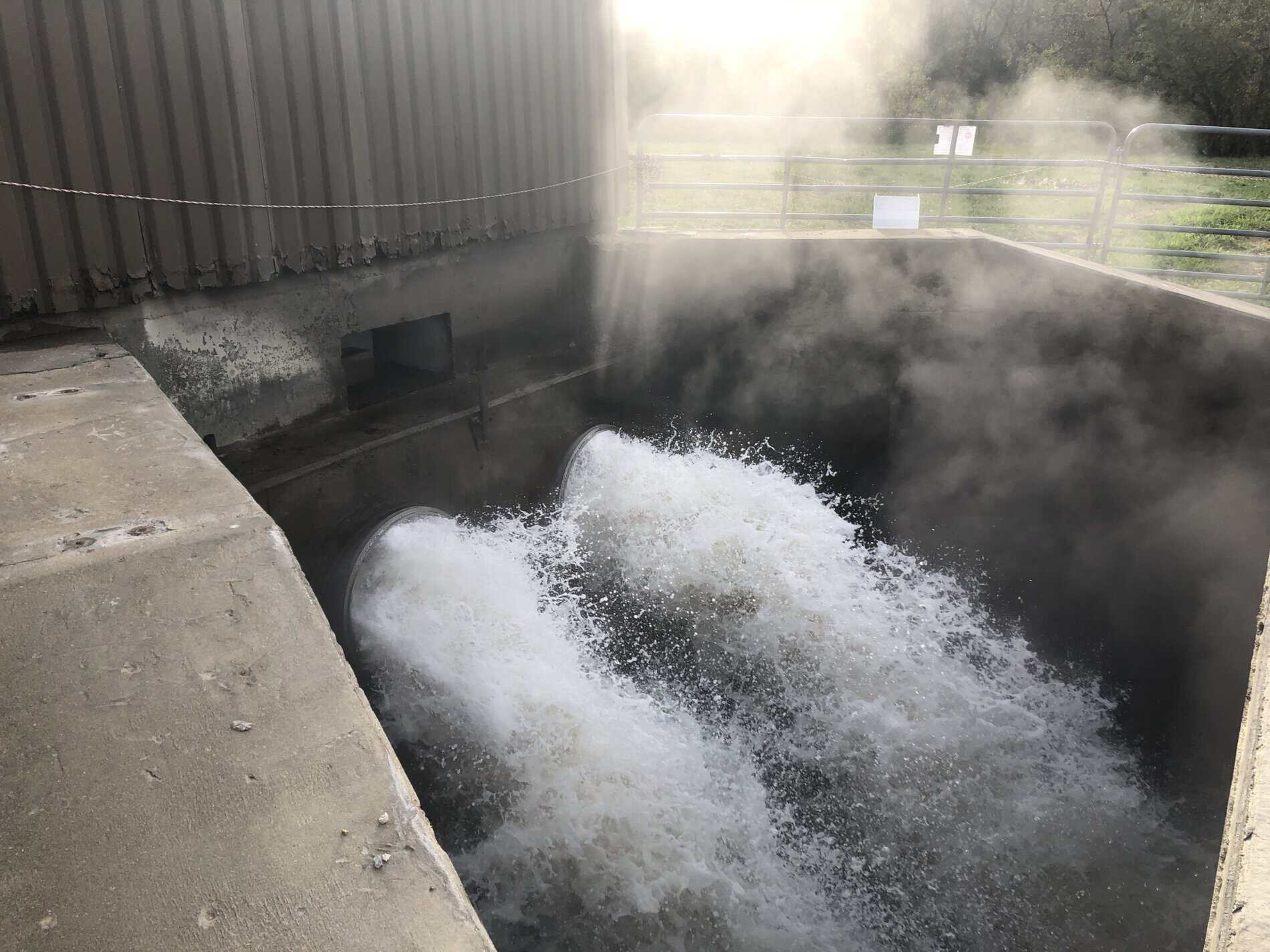
Two 14” Fixed Cone Valves installed at a nuclear plant in Illinois are equipped with baffled hoods that reduce the energy of discharge by ~90%.
Fixed cone valves are especially effective in applications where downstream energy dissipation is critical. In some installations, the discharge plume can extend across a wide area, requiring the careful consideration of the potential impacts to the downstream “splash zone.”
To address situations where the tailrace needs to be protected, many modern fixed cone valves incorporate discharge hoods that help concentrate flow and reduce spray dispersion.
Typical applications include:
- High-head reservoir releases
- Energy dissipation systems
- Environmental flow releases
- Emergency drawdown systems
- Turbine bypass applications
One of the major advantages of fixed cone valves is their ability to operate under extremely high-head conditions while requiring relatively low operating power.
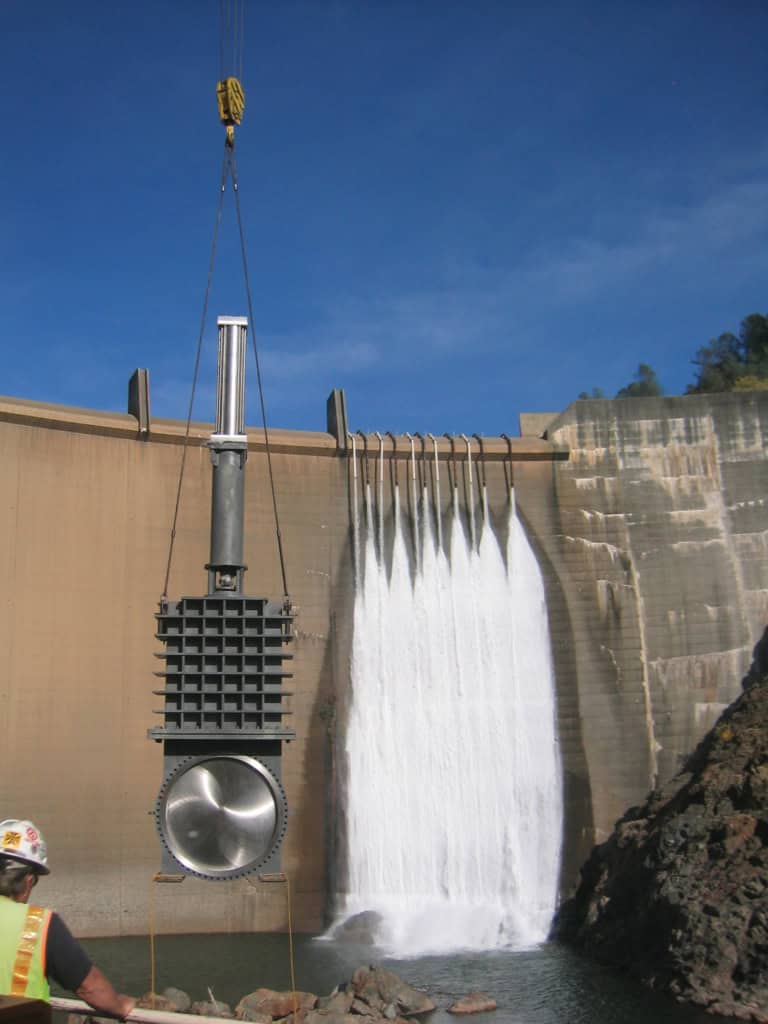
A 72″ Bonneted Knife Gate Valve (130 psi rating) with hydraulic cylinder actuator is used for a guard valve for a Fixed Cone Valve at a dam in Northern California.
Modernizing Existing Hydropower Facilities
Across the hydropower industry, upgrading aging infrastructure often requires specialized hydro valves.
Many dams constructed in the 1920s through 1950s still rely on original outlet systems that were never intended to meet today’s environmental flow requirements or operational expectations. Operators are increasingly replacing undersized or obsolete valves with modern designs capable of improved throttling performance, higher reliability, and better cavitation resistance.
As these modernization efforts continue, valve selection remains a critical component of successful hydropower rehabilitation projects. Matching valve technology to head conditions, operating requirements, and downstream discharge characteristics helps ensure long-term performance while supporting both operational and environmental objectives.
For hydropower operators, engineers, and regulators alike, valves may not always be the most visible part of a hydro facility, but they remain among the most essential.