



 Back to All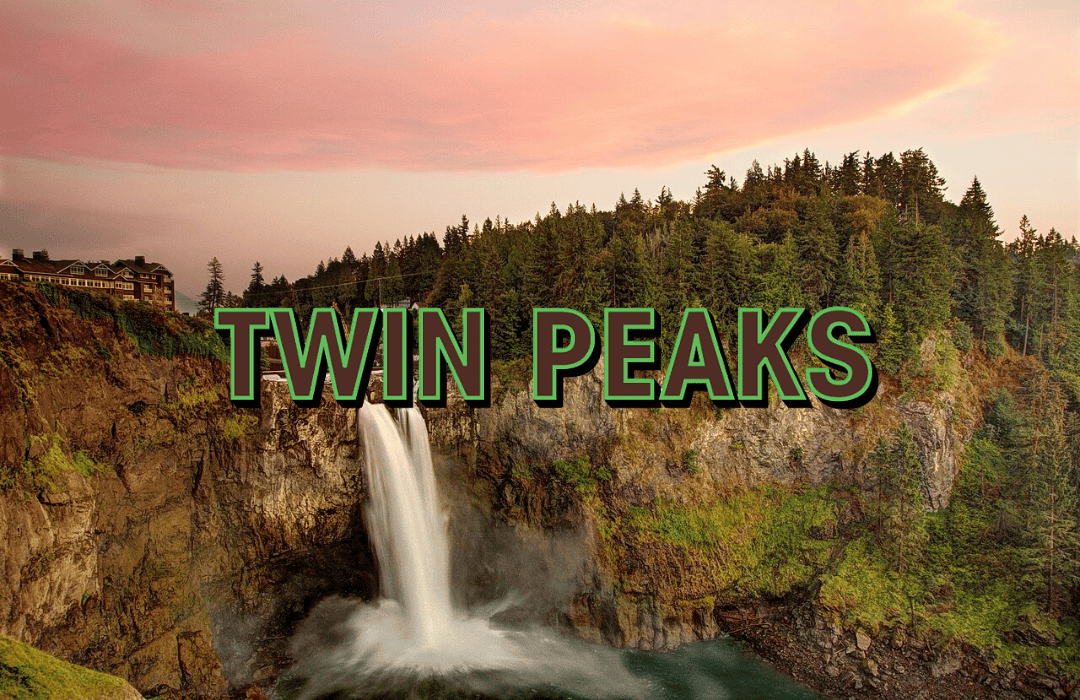
April 8th marked the 36th anniversary of the famed television show Twin Peaks. Created by renown director David Lynch, who passed away in 2025, and writer Mark Frost, Twin Peaks was groundbreaking when it debuted on ABC in 1990.
Celebrated for its surrealist imagery, bold approach to storytelling, and cast full of young and old talent alike, the world of television has never seen something quite like Twin Peaks before or since.
Set in the fictitious, Washington town of Twin Peaks, David Lynch used set pieces like logging operations, dense old growth forests, hydropower, and waterfalls cascading off towering cliffs to ground Twin Peaks in a setting quintessentially Pacific Northwest. It is here that Lynch allows the drama of a small town to unfurl, as it grieves the loss of a young woman, Laura Palmer, whose murder turns everyone into a potential suspect.
The introduction to Twin Peaks, famous in its own right, features plodding shots of industry and nature, culminating in footage of a waterfall – Snoqualmie Falls. While the story of Twin Peaks is a human drama, the introduction does not show a single one, preferring to ground the viewer’s perspective in the notion that the town of Twin Peaks is the true focus of the series.
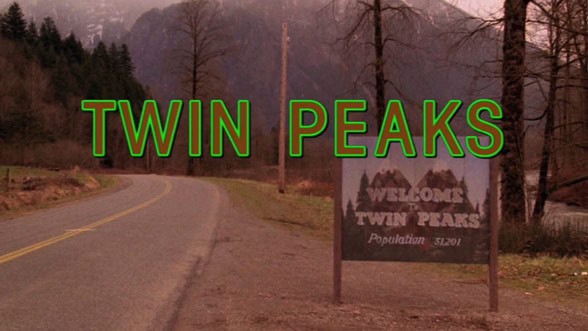
Introduction Title Card for Twin Peaks (Photo Credit – Paramount)
THE HISTORY OF SNOQUALMIE FALLS
Since time immemorial, the Snoqualmie People have lived in Snoqualmie Valley, located in western Washington. The falls hold traditional importance, as they are believed to be where the water’s rising mists connect heaven and earth.
The town of Snoqualmie was founded in 1889 by Charles Baker, a civil engineer, who was drawn, like many at the time, by the Seattle, Lake Shore & Eastern Railway – a company conceived of by Seattle business interests to tap into the resources of the Cascade Range, attract venture capital, and, ultimately, boost a link to a transcontinental railroad to Seattle.
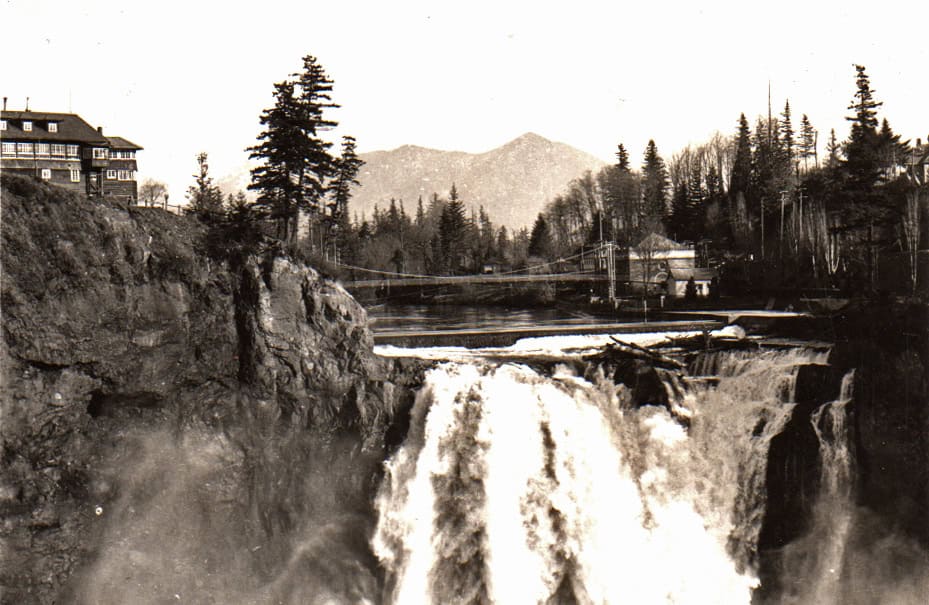
Snoqualmie Falls and the original Snoqualmie Falls Lodge, taken sometime between 1920 and 1946. (Photo Credit – Ellis Photo / Wikimedia)
A WORLD FIRST FOR HYDROPOWER
Compelled by the prospect of harnessing the natural drop in elevation of Snoqualmie Falls for the purpose of hydroelectric power generation, Baker formed the Snoqualmie Falls Power Company and began construction of his proposed plant in 1898.
Through the utilization of steam-powered pneumatic drills, the engineers excavated a vertical shaft from the intake to the cavern for Plant 1; a horizontal shaft was also dug to meet the vertical shaft. After the construction of a weir downstream of the intake and above the falls, raising the water for delivery to the plant, four Pelton turbines with Westinghouse generators were installed.
Named the Snoqualmie Falls Cavity Generating Station; Plant 1 was the first completely underground hydroelectric power plant ever built!
In 1908, Seattle Tacoma Power Company, the predecessor to Puget Sound Energy, purchased the Seattle Electric Company, which owned the project since 1903. In 1910, Seattle Electric Company commissioned Plant 2 with a single 9 MW Francis turbine-generator, yet accommodations were made to allow for further expansion at a later date.
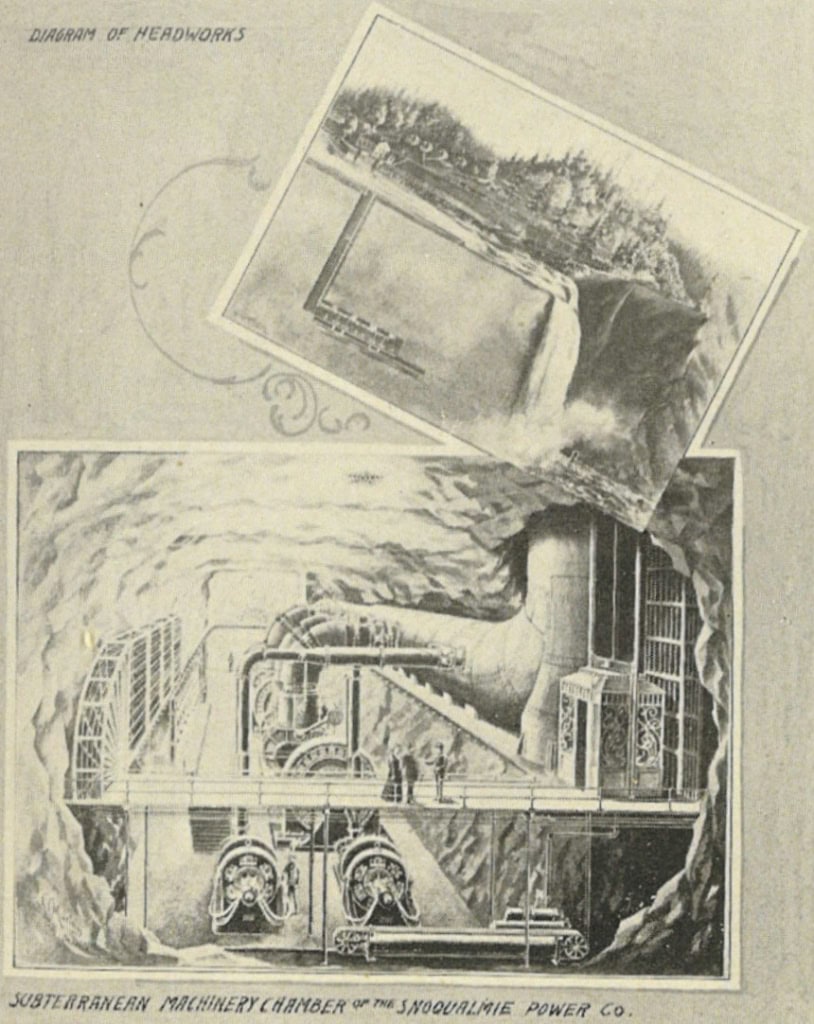
Cutaway diagrams of Power Plant 1 (Photo Credit – Alfred D. Bowen / Wikimedia)
MODERN DEVELOPMENTS
In 2010, Puget Sound Energy began a $200 million project to rehabilitate and upgrade the power plant. The project included retrofitting the first four of the generators in Plant 1, replacing the fifth, and replacing a turbine-generator in Plant 2.
Additionally, the penstocks were upgraded, the weir was lowered to 16 feet, lengthened by 37 feet, and the water-intake structure was replaced, ultimately helping reduce flood waters upstream of the falls. Puget Sound Energy also made substantial upgrades to the site by adding new visitor centers, hiking trails, and a boardwalk.
The renovations of Plant 2 were completed in April 2013, and the new 6.5 MW Francis turbine generator in Plant 1 was finished in 2014, raising the project’s installed capacity from 44.4 MW to 53.9 MW.
In 2019, the Snoqualmie Indian Tribe purchased Snoqualmie Falls (the hydropower project is still operated by Puget Sound Energy), the Salish Lodge and Spa (which had been previously owned by the Muckleshoot Tribe), the Snoqualmie Falls Gift Shop, and 45 acres of property surrounding the site for $125 million.
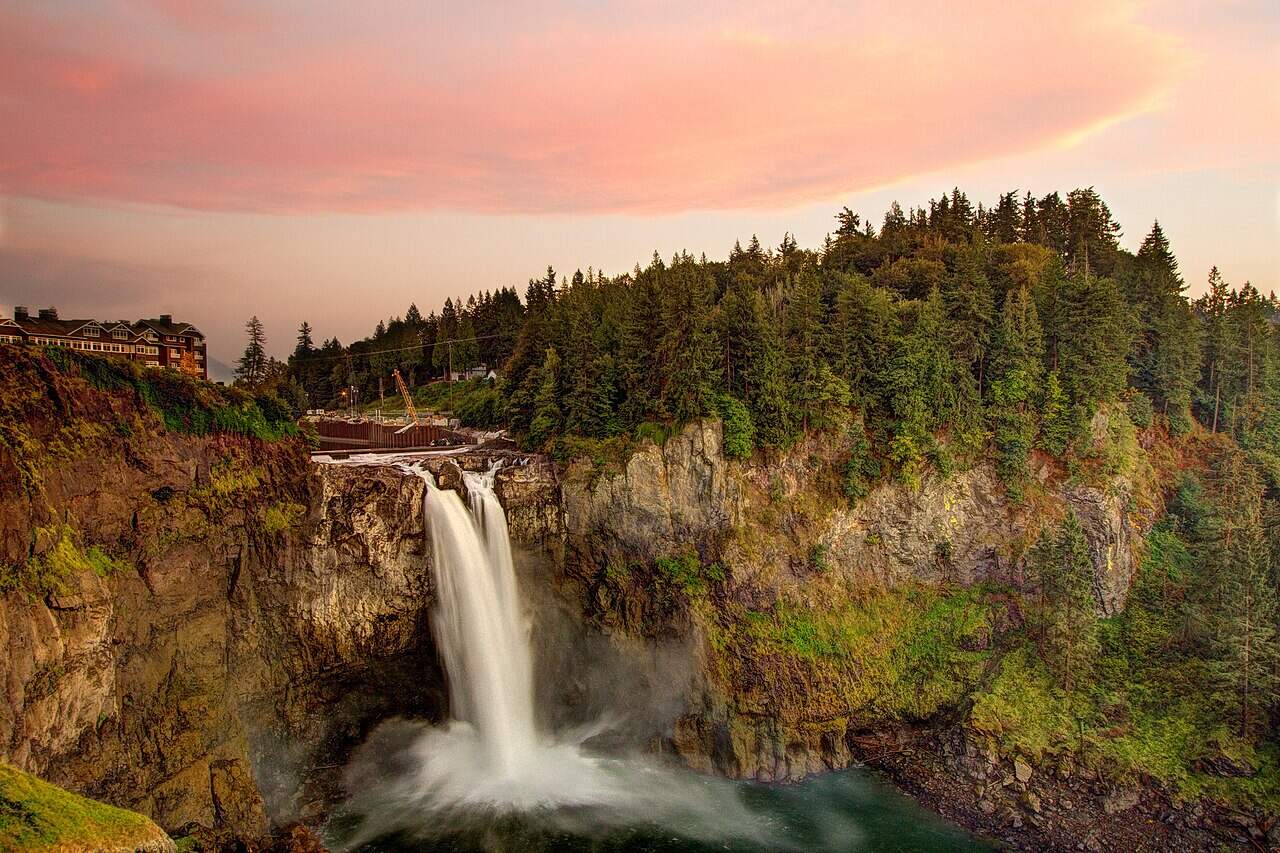
Snoqualmie Falls, Snoqualmie, WA (Photo Credit – Meher Anand Kasam / Wikimedia)
FINAL THOUGHTS
The enduring majesty of Snoqualmie Falls continues to serve as a major tourist destination in Washington, attracting more than 1.5 million people each year.
Whether visitors frequent the site because of its unparalleled beauty, fascinating history, or connection to an iconic American television show, David Lynch’s fixation on Snoqualmie Falls mirrors that of the millions who have sought it out over the millennia.
While Twin Peaks has concluded, the composite pieces of its identity – borrowed from the cornerstones of life in the Pacific Northwest – persevere, remaining forever intertwined as part of an unparalleled landscape, where they serve as a reminder that the setting has been the main character all along.


