



 Back to All
Hydropower has entered a transformative era of opportunity. Thanks to the Inflation Reduction Act (IRA) of 2022 and with subsequent legislative updates like the One Big Beautiful Bill Act (OBBBA) of July 4, 2025, the hydropower industry can now access billions in federal incentives.
These incentives, primarily through Investment Tax Credits (ITCs) and Production Tax Credits (PTCs), are central to the financial structure of new and modernized hydropower projects. While credits can dramatically improve project economics, they also introduce a layer of financial and compliance risk. That’s where tax credit insurance comes in.
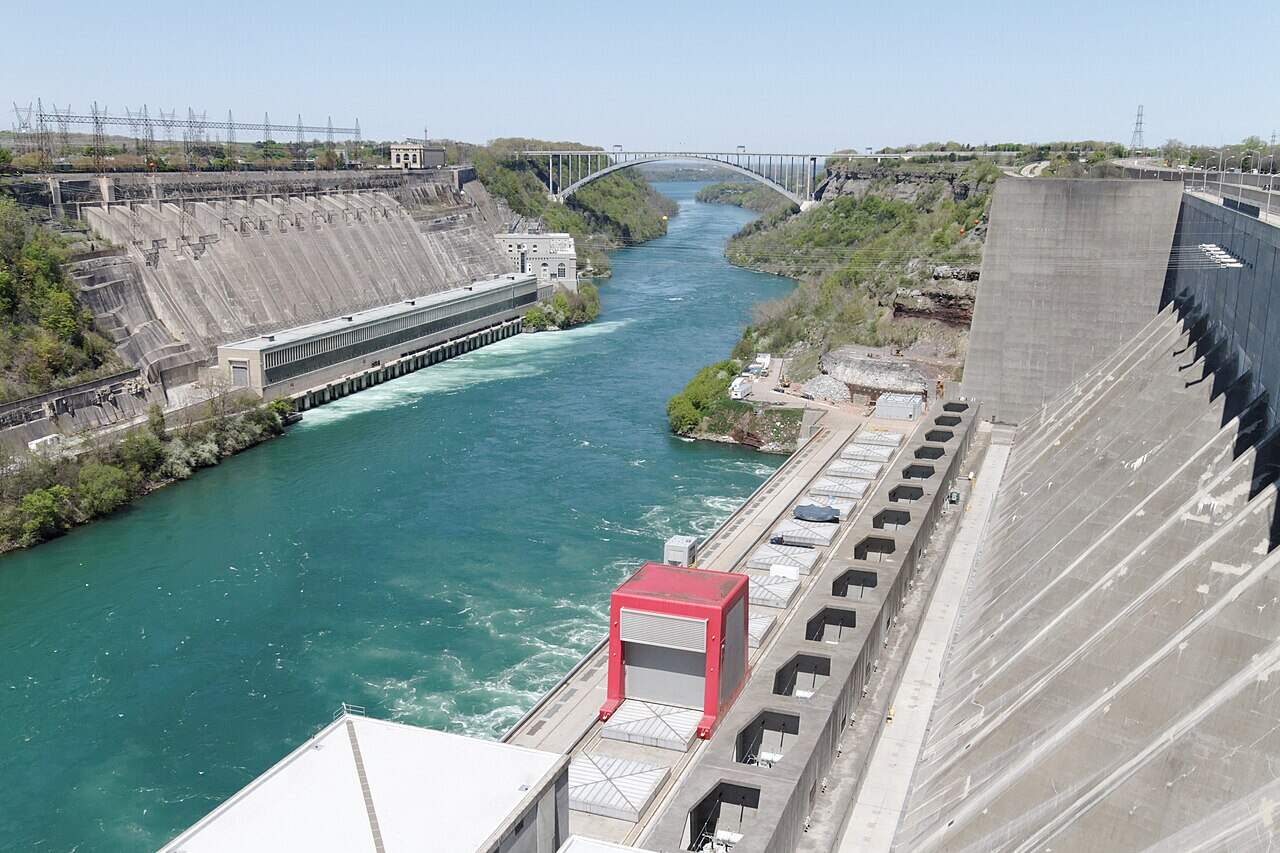
New York Power Authority’s Robert Moses Power Station. (Photo Credit – Wikimedia – KimonBerlin)
WHY THIS MATTERS FOR HYDROPOWER
Hydropower projects involve high upfront capital and long operational lifespans, making financial certainty essential. Even well-structured projects can face retroactive scrutiny due to evolving federal rules and multi-decade recapture periods.
Tax credit insurance provides a financial safeguard, protects investor confidence, and enhances the bankability of projects. Developers who proactively manage compliance, documentation, and insurance placement are best positioned to secure financing and fully capture the value of federal incentives driving the next generation of U.S. hydropower.
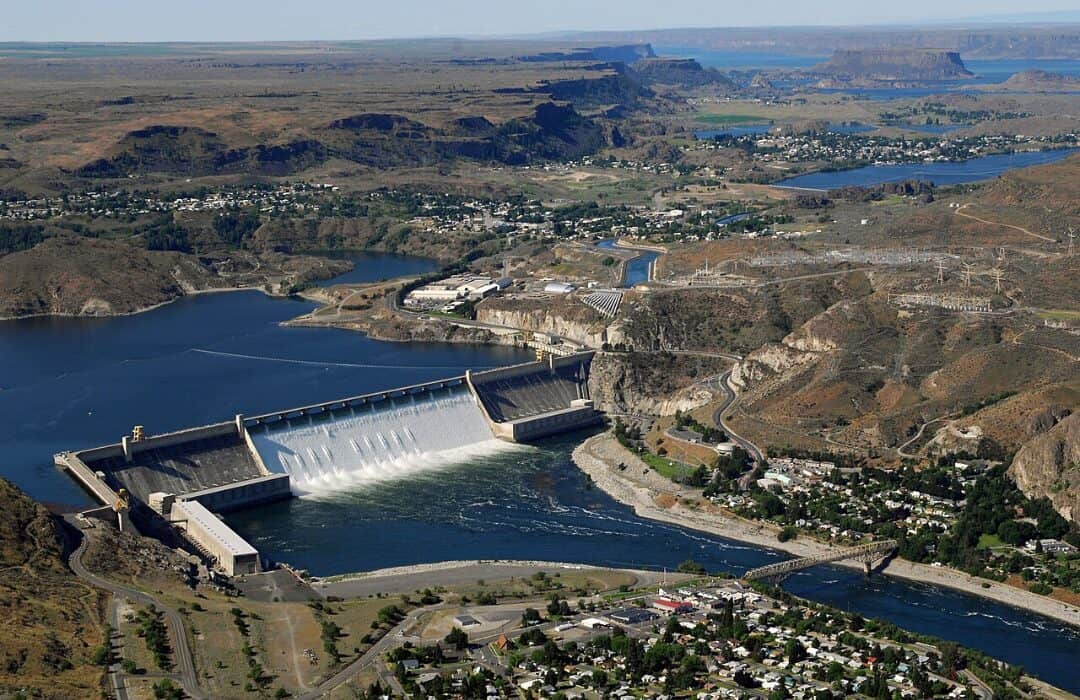
Aerial photo of Grand Coulee Dam. (Photo Credit – United States Bureau of Reclamation)
WHY TAX CREDIT INSURANCE IS ESSENTIAL
In the current tax code, asset owners and developers can claim or transfer tax credits, allowing them to sell credits to investors for cash. This converts a future tax benefit into immediate capital for construction, upgrades, or refinancing, rather than waiting years to realize it through tax filings.
Investors buying these credits receive a dollar-for-dollar reduction in federal tax liability, while supporting renewable energy development. It’s a win-win, but only if the credits are valid and compliant. If the Internal Revenue Service (IRS) later disallows, recaptures, or reduces a credit, then both developers and buyers can face millions in potential losses.
Without insurance, the financial consequences of disallowed credits can ripple across a project: developers may have to return proceeds from credit sales, investors lose expected tax benefits, and financing structures can become strained.
Tax credit insurance mitigates that risk by reimbursing the insured for the value of disallowed credits, including associated interest and defense costs if the IRS challenges a project’s eligibility or structure. This is especially true now that the OBBBA created Foreign Entity of Concern (FEOC) restrictions, requiring tax payers to ensure equipment, materials, and ownership structures avoid ties to certain countries like China. Beyond protection, insurance is increasingly a deal enabler: lenders, investors, and tax equity partners often require it.
In short, insurance turns a contingent tax incentive into a predictable, insurable asset, making projects more attractive to capital and reducing financing delays.
SECURING TAX CREDIT INSURANCE
Obtaining tax credit insurance requires transparency and independent verification. Sellers of tax credits usually begin by engaging a recognized law firm to produce a legal tax opinion confirming the project’s compliance with IRS guidance, which is the foundation for underwriting.
Insurers look for clarity, credibility, and consistency across all supporting documentation. For project structure and ownership, they expect org charts, experienced sponsors, and clearly defined roles.
- Construction and operational contracts should feature reputable counterparties, well-defined scopes of work, solid performance guarantees, and clear risk allocation.
- Financial models must use conservative, well-supported assumptions backed by independent valuations and cost segregation studies.
- Tax memos and legal opinions should come from respected tax advisors and provide strong, unqualified support for eligibility.
- Risk engineering and due diligence reports should show thorough technical review, credible mitigation strategies, and no outstanding issues. Collectively, these components give underwriters confidence that the project is sound, compliant, and positioned for long-term performance.
- An insurance broker plays a central role in coordinating the process. Serving as the bridge between developers, legal counsel, underwriters, and finance teams, brokers ensure documentation is complete, questions are addressed quickly, and coverage aligns with the project’s tax position and financing structure. Their guidance streamlines communication and accelerates underwriting.
The entire process typically takes 4–8 weeks, depending on project complexity, and results in a specialized policy tailored to the project’s tax position and structure.
THE CURRENT MARKET
Tax credit insurance adoption has grown rapidly: A study by Crux shows that roughly 60–70% of ITCs and 20–25% of PTCs in the renewable sector are now insured. Hydropower projects, particularly those in the $10–$150 million credit range, are seeing strong uptake.
- Policy limits: Typically, 125–140% of the total tax credit value, including potential costs and penalties.
Pricing: Most carriers price tax credit insurance at 3–5% of the coverage limit.
- Minimum Premium Thresholds: Carriers typically require minimum premiums of $200,000–$300,000, which makes smaller tax credit placements (generally under $5 million) less attractive or economically inefficient for insureds.
Insurance carriers generally prefer single-asset deals over portfolios for tax credit insurance because they present a much cleaner and more predictable risk profile. A single project has one set of facts, contracts, engineering reports, financial models, and tax positions, making underwriting more straightforward and reducing uncertainty.
Portfolios, by contrast, introduce differing technologies, contractors, timelines, valuations, and documentation sets, along with potential correlation risks such as shared weather, regulatory exposure, or contractor performance issues. This added complexity makes pricing, structuring, and claims handling more challenging. As a result, carriers favor single-asset structures because they are simpler to evaluate, easier to document, and more reliable to insure.
*Taylor Stothoff is a Hydropower Insurance Specialist and Advisor at Maury Donnelly & Parr, helping asset owners, developers, and investors protect tax credits and secure property and casualty coverage for renewable energy projects.


